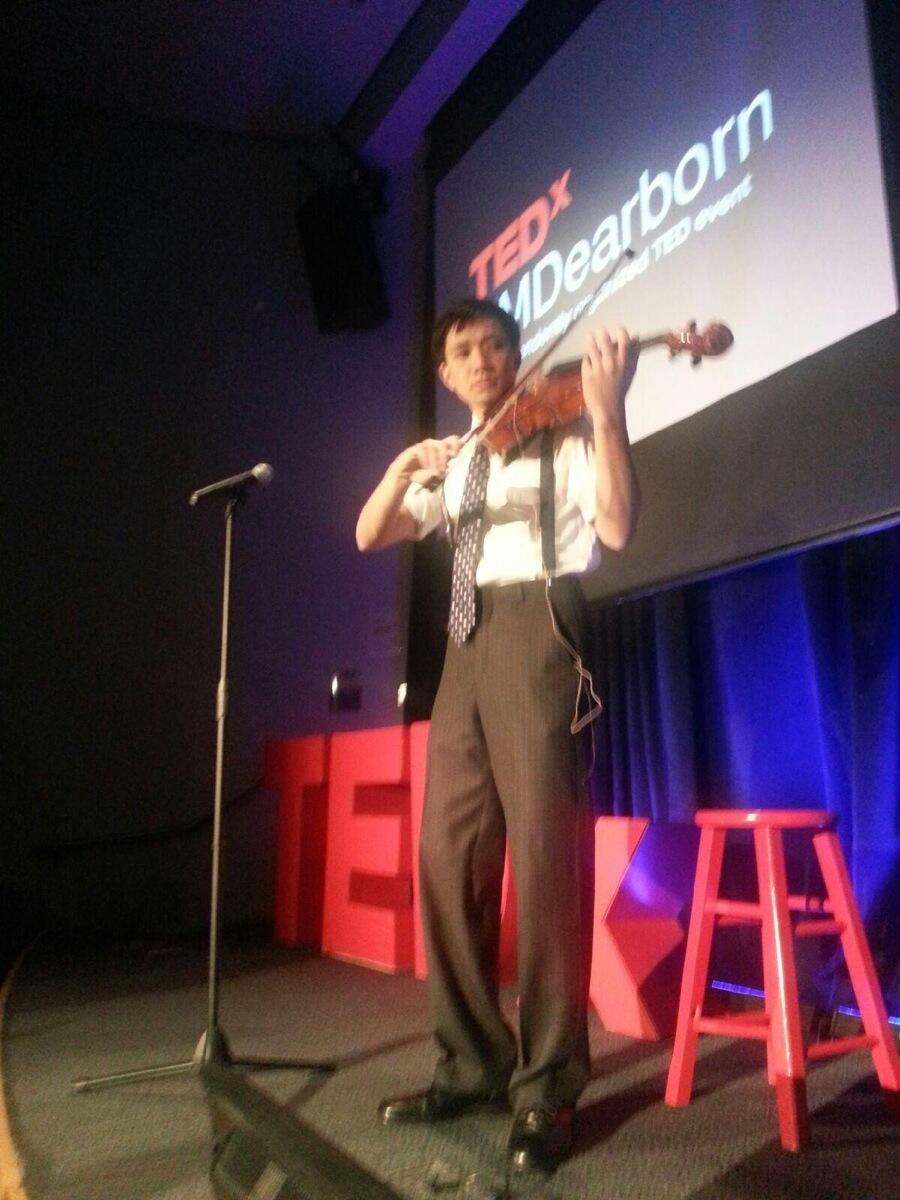
Yesterday morning I had a dream that I was at work and a lab user told me a story about "the devil's advocate". Normally, the expression "Devil's advocate" refers to someone who offers insightful reason for a contradictory if not controversial position in a debate. But in this story, the person spoke about immense hope and changing the world--and before anything conclusive about what the first step to take toward making a better world might be, he added another condition and new story. It was endless.
His advocacy led to nothing.
In that case, the Devil's advocate advocates to move us emotionally, while hacking emotional sensation and rapid dependency on the next detailed caveat. In lulling our being into the next caveat, the Devil's advocate shifts our attention from any prospect of moving forward to look for the next caution and item to fear. We're smitten by grandiose prospect, while simultaneously disempowered by its monolithic complexity and our loss of self-agency when relying on someone to create a vision and path for us to follow.
Conversely (and in waking life), I spoke with another person about mantras and music as both means and ends to sensing spirit and confidence yesterday. I think it ties in really well with the same practice of self-empowerment by scaling down big initiatives into something you can act on. There was a lot of great insight from the discussion I'll share another time, but for now I'll send some links.
Converting grand intentions (like new years resolutions) into habits that are tangible and actionable:
http://blog.bufferapp.com/the-science-of-new-years-resolutions-why-88-fail-and-how-to-make-them-work
New life-challenge: turn curiosity into courageous questions quickly.
Not so new but still challenging for me to do: elicit passion and wisdom from other people as soon as appropriate.
“Art ain’t about paint. It ain’t about canvas. It’s about ideas. Too many people died without ever getting their mind out to the world.” — Thornton Dial, SR.
Art, as I’ve come to understand, exists as a special form of communication. It’s communication that inspires a sense of wonder—a deep curiosity that has us ponder the encounter and ideas behind what we engage. It compels us to activate our curiosity as we wonder about the possible implications an encounter can have on our lives or the that of others.
I saw Thornton Dial SR.’s quote in the Smithsonian American Art Museum’s folk artist exhibit. It was liberating as much as it was validating: To make art, one requires no rigorous history of training, art degree, special materials or extraordinary circumstances to start. To me, Thornton Dial’s quote was an invitation to make whatever was on my mind if I so wished to do so. Better yet, it comforted me to know there’s boundless opportunity to share any idea, including those that can’t be experienced in writing. Perhaps what we have to share comes forth as good and beautiful. Whatever we choose to do, the act of honestly communicating our ideas certainly brings us closer to truth for our minds and hearts. Whenever that happens, it’s an invitation to live life artfully.
Looking at Mr. Dial’s quote again, it also applies to how I look at living life when speaking with and listening to people. There’s an art to good conversation and dialogue. If we consider Seth Godin’s distinction between the characteristics of work and art, artful conversation becomes a palpable ideal. Godin believes that work can be recognized as something people want to do less of, while art is something people want to make more. In that sense, we can all strive to make artful conversations. Both are important, good work can be necessary for creating better art.
. . .
I believe everyone benefits being in and moving from a place of passionate curiosity. Being as Rachel Carson describes, in a “sense of wonder”. When activated, it entices profound intrigue straight from the spirit. Whether mentally or physically, that place could be our own, among others, or perhaps better yet: shared. What matters most is that we speak with the flames of inspiration, those burning deeply from within our being to create that place.
If there’s dead space or if confusion nags at your attention in a way that prevents peace for everyone in the conversation, call it out and help shake things up. Time and life in the presence of another person are too precious an opportunity to squander. For anyone who grants me the privilege of sharing a conversation, this applies to us too. Call me out if I don’t do so first. Just because I’m familiar with the recesses of awkward pause doesn't mean I necessarily need or want us to stay there.
Perhaps the cost of very good conversation comes from committing yourself wholly to the people you speak with by thoroughly listening and keeping the courage to share what really matters to you. But do so in the greater interest of co-creating an enriching dialogue for everyone involved. Live boldly. Don’t be cautious, but be considerate with presence, intelligence, and equal heart. With this in mind, we can strive to create heartful conversations.
I’m still learning how to do so with excellence. But I like the idea that it’s an endeavor to live and share.
-As with every performance, I learn about who I really am in the moment from what I actually prepared and what I chose to use
-Virtue in performance (for what I mean, here's a statement on virtue in music):
Everything I really prepared for came through fairly intuitively. What I hoped but failed to thoroughly prepare for didn't manifest itself clearly when spoken under pressure. I'll acknowledge that I didn't project my voice sufficiently too.
Granted, there were a fair number of curveballs thrown just before I got on stage:
I was asked to shave 5 minutes off of my time minutes before I walked on from a 12-15 minute timeframe, equipment wasn't readied for me to speak or play (amplifier and receiver was unplugged), and the timer was never started until I requested it about halfway through my set. But what I've learned from this and previous trials and performances: you find yourself when you push yourself. I learned on stage what exactly I had internalized and what I had yet to embody. I'm certain learning to prepare for that better comes with time, additional exposure, and follow-through on not repeating the same mistakes.
My remarks were written in strategy language--they represented the content I sought to intellectually convey, but they didn't represent what I needed to say to human beings. In my strategy work with the Ismotion/WorldByCycle team we've realized the same thing: every time we got stuck in crafting our business pitch, it was because we no longer wrote words that meant something to most English speaking human beings. To bring stories to life, one needs verbs, not nouns to move us forward.
-I'm getting better at building emotional solidarity with audiences, but there's a threshold where the enthusiasm and emotion stirred up in my performance-presentations needs to match the integrity of the wisdom I strive to convey. My intentions for the performance was to show that attendees had both a privilege and responsibility to take whatever they found inspiring or useful and share it with others. At the same time, I hoped that bringing statistics about environmental health and air quality in Detroit/Southwest Detroit, and the "digital divide" (how the event required online applications in an area where digital literacy and access to the internet remains very low) would also spur lasting attention to bigger systemic environmental and digital justice issues.
-At an event like today's, innovations in emotional technology (how we get people to connect and humanely relate to each other) ought to be coupled with ethical intellectual food for thought of equal or greater quality as well. I have an opportunity to educate a community. Using new devices for engagement stays in the heart's memory, but sometimes a clear logical statement can help the mind stir the heart as people wind down from an event. As a former debater, I know what a logical presentation and argument looks like. While I wasn't at TEDX UM-Dearborn to debate, I did come with a message to assert. I don't think it was done as clearly as I'd like, but I'm at peace with it for now.
I'm pleased to learn from various attendees who shared their thoughts (especially from Alex) that the concept of taking inspiration and carrying it forward beyond the event was clear.
-Seek out and listen to the people who didn't get your message(s)
Accolades and enthusiasms are wonderful and deeply appreciated, but in finding ways to refine how I communicate, it's best to engage those who didn't appreciate or grasp the points I hoped to convey.
-Prepare 2x more
For performance presentations that require solid grounding in data and ethics, it certainly takes twice as long to prepare. In order to use the opportunity well, I need to do two things: Prepare the speech and practice the speaking/audience engagement, prepare the music and practice performing it too.
-That said, I enjoyed sharing it--in the future to prepare for events that charge a fee for attendees, I'll be sure to offer more opportunities to friends/the public for test-running my presentations/performances in progress.
-Unlike featured speakers for the event, I didn't have a dedicated speaking coach assigned to me and have yet to find one I'd trust on my own. However, thanks to the generosity and attention of friends and the broader community, I was able to practice my remarks (a brief 3 minute or less speech), and sketch out how the presentation aspect blends into the audience participation & performance aspect.
If you know what to look out for and can ask others to keep you accountable, it's possible to sharpen what you do without a professional coach. I've been fortunate to have various professors, classes, and extracurriculars which helped hone what I pay attention to for better public speaking. But without the keen attention, enthusiasm, and support of many friends and amicable acquaintances, I don't believe I'd have refined my message as well as I did.
Many thanks to Sara C., Megan M., Bear, Scotty, Thomas M., Marty S. and all those who shared their attention and insight.
Also: sometimes straightening out another person's collar when they're unaware can be as good as getting a hug from a dear friend. I really appreciated Ryan K's keen eye in helping make sure I had my tie under the collar before I went onto state.
Pushups helped, I don't mind how odd it looks to others, I did a quick set of pushups a bit before going onto stage and it was worth it.
If it quavers and shakes in fear:
let it be for the reasons we share with you.
Speak your truth with courage, and all your heart.
Inspire, then move us--with each word you expel, and each breath you spend. We'll catch our breaths, and then we'll respire.
We'll breathe as we move closer toward something worth every spirited breath of speech, story, and song before our lives expire.
But it ends not at your life, nor ours. Greatness flows over and through endeavors of legacy everlasting.
Free it with your voice and contribution to the world.
Let it ebb and flow from heart to heart: yours to mine, theirs to yours.
Call again!
Through sacred passage of wisdom in your call and listening--let your curiosity open the greatness of others, share your reliable truths, and always ask for the greatest of truth even when the only answer may be silence from your fellows.
The echoes of utterance will be great, and the world may quaver and shake in new movement as it awakens with the warmth of your voice for the reasons we share with you.
I met the son of Suzanne Massey at a recent conference. In reading up about her son on Wikipedia, Bob Massey I found that his mother had a role in U.S. diplomatic relations between Ronald Reagan and Mikhail Gorbachev during the cold war.
(Ironically, I need to verify where the above claims really came from beyond taking wikipedia's list of books and interviews for granted...)
Sunday, July 28, 2013
Played with Jean--a fine flamenco guitarist, former automotive mechanic, playful humorist "is your dog a male?--no? that's too bad, I was going to offer you a hat."
I still find myself amazed that I live in a place where people feel safe enough to run without concerns about being attacked or harmed.
Perhaps today's dragons come not in the form of multi-headed monolithic institutions that exceed our ability to grapple with. Rather, they're a challenge for us to advance and embrace unencumbered honesty.
About a year ago, I contemplated a lot about existentialism in marketing: if a product engages an audience (especially the consumer) with an actual experience, the product--and in turn, the brand--becomes priceless, the added value becomes invaluable. I also made an ethical distinction between outreach and marketing. You can read that post here. Now, I'm finding a continuum between community-based ethical enterprises and stories: stories humanize our relationship with whatever good or service we engage.
Ironically, my revelations are heightened by the fact that I'm starting to work closely with an Australian company to examine the "story of stuff" for sustainability in global supply chains--while many people whom I know are focused on very exciting sustainability and community building on a local level.
Hansen and Lydersen: "Exquisite Smoked Salmon"
Playing music as Ole smokes the salmon gives a story that differentiates his product from others, and adds value to the smoked salmon altogether. It's clever marketing that makes consumerism a bit more humane thanks to the touch of a story and a product procured with passion. But how integral is the music to enriching a customer's experience?
Interface: Net-Works
Interface is a carpet company. For those who might not be familiar with building materials and sustainability in industry, carpet companies pack a surprising punch when it comes to re-imagining how our economy can function [1].
Interface's net-works program might be considered a "social enterprise", but they're throwing in a fine new phrase that's worth noting in the lexicon of commerce: "restorative enterprise", which asks: How can a company improve a place or process for the human and ecosystemic community?
While they might not explicitly say so in their marketing, it's focused on using their supply chain to cultivating a coherent thread of sustainability that removes discarded fishing net from coastlines and benefits island communities.
I recently got back from a summit (check out the highlights from ReRoute) in New York which poses the same kind of question for business and economics in general: "How can we make business and economics more enriching and non-degrading to the people, and other co-habitants we live with?"
There's a movement/field of study called solidarity economics, which looks at this, and from discussing with conference luminaries, it's clear that the "new economics" movement is well underway.
Telling the story of our stuff looks like an excellent start in a global economy. Yet at the end of the day, I think we beam the most when people we know, see, and embrace directly do well.
I'm really excited at the prospect of consulting Interface's Australian company to show the global story of their sustainability initiative, and will look forward to the time when I do the same here in the Great Lakes bioregion as well.
[1] The Ellen MacArthur Foundation's "Circular Economy" video gives a good big-picture overview of how the carpet industry's business of "cradle to cradle" material reuse happens.
Alfred State College:
-Relationships and meaningful conversations, inspiration and zeal taken from the event
-I'm convinced that my insight is worthwhile and potentially valuable among sustainability theorists and practitioners
-The things I want to see at UM-Dearborn/throughout Michigan are valid--and happening at Alfred State College or other campuses
AWMA:
-Industry sustainability isn't quite the same, chiefly because most people in industry don't really know how to look for it
-Embodied/Embedded energy assessments are very similar to Life Cycle Analysis; Cradle to Cradle isn't always clear in design; circular economics
-Stakeholder engagement
-Project Management principles: I've got them, and I understand it very well.
Lamps on the side of Chicago's Harold Washington Public Library--I was amazed to find it had an innovation lab (some people would call it an innovation incubator)! So far, it's the most exciting find of my adventures in library tourism. Must have been an interesting attraction for those attending the American Library Association's conference. Eager to see more of these pop up throughout the U.S.!
The library reminds me a lot of the Enoch Pratt Free Library in Baltimore Maryland (though I like the space, building and name of the Enoch Pratt Free Library central location/state resource center better), books are arranged by topic (humanities, music, etc.), sometimes taking up whole floors. However, the books and major things to do are nowhere to be found upon entering, much of its contents happen up a series of escalators. Also, the bars reminded me of San Antonio's prison-like public library (note, not my photo, but it captures some of the features well)... at least free minds can't be kept behind bars!
I just realized "Publish" has "Pub" in it--as in "public".
A quick check on the definition of "publish" shows the word "public" is intrinsic to its meaning and etymology as well:
pub·lish
[puhb-lish] Show IPAverb (used with object)
1. to issue (printed or otherwise reproduced textual or graphicmaterial, computer software, etc.) for sale or distribution to thepublic.
2. to issue publicly the work of: Random House publishes Faulkner.
3. to announce formally or officially; proclaim; promulgate.
4. to make publicly or generally known.
5. Law. to communicate (a defamatory statement) to some personor persons other than the person defamed.
Origin:
1300–50; Middle English publisshen < Anglo-French *publiss-, longstem of *publir, for Middle French publier < Latin pūblicāre to makepublic
publish. (n.d.). Dictionary.com Unabridged. Retrieved July 10, 2013, from Dictionary.com website: http://dictionary.reference.com/browse/publish
Yet many academics "publish" their papers in exclusive academic journals which the public rarely ever engages--either because the world doesn't know about it, or because the costs inhibit casual curiosity from further engaging the information. If no one knows about it, and few people know how to find the information, then it's an unlikely source for public access that leaves the information exclusively to an intellectual elite.
Edit: By coincidence, I just realized I'll be meeting with people at a pub (alehouse) to discuss the framework and plannings for a sharing economy festival today!
The writer must not have been around since February.
The windows were still there when I went by two weeks ago. Those are some fine windows too, they're looking really fresh even from Michigan Avenue almost half a year later. To whomever installed them, bravo. That's one of the best creative pranks I've seen yet. http://youtu.be/XS1n7Q84dP0
Thursday, June 20, 2013
Blood, tears, and sweat:
they all sound the same when they fall in drops to the ground.
[TBL/mind body spirit equivalent=tear blood sweat
sweat=mind, blood? body, tear=spirit?]
But do we sweat over something worthy of our blood and tears?
Would one weep for
Does a mother cry tears of joy upon seeing her newborn child, still covered in her own blood after hours of labor?
In pursuit of the things that bring forth our tears, or have our blood course through
Perhaps a truer test of strength comes from resilience. It's an act of strength through fortitude. In times of duress, we learn most from our body, mental acumen, character, integrity of the team, community, etc.
Surges in our strength can surprise us when considering our momentary capacities to handle a situation, but our sustained commitment and endurance allows us to glean a more authentic understanding and confidence for ourselves.
At what point do the elements of a good story/legend/myth/prophecy line up with the likelihood of real events happening?
i.e. the story of Michigan's weather being of two Native Americans who race, one always lagging but when he arrives and rests, the weather becomes warm, pleasant, and sunny.
That's quite like a metaphor for cold/hot air masses.
Thought inspired by Michigan Radio's Stateside with Cynthia Canty.
Best use of my talents
Best exposure for personal/professional growth
Best impact in society
Edit 10 July 2013: I'm pleased, I wrote the above a while back when wondering what were the things I really wanted to see in a prospective employment role. I think I assumed personal sustenance (financial and time needs being a met requisite) as part of "exposure for personal/professional growth". Today, I came across this: http://www.shareable.net/blog/the-sandbox-interview-a-co-living-lab-for-sharing-everything
Their venn diagram? In essence, its:
Inspiration.
Income.
Impact.
Today I played music outside of the Mardigian Library. I was approached by a girl who said she was unfamiliar with a lot of music, though she shared wonderful insight into the ways verses of the Q'uran can be sung (according to her, 10 melodic guidelines can be applied to every verse when reading). She asked me if the music I played had any meaning or symbolism.
. . .
{according to my mother 20:28 28 IV 2013}
American FM radio was a source for interesting music and news in Vietnam, but during these days, all they could hear was "I'm Dreaming of a White Christmas"--that's what my mother and grandfather heard as they stayed in their Saigon home under a curfew that began on the 27th of April in 1975. Instead, my mother listened to her music on reel to reel audio tapes or tape players. Around April 26th and the 27th of 1975, a few skirmishes broke out and airplanes trying to leave the country crashed. Some of the planes were too overloaded with people, others were piloted by mechanics who didn't know how to fly. The music persisted throughout the 28th and 29th, and at night the skies were pink from combat. From the windows of her home, my mother could see a lot of bloodied uniforms, jeans, and guns strewn on the street behind her house. The uniforms belonged to the Army of the Republic of Viet Nam fighters, while the jeans were almost certainly of the Viet Cong. Meanwhile, my mother and grandfather listened to the radio. They didn't know what it meant at the time, but for the U.S. nationals in Saigon, the ongoing broadcast of "I'm Dreaming..." signaled evacuation.
At noon on April 30th, a famous Vietnamese singer-songwriter [Trịnh Công Sơn?] was in the palace to receive the North Vietnamese and Viet Cong. The Communist flag was raised (yellow star in the center, red field), and no matter where one looked, the South Vietnamese flag with three red stripes on a yellow field could not be found. With the change of regime, the curfew no longer remained in effect and people were in the streets to see soviet supplied T-54 tanks roll in bearing with many skinny young men (approximately 16 years old). At this time, my mother chose to wear her scout uniform over her Red Cross uniform since the Red Cross was restricted to certain areas, whereas the scout uniform, especially that of a young Scout Master, was recognized and respected by the North and South Vietnamese alike. She spoke with two of the youth who appeared to be soldiers, still wearing fresh jungle vegetation on their helmets. They turned out to be students--North Vietnamese honor students promised to see and liberate the people in South Vietnam.
Drawing parallels to what we hear about malnourished and impoverished people in North Korea today, the North Vietnamese Soldiers and Viet Cong were all skinny, and the students wanted to know why the South needed liberation when the South seemed so opulent: everyone in the South seemed rich, or fat. Ladies were well dressed, and you could smell their perfume in the breeze. The city still had a modernized mark from the presence of U.S., French, and other international forces. After days of curfew, florists had their finest flowers on display in the streets--and they were exotic to those from the North, where the selection of flowers weren't as diverse and tended to be mixed with edible crops in the city.
My mother and grandfather took a taxi cab rather than their own vehicle to save gas. With all of the people in the streets, travel was slow. They had a boat prepared and tried to leave on the Saigon River to the ocean, but since the draw bridge had no operator were unable to pass.
They went to see my grandfather's brother and their 85 year old mother, a suburb where high-ranking officers lived. Though they couldn't leave the country, my grandfather said he'd continue to try to leave and my great grandmother sadly agreed. It was a sad affirmation for everyone as they knew it was likely the last time they'd see each other.
On the return, they stopped by warehouses and food stores to purchase non-perishible foods (canned goods, dried foods, etc.) the warehouse which had nouc mam (the Vietnamese fish sauce), rice, and sugar was looted and ransacked--my mother could see people carrying goods away as if they owned them.
Grandfather and my mum got home while it was still light outside, likely around at 6:30 p.m. they ate very little and began pulling photos, documents, and books to burn. They heard a noise in the street and overheard someone in the street offering a bounty to neighbors. The description was for my grandfather. Since it was too soon for outsiders to know who was who in the neighborhood, especially for the North Vietnamese and Viet Cong to know anyone there, my grandfather and mother realized one of their neighbors must have been supporters and informants to the communists. My mother and grandfather tore up any books that were translated so that they could burn them throughout the night. My mother got exhausted and was told to sleep as my grandfather continued burning books throughout the night and next morning until 05:00-06:00.
On May 1st, my mother went to a friend's house. Her friend was a schoolmate and fellow scout. her friend's family, where she overheard their plans to leave. Mum asked if she could leave with them, and her friend said yes--but the fishing boat leaves at 10:17 (or possibly at 10:47--my mother now forgets). Mum left for home to tell her father.
On the way, she saw South Vietnamese Soldiers on the street calling out each other's names at their homes and asking neighbors if they were planning to leave the country or go to the jungle to continue fighting. They gathered weapons that littered the street and planned to rendezvous. In retrospect, my mother says when people refer to the jungle, it's a jungle that's in the mountains where the Hmong people lived. The Hmong are respected for continuing the fight long after the U.S. had left, and she suspects it's likely the South Vietnamese resistance soldiers had joined them.
### (recollected from a previous conversation in early May of 2010) ###
My mother and grandfather left for the boat by automobile and she watched as her dogs disappeared behind the car as it drove away from the house. As the boat departed from the dock, she saw her dogs swim after them. As she told this to me, she wept.
#01:49 2 V 2013
Throughout the week, and especially as I re-wrote the frantic notes from Monday's phone call into sentences, everything in the present seems to relate to these events. I suppose that's a good sign--I hope it means I'm living life eventfully and well enough to relate so much to someone else's life and consequences of history that still shake the ground I move upon with its echoes here on the other side of the world: yesterday a Vietnam War veteran called my father to express his thanks for an e-mail my dad sent in observance of the fall of Saigon and in respect to those who were part of the armed services. As I've said last year to several people, I can attribute much of the circumstance of my existence to military conflict and aid. While I believe there's something important about writing all of this down, I'm also detached from the events enough to feel neutral and ramble my writings like a fool in hopes of finding something that resonates with greater coherency.
I spent much of my evening yesterday reading and working in a library writing about organizations that promote literacy, higher education, public service, and peaceable conflict resolution. I imagined the smell of chemical smoke from burning your own books and family photos in your house at the base of a grand staircase. I can also imagine my grandfather's heart pump through arteries that stiffened from being persecuted for his involvement with a government that lost its legitimacy again (Vietnam was susceptible to coups and regime changes).
As I wrote my mother's account of the past few days, I also wondered what would I do were I there and what I would represent.
Isaac Asimov was quoted from one of his novels that "violence is the last refuge of the incompetent."
Despite my belief and interest in non-violence, the fires of youth and bonds of loyalty compel me to imagine myself joining the South Vietnamese even after the capitol and government had fallen if I were part of the armed forces. Yet last year alone I've seen people get brutally beaten over notions of loyalty and an ethos of escalation. I also know some people who are in prison for similar reasons. Myself a musician, I could also see why the musician who greeted the North Vietnamese at the palace might have thought it was appropriate and meaningful to welcome the re-unification of Vietnam. If it is the person I suspect, he certainly advocated for peaceable action and probably had the imagination to envision a co-creative outcome between both regimes. To move people toward a peaceable path in the midst of a major event requires so much work that I can hardly imagine it working--the resilience of a peaceable infrustructure must be established in advance, and the sustained opportunity to authentically engage all stakeholders involved must happen as well.
I'd probably do as my mother did to engage the youth riding in the tanks in a curious conversation, and calculate possible ways to escape the country too.
I explained to the girl who asked me about music that it can bear intrinsic meaning as well as carry extrinsic meanings--history on personal and collective levels can imbue new meanings onto a tune or song. White was once a color of truce, but also a color of surrender under the Hague Convention. In some Buddhist countries, it's seen as a color of mourning. Is it odd or fitting that someone chose a song which wistfully celebrates the birth of a Christian icon as the signal for evacuation? In this case, there's too much life to meaningfully unpack. People died, many in terrible ways, over notions and an ethos of escalation, nationhood, manipulations of our appeal for humanity, and aggression. Others, including members of my own family, would suffer from a legacy of oppression in "reeducation camps" and strife once released.
There's a lot of truth to this article: http://opinionator.blogs.nytimes.com/2013/04/06/how-memoirists-mold-the-truth/?ref=opinion
Within the first few lines of my mum's account, I found myself trying to articulate it with narrative devices as a story that fills the gaps and highlights the salient points. While I certainly see pockets to further explore and flesh out, I understand how my fellow memoirists of the Immigrant Memoir project can find it so challenging to write down their own family histories, and I now also know how the awkward gaps in a possible narrative can occur. This is the first memoir I've completed (relatively) about my parents' past.
I'm still inclined to write some kind of satisfying resolve to the events described above. The best I can offer follows: many of the people I know are alive today or have passed on for reasons other than the war, I remain privileged to write about this and partake in the telling the story of other people's misfortune. While this might not solve a lot of problems in the big picture, we can at least continue to live with gratitude for memorable stories that continue to be made today and our ability to share them.
I think people (especially the author of this "article") confuse buzzwords with "fuzzy concepts"--ideas or words that can mean a lot of things depending on who you are and what you know. But here's the good news: when you hold the people slinging these "buzzwords"--which may actually represent something transformative and invigorating or simply reflect superficial frenzied hype in our communication--accountable through intentional dialogue (yes, another "buzzword"), eventually you'll find common ground. That's the whole issue with sustainability: people say "we want a sustainable future" and don't actually want things to continue as they do. They want something better. I champion (another buzzword?) for comprehensive sustainability--which means it coheres social well-being along with prudent economic action and environmental integrity. Many people might assume sustainability means installing twirly CFL light bulbs to end anthropocentric climate change and recycling to solve all our other environmental challenges. It's a "wicked problem" or "wicked process".
People seem take issue with not seeing the words he uses in the way that the community of foundations and community investment institutions do, but I suspect that's why he talks about dialogue and participation--so that everyone can find common ground and language to move together with. Pardon the contrary opinion, but I think Jason's statement is probably the most respectful approach to action: to explicitly declare actions beyond seeking participation and dialogue would be arrogant--he'd have to impose initiatives and look like he's doing so on behalf of Detroit. If people's participation and involvement are there, it's a bit simpler, but looking at his work, I think he recognizes that lasting change requires an inclusive co-creative approach. At this point figuring out sound actions probably matter more than imposing grand statements and agendae. For those whom the statements and agendae do matter, he's opened the door to discuss it and establish some degree of trust with them. That makes a lot of sense for the wicked problem/risk governance/democratic/restorative practice processes I've come across.
I've never met the guy in person, nor do I know his tendencies beyond the few items of information I've seen so far. That said, I don't think anyone's in a position to judge an individual in such a context. Have we had the opportunity to meet and maintain some degree of meaningful dialogue with the guy? Very few of us can say so. In sustaining our relationship with the person, is it possible and can we know whether our interactions have shifted their character and ideas over the course of a few years? People can change. Can you help highlight better paths for them to engage?
Yes, and for the sake of where and how we all live, I hope you'll strive to do so. Let's dialogue?
(buzzword? I think not, link goes to a thoughtful definition posed by the Public Conversations Project.)
If there's anything you know about the Boston explosions, share them with the Public Insight Network: http://ht.ly/k5tUF
Do you have a connection to the race? Are you nearby or hearing first hand about the situation? Let us know below. A reporter or producer may contact you to find out more.Boston Marathoner who needs a place to stay? http://po.st/OsjjHv Have a place to offer? http://po.st/5MvHth
Last week I briefly attended an event held at the N'Namdi gallery by artist ____ fleur, who discussed how the future of Detroit's aesthetic will likely move from a grungy/gritty presentation to something brilliant and colorful--she pointed to traditional African aesthetics, and even the diversity of existing architecture in Detroit. I used to think about parallels between abuse and the Detroit aesthetic--its music, a lot of its art, the stories in the news. There's something about some people who experienced deep and sustained harms where we find an attitude that's a mix of resilience and a weary-worn frankness. Sometimes, an element of guarded shame stands as a likely possibility. It's often comfortable to recognize it. You know you're at peace in their company but there's a certain darkness to how they live--unanswered or seldom explored questions remain like mysterious gashes: no one can tell whether they're still wounds to be healed or closed scars, and we've either developed habits for moving in ways that don't aggravate them, or are too afraid to move any further. Knowing that a lot of media and negative imagery already exists for both, I never expressed it to anyone before.
However, I happen to know several people who endured sustained abuse, sometimes terrifying in its truest sense, who can embody the most vibrant aspects of life. They often define what's possible for living in a better world, or demonstrate how to carry on by living amid its realities. In spite of misfortune, they continue, we live well. I also had the privilege to know so many brilliant people who know Detroit as their home do brilliant things. Their actions and the communities they create exist as the tinder and fuel aflame--the growing feathers of a phoenix--through which the city finds itself amid its ashes. While I've been through gunshots on the East side, I've also been to the Alkebu-Lan Village which soon celebrates a 35 years of exceptional karate in Detroit and sustained community enrichment that's drawn the attention and admiration of companies known for their mid-town investment presence like Quicken Loans.
Going back to the idea of parallels in mental illness and community: In a lot of ways, the negative media and identity stigma that many Detroiters loath mirrors the same imposition of identity a person undergoing mental health challenges meets when labeled with a certain disorder/illness. Identity becomes objectified by another, opportunity for change is denied in the reality constructed by those who impose/accept it as such.
True stories: I care a lot about the Great Lakes, did a lot of work with watershed education, advocate for citizen science, and also tutored English to English as Second Language (ESL) learners.
There's a set of "serious games" which educate people about citizen science or help ESL learners learn American English:
While I haven't played the ESL game, I did try out the Citizen Science game last year. I approve of it too: it covers critical discourse (debate/evidenced based dialogue), watershed education, science, outdoor recreation, hanging out with other animals, and other forms of community and interpersonal engagement across urban, suburban, rural, and natural areas (frequently by foot) with the occasional excursion via water craft.
I'm also amazed that the images from both the Citizen Science game and the ESL game happen to look a fair bit like me. For the photo on the left, I pretty much look like that guy. For the one on the right, I've at least got the same shirts though my face isn't quite as angular and I doubt I've ever had my hair grow that far out. Still, they're enough to make one wonder...
Sunday, March 24, 2013
Thankful for this peace that I found today
Swear I almost threw my life away -- now I live on
Sweepin' through the streets still around the way
Man a good thing
I found a way -- pain made me strong
- Lyrics by Gmac (unpublished and song still in production)
Last week I was part of a suicide prevention training. By miraculous coincidence I also received the following lyrics via e-mail while I was at the training from a Detroit "conscientious hip hop" artist named Gmac whom I'm in the midst of collaborating with.
Here's what I personally gleaned from the training, and some of the other stuff that arose earlier in the week:
1) Once we've tried everything we can come up with, it's time to wait. Waiting allows new opportunities for us to move forward. To "suffer with patience" is wisdom for the crisp moment at the brink of life and death, and it's perhaps the same test of patience for any life endeavor too.
The biggest challenge posed in the workshop comes from empowering people with reasons to survive and sustain themselves. However, to ensure meaningful impact in the bigger scope of life, you must help them engage something they love--"reasons for living". During an intervention, you facilitate the discovery of their reasons. You might also be their only reason for living at the moment too. Sometimes the opportunity to be heard without retribution is most profound demonstration of compassion one has ever experienced.
In the long-term however, we need a resilient vision that moves one beyond the balance of survival by means of subsistence toward living well. The Applied Suicide Intervention Skills Training (AKA ASIST) workshop, developed by Living Works and hosted by the American Indian Health and Family Services, gave proper priority to the survival aspect of an intervention. However, as I've mentioned before, some of the people I carry concerns for were driven to considering suicide because of the long-term
2) Tenacious creativity literally becomes a vital tool. Creativity no longer becomes a luxury as an outcome of proper resources and imagination, it's necessary for living life and helping others live their lives more fully.
Though I don't have an explicit connection, I know the following's related:
Earlier this week, I clarified part of my interpretation of social sustainability for a social entrepreneur's keynote speech to Jane Goodall's Vision 2020 symposium earlier this week. The notion basically coheres all those lofty ethical ideals (peace, compassion, love, etc.) and processes of governance (democracy, restorative practice, etc.) and brings us to consider at what point do our relationships impact how we engage other things in the world? I used this photo series to visually pose answers to that question: The collateral effects of poor relationships create definite economic and environmental impacts. Though most of the animals here are/were domesticated, the idea that our social relations among other beings bear economic and environmental consequences as well--what does it take to rebuild a war-struck neighborhood?
I recently gave feedback on the draft speech of a fellow social entrepreneur who was invited as a keynote speaker for the Jane Goodall Vision 2020 symposium.
While I won't be there for the symposium (it's in Australia), I can imagine the following for events of this caliber and magnitude: people are privileged to attend, and the event organizers bring in some of the best speakers they can find to leave all their attendees charged with the finest of rekindled hearts and solid wisdom.
While I was more or less familiar with various strategies she explores in her speech, I'm starting to realize how tremendous an opportunity it's been to have access to her speech and organization: due to the nature of the organization's programs, I've been privileged to learn about some of her organization's deepest challenges in ways that most people would never imagine possible for someone working with it in such a short amount of time. I know that in some way, the things they might have struggled with are the very same things I struggle with too. They probably boil down to very simple (but tremendous!) things that were affirmed at the end of her speech: perseverance, commitment, and belief in your own success before you begin.
If you're left with the same things you had questioned before, it's time to get moving--sometimes you must live to understand them, rather than know them to live. Some ideas retain resilience even when we don't feel we have a complete grasp of reality or the concepts in our minds. Those come from learning by undergoing the most trying challenges of fully living our lives.
Heed your vision to find your bearings before committing, keep your eyes open, and dive in
Perseverance is a powerful thread of sustainability. Yet in the opposite direction, perseverance in purview of foolhardy and narrow commitment can become the undoing of an individual, community, or organization.
We require vision to ensure the viability of our perseverance and ultimately, our sustainability.
#added 20 III 2013 11:22
American Indian Health and Family Services of Detroit offers a free (valued at $275) [note: I find it really odd that the prevention of someone's death is "valued" as "FREE"/"$275"; life is priceless.] suicide prevention training workshop on March 23rd and 24th, 8:15-6:30PM in Ann Arbor.
East Hall
Rooms 1084 & 1060
530 Church Street
Ann Arbor, MI 48109-1043
If interested in attending, send the following information to Nickole Fox at AIHFS: nfox (at) aihfs.org
To proceed with registration (LIMITED SPACE):
· Full name
· Address
· Email
· Phone number
· Organization/department
Last year I called the suicide prevention hotline and found out it was ridiculously busy. Fortunately I got the police to take care of things, but I've experienced a few later instances where I was the only person with the opportunity to intervene and did so seat-of-the-pants. This workshop offers a preferable alternative to seat-of-the-pants intervention, but even the support of a dedicated and skillful individual is no substitute for an active, compassionate and loving community.
Much like reading a newspaper in the morning, I spend a fair amount of time wandering the internet during part of most days. While it's not good to do in excess, and rarely justifiable to do so without aim, I realize there's something valuable in dedicating time to wander for interesting things. It's a bit like scheduling time for fun, worry, play, or time to muse over ideas without a particular objective.
Several friends and colleagues have remarked that I'm well attuned to finding timely ideas or opportunities, and here's why: I've tweaked several social networks for research purposes. I've come to a point in life where I no longer have an issue finding truly interesting things, rather I find too many, and I don't always need to actively search for them--they frequently appear.
That said, I'm returning to the pleasures of intentionally discovering information for specific research purposes, and I'm pleased to find a wealth of relevant information not yet explored on my part.
Sunday, March 3, 2013
I've been privileged to play for and with noted musicians who seek to tell stories from unheard of people or under privileged places. It takes a fair amount of courage for some to ask for help (note Amanda Palmer's talk on "the art of asking"[1]), and the excellent Nate May's asking for support to create a nuanced portrait of Appalachia. Hailing from West Virginia, he represents his roots and curiosities with dignity, and it convinces me that we've missed so much in the history books about America's Appalachian heritage. I'd be interested in seeing what comes of his project. If it fancies your interest too, perhaps you'd be up for donating?
I wanted to quickly explain the basics to a bunch of people trying to solve wicked problem/complex system types of challenges amid 4 days of very little sleep and intensive projects. I cleaned it up some and posted it for anyone interested to check out.
You'll need to download it and/or zoom in (it's a large document which shows up at 47% of its actual size on my screen--printed to actual size, it's 2 feet wide!) to read the content comfortably. Despite my inclination for freely sharing information, I put up a copyright because the "infographic"(?) needs some cleanup in its design. Given its hacked-together inception, it's not completely satisfying. I hope to finish a cleaner version later for the creative commons. However, if you substitute "wicked problems and complex systems" with "life", the theoretical stuff makes a profound guide for approaching any issue.
Despite my efforts to frequently communicate complex ideas in derivatives.
This is what I call the application of "life-calculus". I'm adopting a mathematical sense of derivative toward language: i.e. tweet-sized statements and one-line assertions which preserve the integrity of complex systems--i.e. the 30 second soundbite in the news which represents a complicated 5 year process of international negotiations fairly accurately. If you derive too much--as in, try to find meaning in something that's been simplified too much--we get past a strange and confusing existential threshold where we can no longer answer "why does this matter?" with satisfaction.
I currently tend to think in integrals and then need to derive essential meaning from them to comfortably communicate in concise statements among others.
I, and I suspect most people are too, am at a point where it's a matter of knowing the appropriate scale to engage another person with a concept or an idea. We're intelligent, possibly very good at knowing what to say, but give the boiled-down derivative answer and someone's liable to take it as fact and move on. Give the full story--a complete integration of information--right away and you're likely going to lose their attention and you'll probably lose your breath from trying to say it--even for those who care. Thus, I try to respond with a mid-range answer that integrates what they ask for. In many cases, it's a bit too much. But in accord with my "youth verbose" strategic resolution, I'm willing to make that my typical disposition (though not without concern) since it seems to me that many people take information consumptively and for granted. In some ways, it's an invitation to re-examine what I say. The challenge comes from doing so in a pithy and concise manner regardless of the scale...
Willie worked at the UM-Dearborn Wellness Center for over twenty years before retiring this autumn to pursue his arts. He's a master with line drawing--in about five strokes he can teach you to draw a skull and point out all of the constituent bones that make up
[paraphrased] "I don't go to church, but angels are real."
... there's more to this notion of love for sustainability (I feel like the ideas are 3/4 baked at this point). In particular, the role of concepts like compassion, love, hocma, and their relation to appropriately bringing one's courage, wisdom, and capacity for expressing it in life that signify the significance of an individual in the world. I can see it, but it'll take me a while to put it all down into writing. For now, here's something I call the conundrum of compassion: How an unsustained instance of kindness can create tremendous pain through disempowerment.
Good education allows us to discover, and some of what we learn from discovery enables us to wisely live through whatever truly matters in life. Oddly enough, increased exposure to the sensations of a holiday like Valentines day, or for those who experience it, exposure to loving people (even those with non-amorous intent) can be painful and disheartening.
When suddenly lifting the burdens of oppression and anticipated threat creates trauma in itself. When realized opportunities for that kind of reprieve are unsustained or non-existent, it doubly serves to break one's hope. It's a different kind of growing pain.
Sometime last year I started to realize it was very likely I was still clenching a few grudges so closely that they might have influence over how I trust and engage other people. I know of a few people who always have "an ax to grind", and could feel myself teetering in and out of bearing preemptive hostilities in almost every situation I came across. I frequently considered it mandatory that I prepare something to validate and assert about myself or my presence before I engage another person, or whatever event or activity before me. I'd come to an event out of curiosity, but find ways to point to bigger responsibilities or obligations beyond self-interest. For the most part, it works--people might know there's something more to what you do or they'll find out if they do something to trigger the unveiling of whatever you had to say for yourself. Yet working in many public forums and among passionate and injusticed community activists, I also recognized that this kind of armed or hostile mental mechanism quickly becomes a detriment to the intended consequences that people seek.
Exposure to a genuinely compassionate person or event that makes any anticipated hostilities pointless can become profoundly painful experience of remorse. You spend so much of your life living in anticipation of hatred only to realize that some people currently don't or never had to deal with systemic injustices the way you had to for all or most of your life. You also realize that their life and community might actually have all of the things that allow them to express themselves in ways that you'd have never conceivably done before.
If you carry a burden on your shoulders for long enough, your body undergoes a kind of traumatic shock from its sudden release and removal. I've experienced this physically several times in my life, but taken as a metaphor, it's a fairly new phenomenon that arose for me in 2012.
The best illustration of this experience might be seen in a film. To make this a bit more realistic, imagine a film where a malicious dictator was apprehended and eliminated from a country, or where the oppressed people were extracted and rescued from the grips of the regime. After having endured and been rescued from a terrible situation, a person of few words and grim resolve suddenly breaks down even though they're in a safe environment and one would think that they should be overjoyed about their favorable new circumstance.
To the casual observer, it's a bizarre token of sadness in humanity, but sometimes it represents something really profound: suddenly lifting the psychological burden of living in anticipation of threat and oppression creates trauma in itself. It might be good, but it's almost unbearably profound and it hurts almost as much, if not more than being in a state of consistent oppression. In essence, they're growing pains, but the brevity of the phrase doesn't do justice to the extent of the challenge some people have to endure.
I most keenly realized this phenomenon last year after speaking with a person whom I initially was extremely guarded around and was taken by surprise when she allowed a long phone discussion for me to address a lengthy array of personal concerns, and much later I realized she had sincerely entertained the possibility of being a girlfriend to me. Months before, as smitten as I might have been, I was convinced that people were more disposed to using each other for temporary personal gain and let that overshadow and sabotage the reality and opportunity presented in our relationship.
I later noted something similar when I shared conversation with a few people who considered me a friend over drinks in Detroit as we discussed transformative ideas for social justice and proactivism. Simple acts, but a taste of ambrosia--you've discovered a brutal possibility about compassion, love's prerequisite. It's something that everyone should be able to live with, but for some, it's rare to find in the environment they live in. A moment of genuine reprise from a struggle so constant, you never knew there were other ways of living life that don't require hindrances from hostility as a preemptive defense. Instead, you discover what it's like to live with a part of yourself that's exposed and unfamiliar. For some, it triggers an overwhelming kind of grief that results from suddenly lifting decades, lifetimes, or generations of burden. It's a traumatic appreciation--good grief in a literal sense--that has you wishing you had found and embraced the opportunity to act without hindrance or burden sooner. It's a naked consciousness that's as fragile in its being as it is mysterious in its resilience. At the same time, I think some people, myself included, are inclined to fight the signals of reality so as to minimize the pain of trauma--especially when we see those opportunities to openly live remain rare, inconsistent, or non-existent. We uphold facades of hollow identity to keep excuses at the forefront of our existence to the world that we're willing to engage.
Last summer, Willie of the Wellness Center at UM-Dearborn had said to me: "some people don't know what love is, or how to love--they never grew up with it" (paraphrased). In the context of his story, he was talking about juvenile delinquents in Detroit but it was profound to me given my circumstances. Thrashing through a mix of hardened oblivion, self-hatred, and what
almost certainly amounts to an iteration of unknown behavioral triggers for acute-traumatic stress coupled with behaviors to patch disingenuous actions [listen
to Paper Cuts by Broadcast for a sense of this "the things you miss out when you try to mislead..."], I know I've squandered even simple
friendships. From here, the only
solutions amount to giving up—which doesn’t fit with my ethical framework—or
belief in ideals that hold little other than disparate possibilities. Belief, and perhaps faith then becomes a requisite for
social sustainability as well.
"In the end we will conserve only what we love. We will love only what we understand. We will understand only what we are taught." -Baba Dioum
“What we need to match the science of human health is what the ancient Israelites called ‘hocma’—the science of the heart. . . the capacity to see. . . to feel. . . and then to act. . . as if the future depended on you. Believe me, it does.”-Bill Moyers
Alright, in heed of Valentine's Day, I've realized love is necessary for sustainability.
Again, there are some who’d argue that love goes well beyond romance, it's really about finding ways to embrace life to its fullest with other people whom you can trust, even in trying circumstances [1]. Perhaps in essence, much of the world is enamored with romance because it exists as the opportunity and hope for lightening discovery. But overall, love's about fostering relationships and circumstances that celebrate others as much as it invites and encourages them to become the best they can be at all times. Perhaps that's a key element for distinguishing love from compassion.
Love then becomes a requisite ideal for sustainability because people must move beyond a sense of duty in compassion. Compassion wholeheartedly considers a humane cause or misfortune, and like love, it may operate on a notion or ethos of improvement and hope. However, without commemoration or celebration-- outcomes from possible merits also fosters awareness about the products of something deeply appreciated. On some level, this can imply a deep understanding as well. The more you know, you're more capable of appreciating, and thereby loving. Which brings us back to Baba Dioum's statement:
"In the end we will conserve only what we love. We will love only what we understand. We will understand only what we are taught."
Those who find pain in loneliness or comfort in solitude have learned something profound as well, and in many cases, have an opportunity to articulate the experience in profound ways, often in the arts or through their commitment to substantive endeavors [2]. That's what makes the arts so elusive: they can commemorate an experience and guide us toward our shared humanity in tremendous ways. They can also inspire deeper appreciation and learning about the world we live with, and why the things we live with matter. That's necessary for sound conservation--the practice of ensuring near-term and long-term well-being.
... there's more to this notion of love for sustainability (I feel like the ideas are 3/4 baked at this point). In particular, the role of concepts like compassion, love, hocma, and their relation to appropriately bringing one's courage, wisdom, and capacity for expressing it in life that signify the significance of an individual in the world. I can see it, but it'll take me a while to put it down into writing...
After a day contemplating existential ethics of romance and time-sensitive self-promotion, here's my say: There's a possibility I'll perform a cookin' handful of early jazz and blues tunes for a Valentines swing dance night with Alex Belhaj (or with him and his quartet) this Wednesday evening in Ann Arbor [1].
Even for those without a valentine, Ann Arbor has one of the best swing dance scenes in Michigan where you can pick up the basics of swing dance--no partner or previous experience required! For me at least, dancing and music yield vibrant moments and memories in life. There are some who’d argue that that’s what love’s really about. More than the romance, it’s about finding ways to embrace life to its fullest with other people whom you can trust [2]. In a vague way, I suppose that’s a shallow iteration of love to everyone reading--it’s not always obvious, but there’s a community willing to step forward, take your hands, and go for a dance. There’s a community willing to share the best music that they can make. And if instead of finding content in your solitude you suffer loneliness [3], I hope you’ll recognize and offer solace to another who shares a similar state, as you've got an opportunity to improve the community at large with fundamental compassion.
That said, I’ll hope the music and dance are enough to content the hearts of several who do attend.
The cat lobby org. And yes, they claim cats don't murder birds on the facebook page. For anyone who've spent a lot of time observing cats (especially feral ones) with other animals, they'll know that
This morning (Jan. 31st) I dreamed I was traveling with a companion (I don't remember whom, it might have been my mum, for the sake of description in this, I'll say it was), walking through a relatively old Western European town that had large stone alleys and walls. We were supposed to meet with somebody and found the door to his house. As the man was just entering his home and his door was still open, my mum knocked on the door frame of the house. At the same time, I noticed another door, white, and almost completely hidden as part of an intricately patterned wall adjacent to the door, standing with waning magic to its right. I knocked on that.
The man greeted my mum and opened the other door for me. I saw he had a flaring salt-and-pepper streaked beard shaped a bit like Arvo Part's (the person looked a bit like Arvo Part too). I stepped into a room laden with large smooth stones for the floor and wall--it almost looked like part of a castle. In it, I noticed what I knew were a few Arthurian relics--part of a crown, a scabbard--and I stepped in. There was definitely magic to the place, but it was mostly bare with stone. I was also greeted with an enthusiastic cry from the ground and saw an attractive pallid mermaid with long, dark black, curly hair, dark blue/green scales, and tattoos across the top of her chest, on her forearms, and part of her obliques laying on a cot. She cast a large down comforter off of her body as she leaned to look up and greet me.
She recognized me (or at least claimed to recognize me with genuine conviction) as an old friend whom she hadn't seen in a very long time--at least 8 years. She had a fine English/British accent too. I quickly accepted her assumption and wondered (I'm pretty sure I also asked her in good spirits) what she was doing so far from a body of water, and then (quietly to myself) why/how she got tattooed. I learned, perhaps from her caretaker (the same person who let me into the room), who was also the curator and guardian of the relics and room, that she was ill with cancer. I knew right away I could only give my heart's attention to her challenge even though I had not immediate or substantive ways to help her out or prevent it from happening to others. I also started to imagine other potentially complicated challenges for water dwellers like noise pollution... . . .
First off, I have no idea how I came to dream about a mermaid. Nothing in my recent memory (or prior) makes me consider mermaids. Giant squid? Maybe. I might have eaten part of a trout not long ago.
Second, I normally don't share dreams like this with other people--some stories can only be told once or twice before losing their magic. In some cultures, you're encouraged not to tell anyone about powerful visions/dreams you've had at all. In most cases, it seems like acceptable fantastic myths no longer have appropriate reasons to exist without a franchise or burgeoning industry or institution to support them.
Finally, I can be slow to trust some people, especially those whom seem to qualify me as a friend unusually quickly. At this point in time, I'm skeptical and would even be surprised that anyone actually would warmly regard me as an old friend in that light. But I think I might have figured out a thread that would affirm her confidence by looking back at one of my actions from today: . . .
Later this morning, after a treacherous drive to campus, I noticed a post from Friends of the Rouge remarking about the rising water level in the Rouge River. When I checked the USGS data, I saw the discharge was around 1090* (*I think, out of a previous record which I think* I recall reading was at 1270--the data changes by day and often by the hour), which compelled me to post this to the Student Environmental Association page:
Hey, check out that Rouge River data! It's edging up to the 1971 record maximum daily discharge.
http://waterdata.usgs.gov/mi/nwis/uv/?site_no=04166500&PARAmeter_cd=00065%2C00060"In honor of what's been happening with the river over the past few days, here is a song by Johnny Cash." - Friends of the Rouge
A little bit of permeable landscape/green roofs upstream in the broader Wayne/Oakland County area can make a big difference downstream.
And later try my hand at broadcasting a reduced announcement on twitter, which led to an updated "cover" photo:
I was rather satisfied with the balanced counterpoint of urban & natural features in all the photos I used (all my own)--a silver maple leaf with water droplets resting on concrete pavement, a pigeon peaking out of a rain gutter, and a photo of me looking at a snake in a natural area as I wore a nylon windbreaker and backpack.
Recently, I've returned to thinking a lot about the nexus between genetics, medical health, environment, and cancer too. There was a time when I wanted to bring light to this phenomenon in Relay for Life events, among cancer researchers, and also in the neighborhood I grew up in (which has an unusually high prevalence for people who had breast cancer and is located near a landfill and industrial corridor which had emissions ranked 4/5 for poor air quality by the EPA).
These may not be the exact things that led to my dream or a privileged visit from a mermaid who'd consider me an old friend, but they certainly make me wonder...
Returning to another thought about the photos on my twitter profile: All of the photos have something to do with rivers and watersheds. Both the silver maple (Acer saccharinum) leaf background photo and the profile picture were taken in fairly close proximity to the Lower Rouge River, in Michigan. The photo of the pigeon (Dover Pigeon--Columba livia) was taken in San Antonio, Texas. San Antonio, for those who haven't been there, has a famous river walk paved into its downtown tourist area. Their river is terribly stagnant, it's stiff and can no longer move about due to their intensive channelization and lock system and you can smell the effluent (sewage) discharge. Call me biased, but the Lower Rouge River has a sweeter smell (this time from treated effluent), can freely flow and meander about its banks, and has far less channelization until it unites with its sisters to become the Rouge River in Dearborn. Granted, given fair river literacy, you'll note its banks are stressed by upstream development as well, but unlike the San Antonio River, it can change, and gradually, with far less revision to the man-made infrastructure which currently influences its behavior. At the least, both are richly storied water bodies stressed by heavy development.
An educated land planner will acknowledge that dense development can be important and have a lower environmental impact than sprawled development--it's never to be interpreted as a case of people-vs.-environment. However, most developers/construction firms tend to use pavement and roofing materials which cover up parts of the land that once slowed the flow of water (and all of the things that get carried by stormwater) from land quickly into streams, tributaries, and eventually lakes, etc. Viable alternative landscaping techniques (use native plants to capture rainwater and reduce chemical application/mowing, create "riparian buffers"/"no-mow zones" near open waters, etc.), pervious pavement (sponge-like pavement that allows water to seep through and into the ground), and different paradigms for roofing technology ("living" rooftops/greenroofs) can help mitigate this. Of course, there's no substitute for a quality wetland/swamp when it comes to filtering water. In the bigger picture, stormwater from flashy rivers--typically, rivers located in areas with 10-20% of the land covered with non-permeable paved/roofed surfaces--contributes to algal blooms which can be toxic, or at least will deplete the lakes of oxygen as they die off (bacteria digesting the decaying algae wind up using much of the oxygen in the water), which leads to large-scale fish-kills. For anyone wondering, this process is called eutrophication. It happens in small inland lakes, in the Great Lakes, and even in the Gulf of Mexico.
Note the green in agricultural areas like Saginaw Bay and the Northern shores of Ohio--that's an explosion of algae. Too much fertilizer from land washing into tributaries and rivers eventually goes into the Great Lakes. The Mississippi/Gulf of Mexico "dead zones" have similar challenges (see http://bit.ly/14w6eJg for well-illustrated explanations ) Image from NASA Earth Observatory.
These are fairly technical details, but it's something I've comfortably worked to educate the public about for several years as it's a reasonable issue to convey (in bite-sized pieces) without making people feel threatened or overwhelmed, and I can easily point out social and economic bearings. Note that in Metro Detroit, waste water is dumped upstream of our drinking water collection facilities. The cleaner we keep the water from upstream by preventing raw pollutants and sediments from rushing into the river due to flash flooding (like the recent events witnessed in late January by those who looked at the Rouge River directly, or at its data in the link posted way above), the less intensively we have to invest (AKA, pay taxes) in our municipal infrastructure, and the less we need to worry about indirect health concerns like salt and pharmaceutical drugs that the water treatment plant is unable to effectively strain out of our drinking water.
I'll edit this post to provide direct pointers to better watershed practice soon.
. . .
Back to dreams about a mermaid with cancer: Hopefully, putting all this information into writing and action meets the merit of doing things worthy of being a friend to mermaids even if it's in a distant and roundabout way.
Interesting coincidence: tomorrow is World Wetlands Day. Start 00:20 ; #23:21 1 II 2013