Showing posts with label arts. Show all posts

Saturday, January 25, 2020

Secret Stairwell Concert

>>*Bike tires skid to a sudden halt*<<
"You guys are from Detroit? Great! I'll be DJing your afterparty. But it's *highly illegal*, so tell everybody."
<<*Rides off into the night*>>
-Berlin DJ during our 2017 UNESCO City of Design visit as guests of honor in Saint-Etienne

In that spirit:
>Improvised, original + traditional world folk/and other violin (+maybe viola) music
>A participatory experiment involving cellphones from the audience and audio feedback to play along with
>A stairwell that sounds almost as good as or better than an auditorium
>All tucked away in an unsuspecting downtown Detroit building.
>Possible improv game/coaching exercise [Party Like it's 2021!!!] with dancing to random office music may ensue after
But it's a secret, so tell everybody? ; )

We'll convene at Campus Martius and walk in when the time is right.

Let me know if you want to help out.
Don't have money but want to join? RSVP if you can and show up anyhow.
Tickets/RSVP are mostly for headcount.


Photo credit to @Mari_visualz
See Bryce Detroit's commentary on why cultural representation matters and how the work that comes with uplifting healthy behaviors that are attributable to them beyond settler narratives that we often see from the music industry add to what he likes to call "entertainment justice" attached to an album from the event this photo was taken at:
https://www.instagram.com/p/B17RXy1lm3z/?igshid=1vgoh0pp1o5ug


PROMO+LOGISTICS:

###
Fri. January 24th ~2:24pm
Ian D. Tran More excitement?!? Why yes, of course! Tony Paris (who happens to be a trained legal observer) + Michael Brumo of Tony Paris and the Sugar Burn and Efe Bes of iBm [intelligent Buti music]+Synergistic Mythologies will be joining us.(!!!)

>What else could* sweeten the deal--fortified with 22+ essential vitamins and minerals?<

How about a mediocre selection of dessert-like breakfast cereals and your choice of dairy or non-dairy milk after the stairwell segment? (*courtesy of the office we'll be adjacent to in performance, assuming there's still some left by Saturday)

><>>Have friends (or maybe you yourself) who can't join in person but want to join contribute and hear some of the ruckus for the experimental participatory music segment at 7:45pm?

Here's the conference call line that we'll be using at 7:45pm too!
Call in for the musical magic making: (425) 436-6385
Access code: 789059

You might even hear Sacramento Knoxx call in from Ann Arbor during one of his events, during our experimental participatory segment too. So we might have the ability to be with people in not two, but three places at once!<<><

See you at the statue on the Woodward side of Campus Martius Park between 7pm-~7:25ish!

And when we're all done, we'll probably head up to the North End to join Tony Nova at Northern lights lounge to dance with house music later in the evening.
 ###

Between the 14 folks who joined in person, plus the callers-in, we had a total of 21 knowing* participants (not counting the random guests and staff) in last night's performance--thank you to all of you, including those who couldn't make it but expressed their enthusiasm, support, encouragement, and interest in other ways!
Gennifer Brumo made a montage that captures the spirit of the evening's performance well in so many ways.
Thank you also to Michael Joseph Brumo for adding his musical touches on guitar (often quite percussively!) and shout out to Norm for capturing the toilet flushes and faucet flows in the audio mix too--what a way to top off the night!
The evening was a great experience and lesson for me in considerate inclusion:
>what we did together, by phone and by our presence
>finding and being in a warm "public" space where we could convene to /play/ with one another during a cold day
>carrying forward city history and hearkening back to its raves
>who we could see represented whether by age, appearance, ability, opportunities
>who wasn't able to or might not have been in a comfortable position to join us based on how the event description may have been interpreted
Thank you to everyone who both considered and took the risk of entering the new lunar year together by experimenting with creativity in a challenging place with open hearts, eyes, and ears. Here's to creating more spaces for claiming moments of wonder, appreciation, and awareness for us to grow--together.
"#secretstaircase #doyouhavearoomhere"
https://www.facebook.com/gennifer.dawson/videos/2584320268360020/?__xts__%5B0%5D=68.ARDKtbOBUdB7TlgBhzJYhNYMYYw0ufsuc3M_GLdL46PVmxd5N5iuA2QUyRQdh_m7RyLq1lxgn6ywVtnPZ4r0gImEt-pQJhXoNRuih8Xapii2obW1R_tFNDnomiX4We2Ma9Lfp_zGJ7s6gIKrWA3cBp1p9P4KuQqLPhXNhITNwfpeHfqRsngh5ODOLVFJu0VBHussR-LDkx3WPv2qnPD7SY7KvIPUkFRtVxTpG2EAez7bPSUbIZaMojDgUzjYphJGFNAGyIHmHxpBoIo&__tn__=-R


 ###

Friends and fellow adventurers, wow! Thank you to everyone who's RSVPd (and shared!?) the event with your interest.
Unlike most concerts involving violins, bringing a cell phone, and a friend/acquaintance whom you're willing to call while at the event is encouraged (but not necessary--and no, as much as I do appreciate your calls, it can't be me : ).
Cell phones will be instrumental to some of the piece and we'll have the option to call each other or a conference line to get the best effect for a participatory segment of pieces or several.
Tentative schedule:
~7:00pm Meet at the statue on the Woodward Side of Campus Martius toward the EY Building and Galaxy Solutions/WeWork Building -- I'll likely be the only person around wearing the hat pictured on the right.
7:25pm we enter the sort-of-secret building, proceed to floor 5 and enter the stairway (requires keycard access thus we must assemble outside before entering)
7:30 Music + Musical Experiments ensue (Solo + w/ special guest[s])
~9:00pm music might continue, or we bring it into an actual office commonspace for activities (Condensed version of Party like it's 2021!!! improv game) + mingling
Due to a momentary lapse in calendar-awareness, it turns out we'll be celebrating the Lunar New Year as well!
So that calls for something special. If folks are interested I'll facilitate an improv personal/organizational development game called Party Like it's 2021! (!!!)
..
~10:30pm all invited to the "Afterglow" joining DJ Tony Nova at Northern Lights Lounge
Looking forward to seeing you there!


###

This tickled my curiosity to experience the unexpected.
Old school techno ravers will recognize echos from 30 years ago. The map point. The secret location. Experimental music. Audience participation. And, ultimately, getting busted by authorities.
Oh, and an excerpt from the event description:
">>*Bike tires skid to a sudden halt*<<
"You guys are from Detroit? Great! I'll be DJing your afterparty. But it's *highly illegal*, so tell everybody."
<<*Rides off into the night*>>
-Berlin DJ during our 2017 UNESCO City of Design visit as guests of honor in Saint-Etienne"


Linda Swanson Some more photos: https://www.facebook.com/Linda.A.Swanson/posts/10219974946702748

Do you have the one group shot that the guy from Beacon Park took in the mirror?
...

The Map Point.
Campus Martius, unwittingly 2 blocks from a common raver map point at Farmer & Grand River.


...

Thanks, Linda! Without saying too much here--glad to see you found the experience notable and enjoyable as chronicled! : )


Sunday, October 20, 2013

RAW REFLECTION: Post-TEDX Public Speaking

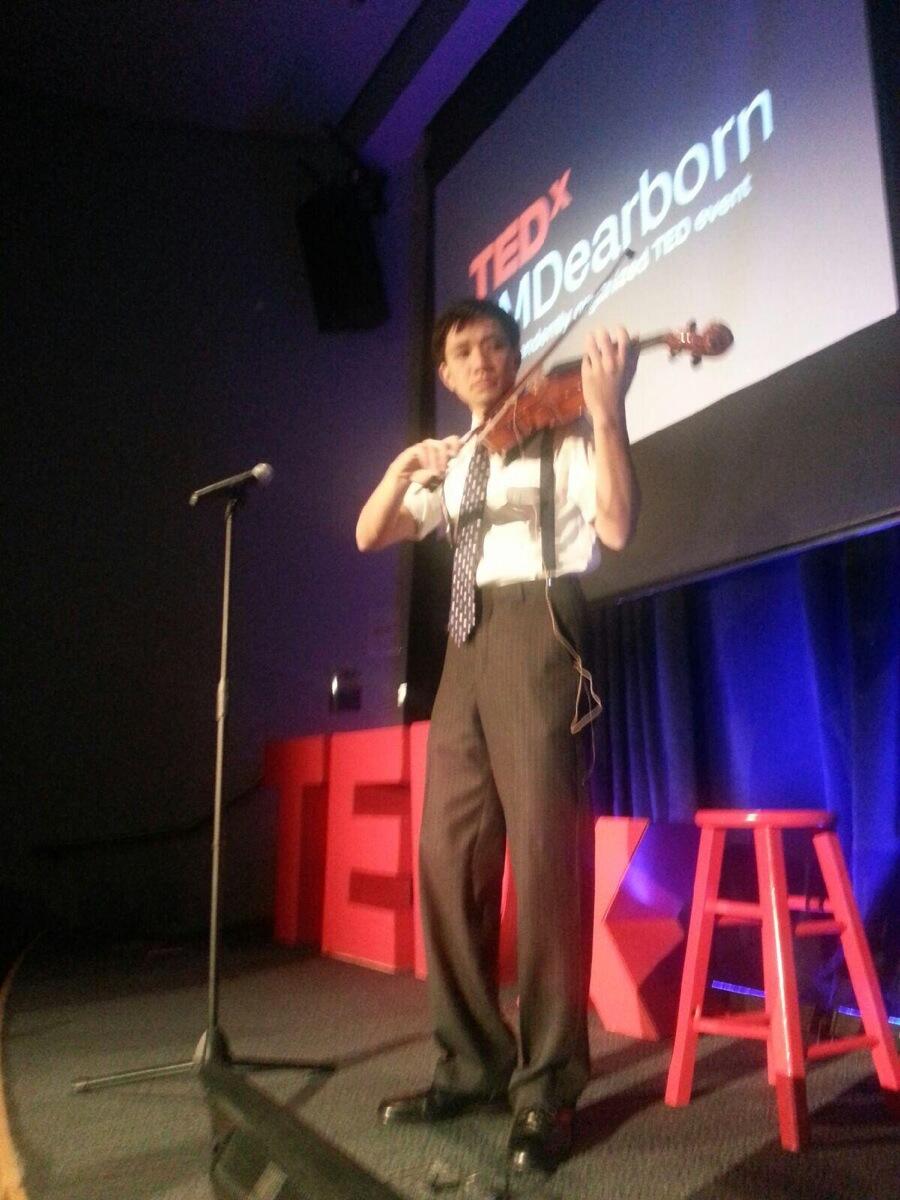
Yesterday I presented and performed two pieces for TEDX UM-Dearborn.  Here are my observations from the event:
Image credit to Greg Ezzo on Twitter

-As with every performance, I learn about who I really am in the moment from what I actually prepared and what I chose to use

-Virtue in performance (for what I mean, here's a statement on virtue in music): 
Everything I really prepared for came through fairly intuitively.  What I hoped but failed to thoroughly prepare for didn't manifest itself clearly when spoken under pressure.  I'll acknowledge that I didn't project my voice sufficiently too.

Granted, there were a fair number of curveballs thrown just before I got on stage:
I was asked to shave 5 minutes off of my time minutes before I walked on from a 12-15 minute timeframe, equipment wasn't readied for me to speak or play (amplifier and receiver was unplugged), and the timer was never started until I requested it about halfway through my set.  But what I've learned from this and previous trials and performances: you find yourself when you push yourself.  I learned on stage what exactly I had internalized and what I had yet to embody.  I'm certain learning to prepare for that better comes with time, additional exposure, and follow-through on not repeating the same mistakes.
My remarks were written in strategy language--they represented the content I sought to intellectually convey, but they didn't represent what I needed to say to human beings.  In my strategy work with the Ismotion/WorldByCycle team we've realized the same thing: every time we got stuck in crafting our business pitch, it was because we no longer wrote words that meant something to most English speaking human beings.  To bring stories to life, one needs verbs, not nouns to move us forward.


-I'm getting better at building emotional solidarity with audiences, but there's a threshold where the enthusiasm and emotion stirred up in my performance-presentations needs to match the integrity of the wisdom I strive to convey.  My intentions for the performance was to show that attendees had both a privilege and responsibility to take whatever they found inspiring or useful and share it with others.  At the same time, I hoped that bringing statistics about environmental health and air quality in Detroit/Southwest Detroit, and the "digital divide" (how the event required online applications in an area where digital literacy and access to the internet remains very low) would also spur lasting attention to bigger systemic environmental and digital justice issues.

-At an event like today's, innovations in emotional technology (how we get people to connect and humanely relate to each other) ought to be coupled with ethical intellectual food for thought of equal or greater quality as well.  I have an opportunity to educate a community.  Using new devices for engagement stays in the heart's memory, but sometimes a clear logical statement can help the mind stir the heart as people wind down from an event.  As a former debater, I know what a logical presentation and argument looks like.  While I wasn't at TEDX UM-Dearborn to debate, I did come with a message to assert.  I don't think it was done as clearly as I'd like, but I'm at peace with it for now.

I'm pleased to learn from various attendees who shared their thoughts (especially from Alex) that the concept of taking inspiration and carrying it forward beyond the event was clear.

-Seek out and listen to the people who didn't get your message(s)
Accolades and enthusiasms are wonderful and deeply appreciated, but in finding ways to refine how I communicate, it's best to engage those who didn't appreciate or grasp the points I hoped to convey.

-Prepare 2x more
For performance presentations that require solid grounding in data and ethics, it certainly takes twice as long to prepare.  In order to use the opportunity well, I need to do two things: Prepare the speech and practice the speaking/audience engagement, prepare the music and practice performing it too.

-That said, I enjoyed sharing it--in the future to prepare for events that charge a fee for attendees, I'll be sure to offer more opportunities to friends/the public for test-running my presentations/performances in progress.

-Unlike featured speakers for the event, I didn't have a dedicated speaking coach assigned to me and have yet to find one I'd trust on my own.  However, thanks to the generosity and attention of friends and the broader community, I was able to practice my remarks (a brief 3 minute or less speech), and sketch out how the presentation aspect blends into the audience participation & performance aspect.  

If you know what to look out for and can ask others to keep you accountable, it's possible to sharpen what you do without a professional coach.  I've been fortunate to have various professors, classes, and extracurriculars which helped hone what I pay attention to for better public speaking.  But without the keen attention, enthusiasm, and support of many friends and amicable acquaintances, I don't believe I'd have refined my message as well as I did.

Many thanks to Sara C., Megan M., Bear, Scotty, Thomas M., Marty S. and all those who shared their attention and insight.


Also: sometimes straightening out another person's collar when they're unaware can be as good as getting a hug from a dear friend.  I really appreciated Ryan K's keen eye in helping make sure I had my tie under the collar before I went onto state.

Pushups helped, I don't mind how odd it looks to others, I did a quick set of pushups a bit before going onto stage and it was worth it.

Wednesday, December 19, 2012

Mit Humor: Mental illness and our capacity for hocma


“What we need to match the science of human health is what the ancient Israelites called ‘hocma’—the science of the heart... the capacity to see... to feel... and then to act... as if the future depended on you. Believe me, it does.”-Bill Moyers

Some of the most evocative artists also happened to have very severe mental health challenges.

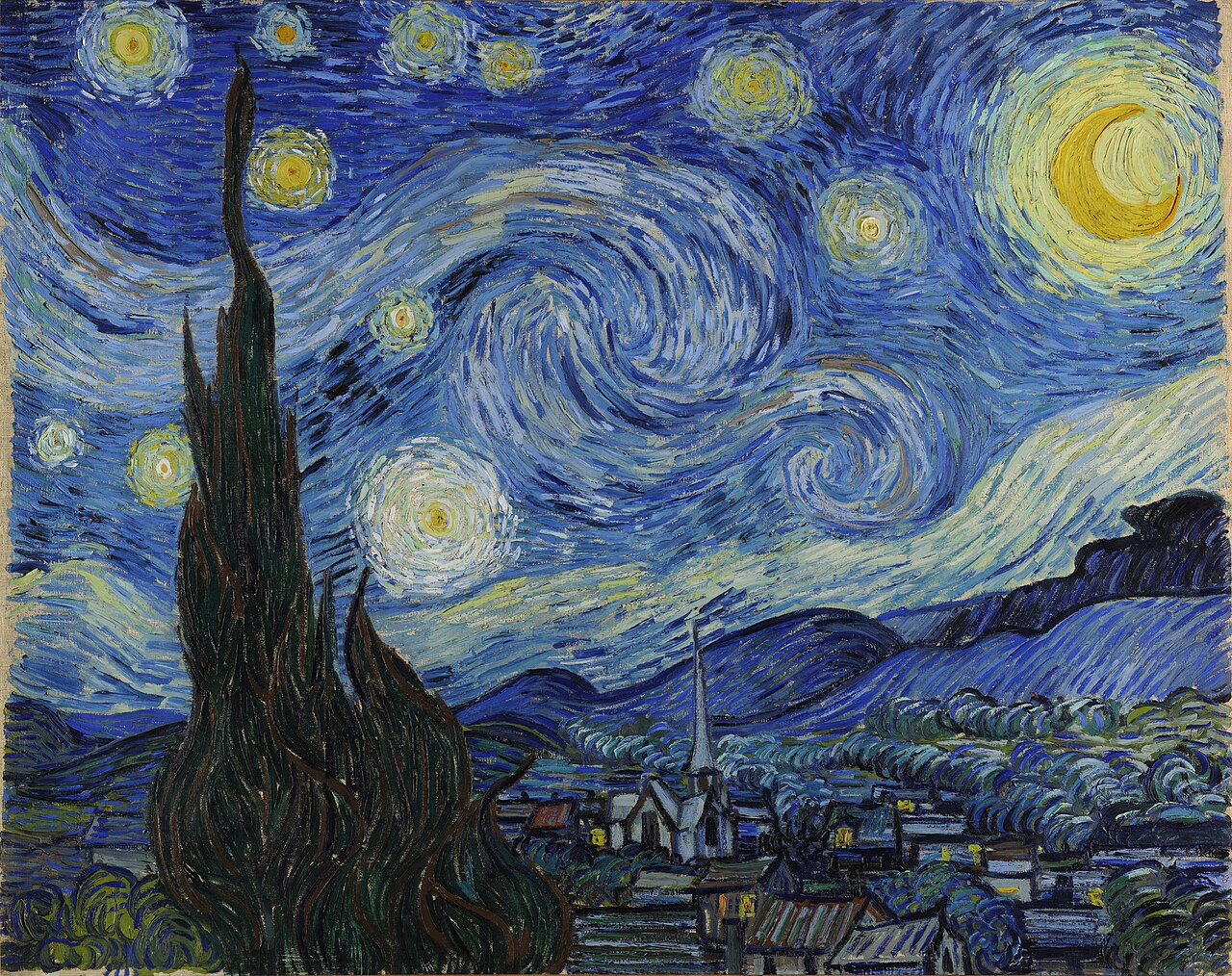
Vincent Van Gogh (of starry night fame, among other paintings), would be labeled with bipolar disorder, schizophrenia, and a host of other illnesses (those who want to point to his missing ear as possible evidence of mental illness may need to reconsider recent interpretations of events though).

Recently, I've had a cello tune by Robert Schumann visiting my head with vigor.  I first learned and listened to Schumann's music via a recording of his "five pieces in folk style" performed by the cellist Natalia Khoma.  The piece that really stood out was the first from piece in the set labeled with a brief suggestion in German: "With Humor" (Mit Humor).  I really liked the tune, but always imagined it had an adversarial kind of sound to it.  Now, with the benefit of many years of new experience in performing and the wonders of youtube, I've listened to several other performances of the piece and decided that the piece is challenging to play with humorous conviction unless you're in a REALLY good mood.

While searching for other recordings of the piece, I noticed one youtube playlist that contained a lot of Schumann's music was titled "Music for a troubled mind."  After a brief search on Wikipedia (and elsewhere, but Wikipedia was most accessible so I'm giving it credit foremost) about his life, I had confirmed my suspicion that he too, had a rough time grappling with life on the now and then.

In some ways, I was disappointed, there's a research article with a disempowering title called "the dark side of creativity:" and a subtitle that says "vulnerability and negative emotions lead to greater artistic creativity"[1], Schumann reaffirmed its findings.  At the same time, I was relieved:  over a hundred years later, living people actually perform and presumably enjoy listening to his music.

Realizing that, I'm reminded of a pondering that started earlier this summer:  how many people actually wanted to be with Van Gogh or Schumann not because they enjoyed their works, but because they knew they were ill and truly wanted to understand, or possibly help them?

The current media buzz from recent shootings suggest that we as a public are quick to impose a label and therefore, imbue an identity onto another person.  When we refer to people with mental illness who behave poorly around others or worse yet, commit injustices, we strip away the complexities of their history, circumstance, and potential as people.  In light of shootings like the Colorado shooting that took place in the theatres, or the recent shooting at Sandy Hooke elementary, people say "that's sick" with sneering hate in their voice and tones of disbelief.  Yet they forget what it means to be sick.  Killings of that sort are certainly inexcusable and unjust acts.  But in saying someone is sick under most circumstances, we'd hopefully recognize sickness as a state of poor health with the intent to improve it to a better condition.  We rarely say someone's an absolute loss and dead already.

In instances of the shooters in the aforementioned incidents, one of them (James Holmes) looked like he was in disbelief about his circumstance and actions during the trials, the other (Adam Lanza) had been killed before he went to trial.

While it might not be accurate or true to the circumstances of the previously mentioned criminals, I'll offer an unusual perspective as a possible ingredient for empathy:

Some people hurt so much that they wish they'd do something to deserve the pain and shame they've felt.  Why?  Because they don't understand where it truly came from, why it happened, or what they can meaningfully do about it.  Sometimes the confusion, pain, and anger are a legacy of outcomes from bullying, terror, neglect--abuse.

At the same time, recovery has little space to exist in our society.  We delegate responsibilities of care by sending people to hospitals or rehabilitation centers.  Often, they're cut off from people whom they might actually need for humane interaction that goes beyond vital statistics, food delivery, and psychiatric testing.  This is a similar challenge that prisoners face.  Granted, they're frequently inexcusable and still responsible for their own actions, but I've met enough to know that there are some who also want to live as better human beings for the sake of others in their community or family.  One of them is a mentor of sorts to me and many others at the University of Michigan-Dearborn.

Furthermore, we're in a society where meeting sophisticated social needs frequently becomes a rare occurrence--mental healthcare for many is inaccessible if it means we must invest burdensome financial capital and traverse great distances to reach whom we'd hope are vigorously trained and keenly attentive health specialists.  But what happens if therapy amounts to paying for the privilege of talking to someone who just might choose to offer you medication instead of helping you embrace and resolve your conflicts?  Our fundamental intentions with most of these sessions come from a deep desire to meaningfully communicate with another person in a safe environment, and know that someone else cares about your well being.  These "specialized services" happen to be many of those that people ought to expect out of a good friend.

Let's consider a line of questions:
1) When someone we know grieves because a loved one died, what's the likelihood that they'll do so in a way that can't be described as some kind of illness?
2) What accurate ways exist to gauge one's mental health?
3) Will that person remain an injured and fatally broken person forever?
4) Does a state or institution have the right to take them (and in turn, impinge upon their freedoms) away from the rest of the world away by labeling them as "sick" or "mentally ill" for suffering humane experiences?

Sometimes, you'll discover that they too, deeply wish to get better.  I suspect in severe cases, more often than not, they've had to confuse themselves into believing they're unworthy of aid and redemption.  In my case, I think it's a form of shame and self-hatred that some people are willing to perpetuate because they don't really grasp an alternative reality to how they can live and who they can be.

When someone is ill, the rest of us also have choices that actually challenge our perceptions of responsibility as a community:

Do you take up apathy?
Will you let them continue to suffer?
Will you embrace their challenge and aid them to get better?

If you want to live in a better world, these questions become your charge and duty.  If you're preparing for fields in medicine or justice, this is the challenge you're charged to meet at any moment, sometimes through witnessing subtle realities slip in and out of a window of opportunity many times in one day.

I started to write this post around December 19th of 2012 in reaction to realizing that a talented and fun loving person who quickly and, likely, genuinely considered me a friend did so as I was still wondering if I was in stable mental and emotional health.

This brings me to a quote from Bill Moyers which you've seen at the beginning of this post:

“What we need to match the science of human health is what the ancient Israelites called ‘hocma’—the science of the heart. . . the capacity to see. . . to feel. . . and then to act. . . as if the future depended on you. Believe me, it does.”-Bill Moyers

You may be the only individual with the privilege of interacting with someone who suffers from mental illness.  Recognizing that possibility exists, even brief encounters with other people can define your relationship if it's no longer sustained. I've come to believe we're obligated to make sure we've made a positive difference in other people's lives whenever we're privileged to reach another person.
"Depression is real. Just because you’ve never had it doesn’t make it imaginary. Compassion is also real. And a depressed person may cling desperately to it until they are out of the woods and they may remember your compassion for the rest of their lives as a force greater than their depression."-an excerpt posted on an online social network by someone who pulled a quote from the depths of another social network
I'm convinced that many people with mental health challenges also contributed some of the most profound ideas, expressions, and acts of compassion known to history.

Van Gogh, Schumann, I've mentioned before.  There are more I can list, but I'll choose Buckminster Fuller as the closing example for his resolve to do something out of what began as despondent angst:
"He ultimately chose to embark on 'an experiment, to find what a single individual [could] contribute to changing the world and benefiting all humanity.'"
Just read about him, he made amazing things and had great insight for design/complex systems theory.
[I don't completely agree with his techno-centric vision, but he was certainly prolific and lived a life worth knowing something about-read the section on his depression and epiphany for the segment that most.]

Now on the converse, you don't need to be sad, immensely depressed, or ill to do great things. If that's where you're at great! As human beings however, we're capable of it all.  Can you make the most of life and see what you can do with the hearts of other people?

Research doesn't tell us the answer, the actions you choose to live for do.  It's up to you to hone hearts, to do what the future depends on you for.


[1] The Dark Side of Creativity: BiologicalVulnerability and Negative Emotions Lead toGreater Artistic CreativityFor just the abstract: http://www.ncbi.nlm.nih.gov/pubmed/18832338
For the paper: http://psp.sagepub.com/content/34/12/1677.full.pdf+html
This might be useful solace for some:
http://www.storiedmind.com/recovery/patterns-recovery-depression-ptsd/
On the composer Robert Schumann:
http://en.wikipedia.org/wiki/Robert_Schumann

Link to Schumann's five pieces in folk style, with humor (the video's already embedded above):
http://youtu.be/DBDHOOBoNuA


Friday, September 28, 2012

Didactic Artistry, Socratic Artistry?

Since November of 2011, I sought to certainly create more than I consumed, and accompany any broadcastings/re-broadcastings of my own work/lesser known work with explicit writing about something that I learned from the content or the circumstances surrounding whatever it was I created (see the text accompanying my youtube videos and soundcloud clip).

Better to ask questions in the School of Athens right?
A noble endeavor perhaps, but certainly cumbersome, sometimes burdensome, and for the most part, incompatible with the amount of things I created or found/re-discovered.

In opposition to sporadic postings of things I found (for an extreme example of what I'd call hyperbroadcasting, take a look at almost anyone's tumblr account that re-blogs material sans interpretation), a didactic approach to the arts almost threatens the notion of "art for art's sake".

Yet I also believe that as a form of communication, the arts have remarkable capacity to convey explicit or implicit information, and that many pieces that we enjoy and share sometimes do benefit from pointing to worldly context to enhance our appreciation for the world, or deepen our awareness with troublesome issues.  Based on the following statement:
"Art ain't about paint. It ain't about canvas. It's about ideas. Too many people died without ever getting their mind out to the world." - Thornton Dial, SR. [a folk artist whose quote is on display at a national museum in Washington D.C.]
I believe the integrity of a good idea withstands any questions about value and utility given appropriate context.  In the arts, you need only one of the three for an idea to appeal:

1.  good idea/intention
2.  good conveyance of an idea
3.  relevant circumstances that make parts of an idea more appealing

If you conceive and successfully create something that meets all three of these conditions, it's a wonderful piece and timeless adventure for anyone who has the privilege of experiencing it.

I'm backlogged almost beyond hope with incomplete broadcasts of ideas and pieces, and especially with neat findings of music, film, or imagery chiefly due to the fact that I start to notice that share common threads with other things I've done or seen (time constraints and other obligations being the other contributing factors to this backlog).

For a time, I considered just posting these out of the blue, but doing so degrades the novelty and joy of broader thematic discoveries I had for myself.  This evening, I realized: why not lay out the individual pieces and disclose that I encourage people to find and share any bigger themes they may  come to discover in what I've shared?

A savvy educator usually uses questions to uncover inspiration, appreciation, deeper inquiry, discovery, and understanding about the world.  Yet art also elicits many of the same outcomes in ways that don't necessitate the immediate presence of an individual to ask these questions.  We can communicate and stir the imagination of another person by sharing something that speaks to us.

What happens then, when we recognize something bigger about the things we appreciate?  As in, we've gathered enough information to discover a new level of themes and content among the individual pieces we love?  Can we guide imagination?  I think so, though the process must be done with ethical cognizance.

This is a bit like the success of the Socratic Method (thus the second half of this post's title), which uses a series of questions toward an individual/ group of people to examine the soundness of their foundational beliefs.

More accurately, what I've resolved to explore is a method of sharing glimpses of insight in a way that's akin to a Japanese style of academic essay composition (at least, according to an informational video for writing consultants I saw while working at the UM-Dearborn Writing Center about English as Second Language writers circa 2008/2009).

So here we go, will you kindly share your thoughts with me?

#Started 01:37 27 IX 2012 finished 3 X 2012 0:37 at home

Tuesday, May 22, 2012

Glass, class, consumption ethics and cash

Among things I never imagined doing, making jewelry in college ranks high on the list.

The course was actually a natural science class that's open to the community as a workshop too. We learned about the chemistry and physics that go into near-alchemy glass phenomena. In addition to the physics and chemical reactions behind glass working, I learned fundamental techniques for crafting glass beads last semester. By the end of the endeavor, I realized I was working with serious materials that could place me alongside competent and professional jewelers (indeed, at least one of the people in the lab, Katherine*[spelling?], is a full-time artist and jeweler).

Many of our glass rods came from exotic and esteemed places like the Murano district of Italy and China (perhaps exotic for those not numbed by globalization). Our instructor taught workshops at the University of Toledo's glass museum, and I worked with 22 karat gold leaf, sterling silver, and stainless steel.

The glass gets its color based on its chemical contents, and sold as glass rods. Heavy metals (things you don't want to ingest a lot of like lead, etc.) are frequently used as opacifiers (to make the glass less transparent). History holds that some antique yellow glass vases would glow in the dark because of the uranium in them (I hear from other classes and conferences that uranium ore is yellow too). When we work with a "cobalt blue" rod, it appears cobalt blue especially because the rod of glass contains a fair amount of cobalt silicate or cobalt (II) aluminate. I'm guessing that it's a radioactively stable isotope of cobalt. For beads with lead content, I now tend to seal beads with clear glass in case any potential health concerns do manifest.

The blue striping on the beads/pendant
is "cobalt blue" (contains cobalt). The
pendant is suspended with sterling
silver, the crimps for the clasps 
are sterling silver as well, and
the beads are threaded with
stainless steel cable. 

Enough back story: At the end of the semester, I came to enjoy working with glass, made some nice things (turtles!), was required to make a necklace for the final project, was left with a bundle of glass rods, and invited to join the summer workshop and Southeast Michigan Glass Bead Maker's Guild.

As much as I enjoy glasswork, a few concerns arise.

1) As a class, we use about 5 tanks of acetylene (a natural gas) in one semester for our torches.

2) Globally, gold contributes to over 90% of mine production, and I suspect the precious metals and steel we used were not from recycled.
(Here's the No Dirty Gold report I sourced that statistic from)

3) I definitely won't use a lot of the glass for myself, but if it's worth it for someone I'm very glad to make it. However, I refuse to craft kitsch.

Disclaimer: In some ways, I dislike getting into classical conservation issues like recycling and the accelerated anthropocentric climate crisis. They tend to boil down to basic education and responsibility, and people get pigeonholed as a very different kind of person known as an "environmentalist". Recycling and climate change tend to miss a bigger picture in the scheme of life: we all have responsibilities that cannot be delegated to specialists. You don't delegate your day-to-day responsibilities to a professional ethicist. Likewise, there are basic things that everyone can/should do that are not to be left for someone else to clean up after. Responsible environmental actions are a necessity in everyone's life, the difference comes from the degree of insight, scale, and influence we knowingly interact with. You can go to an environmental scientist for insight, but don't forget about the learned perspectives of everyone else in society.

1) Back to point 1 about natural gas consumption:

The first point probably has a stereotypical and common set of reasons for an environmental science major to be worried. Anthropocentric greenhouse gas combustion, natural gas consumption, which ties back to extraction (increased demand for fuel can add to impetus for fracking in the Great Lakes region [I'll acknowledge natural gas as an enticing transition fuel, but when we get to the science of risk, impacts, and industry response, it's very challenging to justify considering the proximity of these operations to our local drinking water supply]).

2) The second point really makes it meaningful for me--I've met people face to face, shook hands and embraced people who underwent (some continue to undergo) environmental injustices in Appalachia due to mountain top removal coal mining. Contrary to what most people would assume, they were still potentially willing to mine coal in other ways even at the risk of black lung disease. They weren't willing to see their fruits and neighbors die from toxic water or silicosis.

3) Furthermore, people can only wear so much jewelry at a time, assuming that they'd even want to (I for one, barely wear a watch, and do so for practical purposes). Again, I refuse to craft kitsch--it's frequently devoid of substance and rarely authentically communicates one's intentional assertions of self-agency.

I find beauty through intrinsic and extrinsic circumstance of an event or entity--when both are there, it's magic. Simple, complex, mysterious all at once. Glass as a medium captures this. The art is visual and for the creator, kinesthetic as well. I recall a [paraphrased] quote from a master Murano glass maker (sorry, I don't recall his name, he's in an early video about the history of glass making in 1960s): 

 "glass is the only medium I know that can be hard, yet fragile and malleable all at the same time". 

I'd take it further and apply it as a fair symbol of the human spirit too. It's origins are inorganic (in a chemistry sense) yet natural and artificial (in that it is frequently created with human intention) too.

A process such as glass work on a small scale is intricate, introspective, and takes more time and effort than the finished outcome may suggest (realizing a cat's eye marble is probably made by hand still surprises me). But as a process, it is fleeting and enrichment is particular only to the individual engaged in its creation. If I'm dissatisfied with the intrinsic nature of what I've made, I'm presented with a few challenges. Can I imbue substantial extrinsic meaning into what I've done? This then becomes a tenuous endeavor akin to marketing what we don't really need. At the same time, I'm looking to pay off tuition and attain more stable living conditions.

Curious to know the context of glass bead making among fine jewelers, I started looking around. I found several jewelers pricing two-bead earrings around $60-$80 a pair, and that necklaces can easily reach $800 or more. Considering the potential time, effort, energy and materials it takes to make glass, this actually makes sense.

That's right, we (you the reader and I) now enter the domain of "what's it really worth" we now ponder if a balance can ever exist between the priceless value of experiences and stories, the worth of the intrinsic materials, and whether the experience modifies the value of a material item. Indeed, there exist companies which drive so much into developing a "culture" and identity around their products, that their value is appreciated for the story.  Surely the existence of an active customer fan-forum can be considered a milestone of success in enterprise. In the bead industry, see trollbeads.  For parallels in consumer technology, I'll merely mention "apple"; video games: "halo".

Perhaps the greater creation behind these individual trinkets comes from the creation of a dynamic, living entity: the "community" which sustains meaning through the extrinsic discussion, exhibition, criticism, and occasional exaltation for particular items, artifacts, and ideas.  The strength of any community belongs to the domain of invaluable relationships.

While capitalism and money may be myriad topics fraught with issue for deeply contemplative and compassionate comprehension, I'm convinced that the lifeblood of these systems amounts to a beguilingly simple notion: trust.  I suspect most economists consider the value of our currencies, even an individual or institution's faith in a good, service, or market resilience rely upon trust for arbitrary interest rates and belief in economic dogma.  Yet the injustices inherent to both of these systems tend to violate the very basis of my conjecture for money and capitalism!

We must be looking at a wicked problem in its most worthy sense...  [A wicked problem is a special kind of problem for complex systems thinkers.  The link goes to previous posts that discuss or at least tangentially mention wicked problems with useful external links for more specific characterizations of wicked problems.]


Saturday, January 14, 2012

Ahhh, beautiful...resume!

I recently applied for a campus job as a lab proctor.  Even though it probably didn't require much (entry level, high school degree, computer skills, good disposition for friendly service* [*that last one is actually a scalable quality--for an ethical individual it demands as much as you can put forth and, in my opinion, can make a huge difference ]), I decided to explore some new ideas with my resume.

It worked so well, I got an interview before I even finished writing the resume!  Actually, a miraculous set of coincidences and other events resulted in getting an interview date set up as I was still typing the resume--a story worth telling in itself--but I digress.  I hastily incorporated these ideas into my #1 resume (for longer-term employment prospects in corporate sustainability consulting) and the image above captures the outcome.

There are four new(ish) things I feel somewhat successful in implementing/addressing with this new edition of resume:

  1. Can you make your name more memorable?  This part was inspired by Rachel Dearborn's wonderful resume--a real eye opener in so many ways for me.
  2. How can you organize your information better?  I'll attribute this to a friend, Sarai Richter, whose resume utilized a two column layout (it almost blew my mind when I first saw it--"You can use the page like that!?!  Wonderful!").
  3. Can people check out what you've done?  This is my own innovation--perhaps other people have done it elsewhere, and credit to them, but I came across this on my own.
  4. Serif/Sans Serif font use.  Huh?  I've got Palatino Linotype and Calibri (or maybe Shruti, I don't remember which I chose for this) in the same document.  Sans serif fonts tend to be associated with futuristic things, and seem to read more quickly.  In a way, it reminds me of handwriting:  people who write in ALL CAPITAL LETTERS TEND TO GET THINGS DONE WITH A STEADFAST, BLUDGEONING STYlE, while those with all lower case characters tend to have a more subtle approach. Yet those who do BOTH seem likely to mix it up in moderation.

Friday, August 13, 2010

New pardigms for walkability--the 2007(?) Saturn Ion commercial revisited

WHOA! A friend suggested "walkpooling" for school children in the Dearborn Sustainability Master Plan, and I then remembered this 2007 Saturn Ion commercial where all the kids and a bus driver were walking on the street sans the bus (at 0:39 seconds):


Watching it again with a new paradigm for walkability in cities, a better understanding of infrastructure and sustainability, I can't help but think that it's a bit ironic and hope that it's a bit prophetic too.  You may ask, "Ironic?"  Think about it, this commercial came from a car company--even though I owned a Saturn and loved it--much of our road infrastructure and city planning (especially for those living in Michigan--even more so for those in Southeast Michigan) was designed around car transportation by the push of the Automotive industry.

Feel free to converse with me in person about the gritty details, I think a lot of people in the Automotive sector are trying to do the right thing at this time (though it may be a bit late) and don't want to unfairly characterize the efforts of the people who are doing good by giving the darker aspects of the company's (GM's) history here).  That said, James Kettering (of GM and also Kettering University's namesake) had a big role to play in shaping a worldview for consumerism, and I suspect not being able to afford a new car over other things has a lot to do with the skew of hyper-consumerism in the economy.

That said the same time it's an outstanding teaching tool for grasping how much attention and space is devoted to vehicles rather than people.  That's the beauty of this Saturn commercial.

It reveals how we approach the way we travel, and where we go to do the things that make up our lives.


It's not always apparent, but when we look at how cities scale their roadways, it tends to be done with respect to making it convenient for a car rather than the people in the city.  In my end of Michigan, there's a fair number of people scraping by to get to work via car, even I commute over a hundred miles almost on a weekly basis for school and work.  That brings a big question based on a plausible what if:  What if we couldn't take this kind of long-distance transit system for granted (say, gas is too costly)?  How can we make the immediate locality--the place we live in--more vibrant and economically resilient?

The Saturn Ion commercial captures an intrinsic truth about human travel so well that years later even without the company's existence we can look at it as an opportunity to rethink walkability and livable communities. In case you were wondering, this is one of those rare "blew my mind with a new paradigm" moments.

Sunday, June 15, 2008

First Post, First Blog, and First Thoughts

Salutations reader,

My name is Ian Tran. I'm from Michigan, which is surrounded by [most of] the Great Lakes. Being a resident of this area, I take pride in our close proximity to fresh water (in Michigan, you are never more than six miles from a body of water), and the erratic weather that we and our fellows from neighboring geographies (let's not forget about nearby states and Canada) experience.

Starting this blog, (this is my first) was intimidating, especially after looking at other people's blogs moments before creating this post. Questions abounded even when I set up my account information, but chiefly I wondered about these two:

1) What is this blog going to be about?
2) What should I title my blog?

At first, I had the inspiration to dive right in and post random thoughts, items, and clips--and there was nothing to stop me except for my research habits nipping at the back of my mind. So research I did, and as I read through other people's blogs, I was impressed to see that some individuals and companies would treat their first post as a kind of thesis statement to their entire blog, mission statement, or philosophy. Of course it made sense to do so, but could I find something greater that overlies or underlies the things I love to think about and share? What exactly are these things?

My answer soon became apparent as I continued my studies as a student. Having interests ranging from the arts to the sciences and numerous things in between, I realized that what typically brought me to appreciate them was either having the privilege of experiencing it firsthand, or by learning about them through effective communication. So that's what I plan to do, I'd share some of my experiences, communicate a bit about communication, and go about my usual business of pondering as I go along.

Time for the title: Light Telecommunication
Right away, I knew I would mostly be writing in brief about what I've found or thought about on a blog. At the same time, I also knew that I would probably want to share something that seems particularly enlightening to me.

I made a violin piece titled Light Telecommunication last year which references several forms of communication technologies within the music. When I looked at all of the available definitions for the words Light and Telecommunication, the available choices were particularly fitting for identifying what I hope to do with this blog. Hopefully, we won't have to adhere to one particular set of definitions for this title to convey a satisfactory meaning. See for yourself, both hyper links go to the respective definitions found at dictionary.com. There's plenty of variety, and yet we have a notion about what we may or may not expect to see.

So why would I be so passionate about communication? I'm currently listed as an environmental science major, and my interests frequently involve the arts, outdoor recreation, and the occasional bit of science fiction or mythology.

I believe our desire and capacity to communicate is what makes us human. As described under the blog title, communication is a part of everything we do. Even the arts (music included when I say arts) communicate information, so long as we consider what can be learned from the experience. A brief look at some definitions about communication (again I cite from dictionary.com) and we'll find that communication can be:


The imparting or interchange of thoughts, opinions, or information by speech, writing, or signs.


So if I feel like posting a poem, an art piece, or something else I found interesting without much explanation, I'll be doing some light telecommunication. If I've felt particularly enlightened by by something I want to share in detail, I'll also be doing some light telecommunication.

Best wishes,
Ian D. Tran