Showing posts with label politics. Show all posts

Wednesday, April 29, 2020

"Storytelling is inherently political"

"Storytelling is inherently political--and you have to draw your lines as to where your politics are. Even if something seems like a step forward in your career, if that's so many steps back in your perspective or your morality then you're losing the very thing you might have inside you that might be worth sharing with an audience."-Brit Marling

Those first four words stayed in my mind for years--to me, politics is about the articulation of desired action (because face it: a lot of politics is about how people say things and look rather than what actually needs to be done and how).

We might not think about it, but sharing a bedtime story says a lot about what someone believes or wants to believe:

That a child might trust in the vision we share with them. That we have the right and duty to take time with someone we care about to create or visit a world that few people get to see.

But if we're to believe the rest of the quote, you must expose yourself to new challenges and responsibilities as a storyteller:

It implies there's a level of will and preparedness you (and your community) need to muster in order to stand by what you care about to maintain those boundaries.

Sometimes you won't have the strength to do it on your own, but if you're fortunate, there will be folks who choose to stand up for the same because they know the story also speaks the truths found in their own lives too.

Sometimes, the best stories to tell are the ones you craft and share together.

......
"Storytelling is inherently political--and you have to draw your lines as to where your politics are. Even if something seems like a step forward in your career, if that's so many steps back in your perspective or your morality then you're losing the very thing you might have inside you that might be worth sharing with an audience."-Brit Marling 16:25
https://youtu.be/1H79-O1IxFA?t=985


I've heard this before but at the time just the first four words stood out: "storytelling is inherently political."

Hearing the rest (and finally 
I think in past moments my hesitation to stake claims

was out of conflict avoidance--

while I can muster what's needed to defend my position

I wasn't confident that I'd have the energy to at the time


Friday, April 10, 2020

Politics, priorities, and proximity.

A while back when we had primary elections I mentioned I'd share my perspective on where my energy for political engagement goes. I appreciate the analysis on power and perspective for the choices and strengths or lack thereof among prevailing parties that S Claire provides here and add some own thoughts that haven't changed pre-pandemic.

Tl;Dr

I tend to focus on hyperlocal engagement. For most of us, our chances at seeing changes in municipal and state government + the odds of you being able to hold elected officials accountable are far higher assuming you actually have the energy, resources, and time to advocate.

If you're among the few people I know who actually work major campaigns/staff at the national level or for Super PACs, do a better job pf championing the authentic and often vocal grassroot priorities that are often raised by Bernie and even Trump supporters in the form of their basic needs and how their trust and voices were historically neglected, betrayed, or outright oppressed.
.......
I think there's something to be said about relevance and sense of connection among many of the disenchanted as the current candidates relate or fail to with them too.
When both candidates have a record of implementing and advocating for policy and causes that created real harm to your community, morality also speaks to proximity and there's a tipping point where it no longer ascribes to the larger impact calculus that comes with a Presidential election.
The most vocal Bernie left advocates tend to come from places where those harms are front and center. They are/were also typically already engaged in front-line advocacy/work that makes their capacity for building long-term power+relationships limited by nature of the crises they've been immersed in and entangled with.

Meanwhile more centrist/liberal/general progressives who tend to be in more comfortable positions for building power are either disconnected from the on-the-ground priorities, or the combative rhetoric and disposition for action among Bernie leftists makes it challenging if not offputting to see how they'll work together in spaces where stability, decorum, and composure might be viewed as key to building relationships and power.

So instead, a lot of folks turn toward hyper local politics or community work as the mutual gap seems too much to breach. At best, you might be able to find heart in swaying state and municipal/city politics.

But in a place like Detroit, people have been fighting for so long that they know the cards are often stacked against their favor unless there's a good personal connection who came from the neighborhoods and can cut through the bureaucratic dysfunction and favoritism that money and status often brings. While I still vote for the sake of recognizing the impacts and lack of accessible and substantive influence at the Federal level, most people wind up looking to their own place and find it more effective for what more or less is localized nationbuilding given the legacy of neglect to their community and people.

A crisis of crises; stories for shifting change


"Let’s chat y’all: do you bring up systemic racism when speaking of black people being disproportionately affected by COVID-19? Do y’all speak on the fact that some living in poverty don’t have access to things such as clean water or affordable healthcare? Do we consider that there are some black people who just CAN’T afford to stay home, and so they go to their essential jobs (who aren’t doing what they can to protect their employees)? Or are we just looking at the groups of people who are caught outside and say “Dang! Black people can’t do anything right 🙄🙄!”?
I genuinely would like to know. " -T

.....
Preaching among far more qualified preachers here but yes. Was on a association of public health professionals +national academy of medicine call yesterday and a lot of the solutions the docs are trying to lean on won't fly in most despotic Afrikan communities given the legacy and betrayal of trust committed by the medical system and US government.

The pandemic is a crisis that highlights the ongoing crises that so many communities were already facing.

The fact that the food system, thread workers, all the minimum/below minimum wage jobs happen to have essential roles says so much about the legacy of slavery and what our country still relies upon for making itself seem functional.

People still pick tomatoes for 50 cents per the crate, and most of them are brown migrant workers who have limited to no legal rights in the US.

Mask makers who have the privilege pf volunteering to create low for the public and maybe some hospitals would be paid 5 cents per hem in the LA sweatshops where my grandmother and aunts worked during the 90s, and about 10 or 15 cents per garment if they worked for American Apparel in 2015.

They're literally subsidizing the externalized cost of incompetence, negligence, and greed among hospital administrators and the Federal government who prop "free market" economic opportunity for exploitation of profit amid crisis over people. Even the mask shortage is an economic reason rather than because of a public health priority.

...
There's a powerful opportunity with a moderately open window to sway folks in say, a suburban setting, to understand and empathize with what it's like to navigate fear and crisis. From this end, the biggest challenge is mustering a gentle heart and emotional presence to guide those fears while handling what's typically more than one's fair share of fragility around race and other iterations of inequity.


.....

There's a professor who shared a really useful framework I think often about for advocacy that informs what kind of skills and information are needed to be effective when speaking to poverty.

Poverty can be looked at in three ways:
1) personal stories --what it's like to experience poverty
2) as a measurement/index/bureaucratic definition for policy
i.e. average median income; academic concepts; government/legal definitions
3) the systems that tend to create the stories

I choose to look at it as a triangle or three-legged stool: you need all three in order to create cohesive systemic change.

We need patience and support to cultivate emotional solidarity and labor to empathize and connect with people.

We need patience, a lot of resources and a certain kind of keen language aptitude to wade into numbers and rules plus advocate without getting sucked into the system's red tape and political favors without losing your ability to step out.

We need patience to identify patterns and see things from small to big picture both as it is plus what the likely trajectory might be, and how to dance with changing or facilitating things that are far bigger than what one person, organization, or even community might usually want to move with ease.
And for most of us, that's something that we have and can practice to grow.

Monday, April 6, 2020

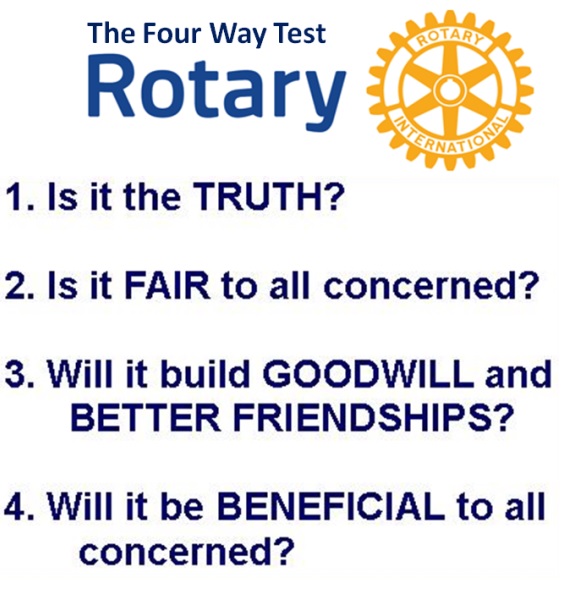
Will it build goodwill and better friendships?

[this is my open draft blog]

​Friends, if you believe there are gentle ways to speak challenging truths please seek them out, share them, and hold each other to a standard.​​

There's a quote that roughly goes "honesty without humanity is brutality."

​While we could say "it's never your responsibility to deal with how other people feel" the reality is that a lot of people are dealing with fragility that merits some kind of care​ as the instability from negligence and stress often leads to volatile and risky behavior when it doesn't have to be so​.

I can say so from firsthand experience if the literature on neuroscience, psychology, and leadership aren't enough.

Our society sucks at making that kind of shared vulnerability and opportunities for finding strength.
To me, the truth with proper context, is always good.

We have every right to be infuriated that our education systems, federal government, and the healthcare industry failed to prepare and present a cohesive strategy for us to navigate and protect public health. 
While it's important to learn and have the skills, people shouldn't have to scramble to become public health professionals just so they can learn how to protect themselves and their communities.

And I see truth in a statement by Brit Marin that says "all storytelling is inherently political" because politics is the articulation of desired action.
Western academia and science were designed for us to look at things, almost never for us to take action. Most politics as we see it on TV and at dinner table discussions winds up being more about appearances and what we want them to represent than solutions.
But we're in a crisis that pushes almost every other crisis many of us have been working to prevent or solve since this country came to be.

Sharing useful information while honoring the reality that people may be afraid or in need of comfort and psychological assurances is challenging work.
Most scientists deal with data but as they get deeper into their work know that the human connection and communication is where realities and appropriate action can be won or lost. 

Knowing is different from doing, so if you see a way we can communicate hard truths and uncertain risks with gentler hearts, please let us know wherever you see the opportunity as appropriate.

Meanwhile, here are our priorities as we see it for those who care:
1) Step up public health education for public health protections and for navigating the pandemic -- educating yourself? Good, seek multiple and contrasting--even conflicting sources. Try to reason them out + get help and discuss it with others.2) Support health care workers -- PPE, food, emotional support, opportunities to prioritize a life that exists outside of work
3) Support the community -- maybe it's checking in on friends or a neighbor with a call to see what they need, or advocates who are working to make sure residents in Detroit whose water is still shut off, or folks working to make sure prisoners can return safely with everything needed to make a second chance a success

Friday, March 27, 2020

Privacy and People in Policy: encryption and its connection to human trafficking

[originally written and put up as a hasty series of posts here during peak wave 1 COVID-19 madness: https://www.facebook.com/permalink.php?story_fbid=10113002978189293&id=2256689 ]

PART I

Two National Privacy-related (one youth human trafficking/exploitation centered) legislative bills worth noting:

1) EARN IT act -- end-to-end encryption vulnerability
I read about 55/65 pages of the EARN IT act which is centered on youth human trafficking/sexual exploitation and has a provision some privacy advocates are concerned would give power to halt end-to-end encryption.

Further analysis found in Part II.

In short, a committee of bipartisan appointees would make best practice recommendations which then become a bill + the Attorney General would be able to take some pretty bold actions to enforce.

More likely than not, the Attorney General or committee and bill would bw inclined to "shoot the messenger" (ban/take over end-to-end encrypted apps like whatsapp, signal etc.) rather than solve root issues like housing/functional foster care, employment, addiction/counseling, not penalizing the sex workers/holding the traffickers accountable, etc.

2) USA Freedom Reauthorization Act of 2020 -- renews part of the Patriot Act
USA Freedom Reauthorization Act of 2020 would renew section 215 of the Patriot Act and reauthorizes Section 215 powers Congress established under the USA Patriot Act in 2001.

Section 215 is the provision national-security agencies have cited to support their unwarranted collection of phone records of hundreds of millions of people in the United States. If I recall correctly, the method most people took public alarm to was a technically legal collection (metadata + triangulation) of data, rather than the individual's actual--so it's like stalking someone's life through their trash rather than going into their house to find out what they're doing.

See comments for a more detailed analysis.

[1] https://www.eff.org/document/earn-it-act
original introduced bill:
https://www.congress.gov/bill/116th-congress/senate-bill/3398

[2] https://www.freepress.net/news/press-releases/congress-tries-sneak-through-dangerous-spying-bill-under-cover-coronavirus
Have not yet read the USA FRA bill. Definitely haven't read the Stimulus Package and probably won't.

PART II
Privacy/freedom of speech advocacy notes in federal policy:

Congress is looking to renew the Patriot Act for data collection:
"If approved, the USA Freedom Reauthorization Act of 2020 would reauthorize Section 215 powers Congress established under the USA Patriot Act in 2001. Section 215 is the provision national-security agencies have cited to support their unwarranted collection of phone records of hundreds of millions of people in the United States."

And in what you'd think was entirely unrelated--youth exploitation/sex trafficking legislation--other folks are concerned that it's a push to cripple end-to-end encryption.

This was framed as a privacy rights/free speech issue by the EFF but I see there's a lot more to it after reading most of the bill--the bill is 65 pages long and in sentiment is decent: Why not get a committee to develop best practices around preventing the sexual exploitation and trafficking of youth?

Summing up the prevailing problem in one line:
The policy's still attacking the messengers, not the folks with the message.

Three things I see as issues with non-expert and possibly haunch-like skepticism:

1. Root Causes Remain Unsolved
Root causes like a functional foster care system, viable domestic abuse shelters and recovery (including mobility and basic housing for those who are trying to leave an abusive family and have a healthy place to live; counseling and therapy or addiction recovery support), victim protections* are probably not addressed.

Or if so, definitely not adequately--our country is terrible at addressing this and we still struggle to make the necessary changes last.

At best, there will be a report and legislation with best practices that might unify a few agencies depending on the administrative leadership that's been around. But how would the best practices compiled by committee differ from those identified by NGOs like Polaris which are still working on the same issues?
i.e. many trafficked sex workers wind up getting penalized more than the people that exploited them--Cytonia Brown (a child at the time of her sentencing) and another teenager (whose name I unfortunately forget but is still facing prison time despite being the victim) being very recent visible examples of this--and must bear more stigma while not getting support for their own needs much like how low level drug dealers wind up with the brunt of issues ranging from hard to cut gang ties and sometimes addiction
2. Shooting the Messenger, but Not the SourceAs EFF points out, this bill makes whatever the committee recommend turn into legislation, and while I couldn't find the specific sections in the bill (pretty sure it'll be somewhere toward the end of the first ⅓ of the bill in the 20-30 page range), the AG allegedly would have power to basically force encrypted web services like WhatsApp and signal to (presumably broadly) disclose private user information or just shut them down -- those are Messengers, not necessarily the source of the messages and it becomes a violation of privacy much like the Patriot Act
3. Does your elected official know how to use "the google" or how the internet works?Most elected officials don't really know how basic technology really works -- the committee would be made of lots of majority and minority appointees.
I.e. Mark Zuckerberg's congressional hearing is an unfortunate example in how incompetent the average representative and their likely chosen advisors tend to be.

Sophos security summary article

Senate Bill

EFF advocacy

Wednesday, December 26, 2018

The Chumbawamba Case Study

In the 90s, a British band called Chumbawamba suddenly became a hit in the U.S. (and probably worldwide, too) with a song called "Tubthumping", in which the energetic chorus "I get knocked down, but I get up again, and you'll never ever keep me down." becomes the soundtrack to the lives of youth as countless shows and radio stations play it on repeat.

Yet when you listen to the rest of their album, pointed and political statements fill the songs with themes that would be relevant to a lot of politically active people even today. I still recall hearing a recorded sample from one of the tracks with someone asking in testy tones: "what about free speech!?" and some bizzare training audio for washing out the brains of a cow, likely a suggestive nod to brainwashing in media.

Which brings me to wonder: of all the people who bought their album, how many actually listened to the rest of the album and its content?

So I looked up the band not too long ago and found they disbanded around 2014 to focus on -- guess what? -- their activism.


Most people in the U.S. are inclined to write the band off as a one-hit wonder, and the commercial stations and media spheres that surrounded its sudden popularity certainly made it so--but it seems like it answers a question I and many others tend to ponder:
At what point can the reach of your platform, storytelling, or media outweigh the need for impact?

If we consider Chumbawamba's commercial radio and record store (at that point, cassettes and CDs where the primary medium) success, their story might point us to an answer:
Some people were certainly switched on by the band when they realized how "music could be a political tool" (as one youtube user comments), but the novelty effect of becoming an overplayed hit on the radiowaves sometimes overshadows the genuine message and story of the group by the time it reaches certain audiences.


Tuesday, December 27, 2016

Poverty & Politics

An essay spurred by this article: "Poverty Doesn't Need Technology, it Needs Politics"
http://theconcourse.deadspin.com/poverty-doesnt-need-technology-it-needs-politics-1789520902

Something to agree with, something to disagree with, plenty to consider for whatever walk of work and life you're in right now.

The raw implied assumption with Silicon Valley superstar-studded tech entrepreneurship conferences and hackathons designed to "disrupt poverty" is that any economic mobility that emerges from a business can be a transformative step in uplifting individuals out of cycles of poverty.

That’s a broad but valid starting point. For anyone who wants an explanation for what makes the tech industry so special in the economic development/poverty halting debate: it lends itself well to attracting everyday people, investors, and policy makers alike because it lends itself to scaleability and visible success stories—you can almost instantly reach millions of people on youtube or facebook, without spending much money, if you know how to make and access the right advertising. It’s fast, lucrative, and easy to see results with larger-than-life personalities who are praised by the media for their daring and subsequent wealth.

For anyone who wants an explanation for what makes the tech industry so special in the economic development/poverty halting debate: it lends itself well to attracting everyday people, investors, and policy makers alike because it lends itself to scaleability and visible success stories—you can almost instantly reach millions of people on youtube or facebook, without spending much money, if you know how to make and access the right advertising. It’s fast, lucrative, and easy to see.

The same line of reasoning applies to why countries might welcome foreign businesses looking to "exploit" emerging markets in the name of economic development--consider China 20-30 years ago welcoming U.S. commerce, people considering countries like Vietnam today. Similarly, this is how some might see plus sides to speculation in the gentrification debate in major cities like Chicago, San Francisco, New York, Pittsburgh, or Detroit. There's a degree of truth to being the first to provide desired goods or services in a place that does not yet have access to them yet. Sometimes, it also does a lot to give people economic & social mobility. Being able to have a well-paying labor job and moving up into different areas of education and business sometimes happens, but it's becoming rare and there are also plenty of places in the world where opportunity for wealth (or even basic employment) will not readily connect employees to higher echelons.

Another Kind of Entrepreneurship [Still] HappeningIn most cases, when someone can associate widespread need with a business opportunity it's easy to associate the potential for wealth with potential for economic impact, but they're not the same thing.

At the same time, there are lots of businesses that aren’t powered by smart phones or big data which still need attention. Whole chunks of the U.S. remain about 30 years behind metropolitan centers in technology use, and many of the needed businesses in those communities will never be visited by a Silicon Valley company. It’s easy to forget that a significant sum of businesses still make the backbone of most communities in the U.S. are small to medium sized businesses that we probably take for granted or forget about:
An immigrant Korean-American family opening a dry cleaner.
A Black family opening a small produce market in a neighborhood of Detroit far from downtown.
My friend creating a powerwashing/yard cleaning business.
All of them count as entrepreneurs and have businesses that meet some kind of need without relying on apps at this time.

I think the article's premise for critique is in the right place (in case you haven’t read it yet, see “Poverty Doesn’t Need Technology, it Needs Politics”)--especially considering context and dominant themes we're in and able to witness: we know some people get very wealthy for unfair reasons (monopolistic businesses, speculative investors, land grabs through closed-door deals, etc.) while most others struggle even with honest hard work and doing what they can to work intelligently--it's wealth stratification--and the ties between systemic injustice and perpetuated cycles of poverty.

In Detroit, several long-time community residents & property owners who took care of their own properties and are looking to expand by purchasing land for sale by the city are still unable to do so while major business barons like Dan Gilbert and John Hantz are often able to negotiate inepensive purchases (land bought by cents per acre). Technology won't solve the fact that some people have unfair advantages or narrow interests in their business.

A moment's tangent to address exceptions for "fair wealth creation"
I personally think there are ways to creating and attaining extreme wealth that exist independent of systemic exploitation. For example, knowing how to scale through online commerce might be a way that people can legitimately earn something. That said, even I've yet to make it work and I believe for most people it rarely happens because the tools for creating a viable high-growth business must be met with:
1) decent preparation
This includes learning, focused hard work, and the ability to maintain your focus on the work without getting distracted by competing priorities like basic needs, family, etc.
2) earned relationships
It takes time, learning, and effort to cultivate good relationships and the integrity to establish and maintain a solid reputation
and
3) lucky and/or carefully facilitated opportunities that work in your favor
For example, you might need to be able to recognize a big problem that affects others (potential clients/customers) exists in advance, or happen to have a working solution ready in time for disasters or the latest breakthrough (i.e. imagine the folks who first recognized the potential for smart phones).

Ujima: Politics, in a Philosophical Sense, and Business with Bigger Purpose
Politics is the articulation of desired action--it sometimes involves explicit and tangible actions, but more often than not it's about people talking about things that they want or believe. I'm not a fan of this, but we know politics are important: articulating a desired action creates the possibility for design--creativity with intention as Cornelius Harris (one of the first creators of techno music from Detroit) would say. This means we can then design potential solutions to meet fundamental needs.

As long as it's operating, a business will (hopefully) always be creating something. What matters is that in the broader scope, the business and people working in do so with a sense of responsibility that makes relationships clear to other organizations and actions that are intended to meet the needs of people in a specific place--a community. For those who unfamiliar with the holiday Kwanzaa, this is approximately what the principle Ujima highlights: collective work and responsibility. While Ujima is often focused on a very close community and family, the idea applies well to organizations too.

In this sense, recognizing that a business can exist as part of a broader intention is essential to the idea that we need to create businesses that are part of real communities--whether directly connected to physical neighborhoods or abstractly connected to other entities that can influence a cause.

So even if the business has a very narrow focus, it's possible for its employees, leadership, customers and stakeholders (people affected by the organization even if they're not customers) to recognize how it serves a role in the bigger picture. Maybe it specifically creates bearings for an automotive supplier, they have a role in transportation and the broader arc of transit accessibility in its multitude (aka transit justice). Or it creates fight gear for women, it can focus its existential responsibility as an enterprise on fitness and/or women's empowerment as we see with Society Nine. That's not necessarily their number one priority as a business--a company like Society Nine wasn't built to give every woman a solution for fitness or to teach them how to participate in professional/recreational fights, but it does exist as part of the broader ethical fabric of the company's existence.

Acknowledging all of the above, I don't believe wealth exempts a business or individual from responsibility and their relationship to the rest of the economy and society. Being able to acknowledge privileges--whether earned or endowed--might be a way to beginning to leverage them toward positive contribution and impact as well.

The gap between enthusiasm for Corporate Social Responsibility and genuine change tends to exist in part because most businesses look at it from a short-term perspective shaded solely by public perceptions of charity (e.g. send your employees for a day to clean up a neighborhood, build houses, plant trees, with a local non-profit), or at worst as a shallow marketing & PR initiative. They don't integrate the broader political context--potential environmental & social impact--into priorities for their core culture and operations.

Changing Paradigms About Charity
As a general public, most of us have a naive or divisive interpretation of charity: we might look at charity as a good compassionate activity for helping the needy on generous terms.
A less pleasant but also valid perspective might criticize charity as something that perpetuates dependence--either with judgmental narratives about needy people who might rely on external aid, or in more nuanced views dependency on philanthropy and Non-Profit organizations to make up for the gaps that employers which underpay their employees and communities create.

Both are valid perspectives, and I imagine returning to the idea that understanding a business with deeply political curiosity can help answer or facilitate evidence for solving the fundamental issues we face with charity.

Aligning Politics for Purpose in a Company
Most companies altogether don't choose to prioritize these charitable efforts in a way that aligns with their existing area of potential impact. Again, we can concede that it's very challenging to operate a functional business in the first place especially in a small or medium sized enterprise where attention, staff, and other resources might be thin.

In larger enterprises, there's a hope that the company can delegate responsibility to an isolated department and hope all problems will be solved by a department made of corporate environmentalists and social justice advocates. But think about what this means: do people delegate their every day social responsibilities to an ethicist to take care of their own personal responsibilities on their behalf? Responsibility for taking care of things that really matter to us are still belong to and require us to engage in fulfilling of our duties, even if we can hire assistants, coaches, consultants, therapists, or counselors.

How many major companies have a department for Sustainability, Corporate Social Responsibility, of Community Relations, or Environment Health and Safety, etc.?
Ask people working in those departments at any level, from Chief Executives/Officers to interns, and you'll likely find frustrated employees who believe the rest of the company's leadership must to take ownership of their strategy for broader environmental and social responsibilities (even profitable ones like efficiency initiatives) to match what they say they need with what to do.

Keeping aware of your socio-political relationship to systemic problems as an individual and/or enterprise matters--you're inevitably connected to something, an integral part of something that can become more inclusive or create value for the community(ies) your work affects.

http://theconcourse.deadspin.com/poverty-doesnt-need-technology-it-needs-politics-1789520902

Monday, July 30, 2012

Transcending known responsibility

What happens when the solution which the world looks to science for really tells us we must be more responsible than ever imagined?

We tend to seek a quick fix through facts yielded by science.  Perhaps someone in history asked: "What happens when we exploit a heavy element like Uranium?"  With intent to answer a perceived need: "we need something to make us more powerful in this war".

The short term answer they sought was yes, atomic reactions can afford a user tremendous power.  But the fundamental truth derived from it was an answer that asks the inquirer "are we responsible enough to consistently meet the challenges that emerge from consequences of this never-before imagined scale of magnitude?"  Whenever we discover a new level of complexity, the responsible answer immediately resets to a decisive "no."  Until everyone is capable of understanding complexity and the ethical implications of the system, it is irresponsible to engage such a system, especially when much of the world potentially has access to it or its potential impacts.


I gave a parallel example to a problem I've been thinking about spurred by a domestic (well, domestic in a national sense) human rights advocacy issue.  It isn't nearly as destructive, but the implications in the science are tremendous and unsettling.  It's not information that you can broadcast to the world unless an established and thoughtful community dialogue of substantial reach is already in place to handle any unrest that may arise.

That said, the issue itself merits action, and countless people are already working on it out of ethical drive even without having all the "hard" empirical data at hand.  This is the uncertainty of courage.  Even if you have few or any reason for an optimistic outcome, it's better to act so that you least put forth the effort.  It's an odd balance of ebb and flow:  there comes a point when one may be the best acquainted and prepared to bring forth challenging and discomforting issues--you become the smartest person in the crowd simply because you know enough about the problem and its possible solution to manifest the transformation of reality.  Therefore, you are responsible for bringing it to light.


Understanding this status incites dramatic shifts in the default attitudes enforced by most of society--we're used to delegating responsibility and may even draw from a sense of entitlement in attempt to justify doing so.  It's ingrained into our elections, in our governmental agencies, and at almost any workplace.  Any time you hear the phrase "it's not my job" in response to another person's problems, I challenge you to carefully reconsider the statement.  What matters fundamentally is not the individual's job, it's their responsibility.  Usually, a "job" is the prescribed objectification of an identity and its associated responsibilities.  This beguiles many in becoming an excuse for them to deny their ability to discern and act on their own behalf.  There exists privilege in being a dedicated audience:  knowing what you do now from hearing--which may place you among a select few--you have the ability to focus your discernment and learn on a different level than others who create.  In doing so, you may cultivate wisdom and act upon it from a different perspective.  Yet bringing wisdom forward with persuasive authenticity requires a degree of courage that almost necessitates one to act beyond measured reasoning.  You anticipate no favorable response from the people you interact with, but you reserve hope your assertions will find constructive reception.

I'll add a slew of paraphrased quotes that reinforced several of my convictions in late February (the 20th) of this year:  The Honorable Representative Shanelle Jackson of Detroit came to the University of Michigan-Dearborn to share her experience as a grassroots elected representative.  She urged everyone to "be an ambassador... [despite knowing a lot of people who love their city], they don't have that Detroit fire-hunger... The people here now need to vest and be an example, ultimately that will draw the new Detroiters".

She also reaffirmed my belief that apathy and complacency only serve to perpetuate injustice.  In response to a question regarding disenchantment with elected officials and Detroit's municipal government:  "When people get apathetic and step away, aren't you endorsing that corruption?  By doing that, you take away your positive energy--the only checks and balance for the desired status quo."

Jackson followed up by saying:  "local safety, clean neighborhoods, some problems are too big for government to solve--that's one on one, hand to hand community work that must be done." [I have 80% confidence in retention of original words in this last one as I wrote them down in shorthand at the event.]

I'm convinced I need to act swiftly.  I cannot un-learn what I've discovered in the research, and it would be irresponsible to leave the issue of concern as is.  Yet without proper educational and community context, I'm definitely concerned about disclosing all of the details to people whom I cannot maintain a face-to-face dialogue with at this time.