Showing posts with label life and death. Show all posts

Tuesday, June 9, 2020

Swinging and Singing

Speaking with a Detroit elder today: "Our biggest mistake in the 60s and 70s was that we got comfortable. They gave us a few crumbs and we let off the pressure before serious changes really happened."

Bear in mind, the protests in the 60s and 70s were planned sometimes up to 2 years in advance and sustained anywhere from a few months at a time to more than a year at a time (i.e. freedom riders).
If you caught it in the news or were there, yesterday's Detroit protest took a different note--folks described it as turning into a dance party.

South Koreans, who ousted their president circa 2016, held concerts and official public events and forums in the streets--if Foreign Policy magazine can be relied on for some of its reporting (a few friends and acquaintances who've been interviewed might share less-than-thrilled accounts experiences with diluted reporting), this may also hearken back to their history when an Emperor provided a special drum for the public to strike as a way to garner his attention and air their grievances.

Some seasoned advocates would describe this as "pleasure activism", and if we consider justice "by any means necessary" from a zen perspective, celebration is a valid means for convening, communicating, and mourning as much as the usual forms seen in uprisings.
The tactical and strategic value of a protest comes from how it disrupts the pattern of attention for politics, media, and commerce in a way that persuades stakeholders into convening to take serious action for change. And most Djele/griot artist-advocate "mujicians" recognize the significant peacebuilding and peacemaking capacity a creative event has for cohering more intentional communities if done well.

So while a crisis may be comprised of danger, the inherent caution it demands also presents an opportunity for care--just as the COVID-19 Pandemic has demonstrated.

By the way, we're still in the pandemic, and it remains a crisis of crises that could guide us through understanding what's needed if we look to root causes that prompted protests.

As a crisis of crises, the systemic change needed to address the gaps in treatment and supplies can and should be made through this moment in concert with those who put their lives at the forefront risk and those who are unwilling to--because for some, there's a point where staying in silent vs. speaking out in a monumental moment at the risk of catching the virus carries the same amount of threat to their life.

COVID-19's complexity is on par with grappling with the pervasive realities of racism in the U.S. -- the legal system, our access to health care, our collective right to express anger and capacity to empathize and process it into healthy pathways all benefit from a healthy degree of conflict--whether it's an uncomfortable series of conversations, or from delivering grievances and contentions to officials and the world about how "business as usual", "rule of law" and "good enough for government" do not amount to justice for all.


If anything, we likely need to find ways to safely maintain disruptive presence while we mature the overarching priorities beyond city-wide municipal demands into something that changes national and economic processes to ensure real change stays in the public interest. For some people, that means shaking up the workplace's way of doing business--do you have colleagues or executive leadership who "value diversity, equity, and inclusion" but also tokenize most of the "diversity" and haven't done more to account for perspectives that would create lasting change in their operations that creates real community and employee benefits?

Disrupt that. Institutional racism is something people in organizations can change within their own institution. Aretha Franklin did it every time she worked through her contract agreements: 1) no segregated audiences 2) cash, upfront.

The analog for inclusion/diversity and equity in most business may have a few more nuances but it's basically the same. Contrary to what communists and Marxists like to focus on, "wealth redistribution" should also entail opportunities for wealth co-creation. "Equity" -- as in sharing opportunities for better compensation within new ventures or revenue streams is part of co-operative economics too. If you need more guidance for navigating unstable times, look to the 7 days of Kwanzaa and what they can mean.


And so while we may need to grow and adjust to the real discomfort where "by any means necessary" entails being present with long-silenced anger that's galvanized into righteous Black Rage, the right to exist by any means necessary also includes letting people take to the streets in dance as they and their communities work toward manifesting tangible solutions that honor our healing and fortify our capacity to keep us nourished as individuals and as a society. Just make sure there's enough people swinging and singing with the same cause in mind.


Detroit Protest as a Dance Party?
https://photos.metrotimes.com/detroits-ninth-day-of-black-lives-matter-protests-turned-into-a-dance-party/?slide=1&george-floyd-protest-day-9-bw_3383

How South Koreans kept up in the streets:
https://foreignpolicy.com/2016/12/02/koreans-have-mastered-the-art-of-the-protest/

Detroit's demands:
https://www.wxyz.com/news/detroit-protesters-have-23-demands-meet-with-mayor-duggan-on-tuesday

Washington DC's demands:
https://dcist.com/story/20/06/08/dc-black-lives-matter-blm-demands-change-how/
For root source, see MLK's address to the APA:
https://timeline.com/by-the-end-of-his-life-martin-luther-king-realized-the-validity-of-violence-4de177a8c87b

Kwanzaa
http://www.officialkwanzaawebsite.org/ 

Singing/Swinging Malcolm X's Ballot or the Bullet
https://www.youtube.com/watch?v=wLHq4Fvnuc0

Text:
https://www.blackpast.org/african-american-history/speeches-african-american-history/1964-malcolm-x-s-speech-founding-rally-organization-afro-american-unity/

Monday, April 6, 2020

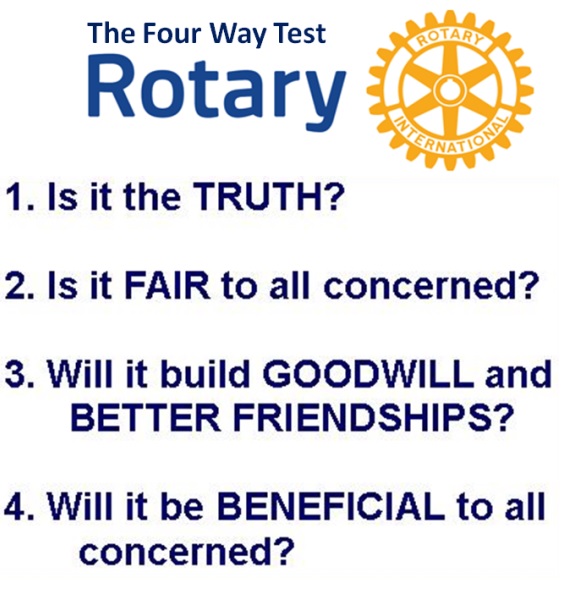
Will it build goodwill and better friendships?

[this is my open draft blog]

​Friends, if you believe there are gentle ways to speak challenging truths please seek them out, share them, and hold each other to a standard.​​

There's a quote that roughly goes "honesty without humanity is brutality."

​While we could say "it's never your responsibility to deal with how other people feel" the reality is that a lot of people are dealing with fragility that merits some kind of care​ as the instability from negligence and stress often leads to volatile and risky behavior when it doesn't have to be so​.

I can say so from firsthand experience if the literature on neuroscience, psychology, and leadership aren't enough.

Our society sucks at making that kind of shared vulnerability and opportunities for finding strength.
To me, the truth with proper context, is always good.

We have every right to be infuriated that our education systems, federal government, and the healthcare industry failed to prepare and present a cohesive strategy for us to navigate and protect public health. 
While it's important to learn and have the skills, people shouldn't have to scramble to become public health professionals just so they can learn how to protect themselves and their communities.

And I see truth in a statement by Brit Marin that says "all storytelling is inherently political" because politics is the articulation of desired action.
Western academia and science were designed for us to look at things, almost never for us to take action. Most politics as we see it on TV and at dinner table discussions winds up being more about appearances and what we want them to represent than solutions.
But we're in a crisis that pushes almost every other crisis many of us have been working to prevent or solve since this country came to be.

Sharing useful information while honoring the reality that people may be afraid or in need of comfort and psychological assurances is challenging work.
Most scientists deal with data but as they get deeper into their work know that the human connection and communication is where realities and appropriate action can be won or lost. 

Knowing is different from doing, so if you see a way we can communicate hard truths and uncertain risks with gentler hearts, please let us know wherever you see the opportunity as appropriate.

Meanwhile, here are our priorities as we see it for those who care:
1) Step up public health education for public health protections and for navigating the pandemic -- educating yourself? Good, seek multiple and contrasting--even conflicting sources. Try to reason them out + get help and discuss it with others.2) Support health care workers -- PPE, food, emotional support, opportunities to prioritize a life that exists outside of work
3) Support the community -- maybe it's checking in on friends or a neighbor with a call to see what they need, or advocates who are working to make sure residents in Detroit whose water is still shut off, or folks working to make sure prisoners can return safely with everything needed to make a second chance a success

Sunday, April 5, 2020

Sleeping and Waking Dreams

"We are creators, not consumers. Draw, paint, [build,] write, compose, 2x more than you consume." --paraphrased from Mike Koenigs Apr. 5th 2016

[unposted Sunday writing] This morning I dreamed I sketched a humpback whale as part of a class, turned on a switch which lit up a ceiling of stars in a bedroom, walked a beach and joined a street jam on my violin playing one of Tony Paris's songs (Window Jumper), and then visited a University+Hotel campus to join a handful of makers working with electronics across from a center specifically dedicated to Korean Natural Farming techniques where I examined their [edible!] still-dormant but springtime landscaping.

I've yet to do so with grace (as in, I probably started a spar of words), but I'm trying to work with folks who have very different political views and experience in getting the word out in a way that doesn't misinform, validates fear and risks, while honoring space for hope on what can be done.

Today I envisioned a small comic where someone sees the Grim Reaper, who turns around to kindly say with a wave:
"Now is not your time [with me]."
"--But I'm glad we saw each other. Go, live your life." *picks a flower and hands it off before walking away*

I started drawing the whale and the illustration.

...

If you're staying in when you can, you're already using the best tool we have--governors, Presidents, epidemiologists, doctors, PAs, and nurses alike, for slowing down the pandemic's spread.

If you have the privilege of time to imagine and glimpse the occasional pleasant dream, how might you bridge what's in your dreams with your waking life?
 
We have choices that can be made in life. Prioritize what you can create, facilitate, and influence. If you're called to do so in service to and with others, that's a creative act too.


Wednesday, March 25, 2020

Fo[u]r people digging deep

Four people I tend to think about and why when it’s time to dig deep or regroup with sadness or overwhelm before moving forward again:

1. Mum – “you always have three choices you can make, even to the moment before death.”
And her refugee immigration story for getting to the U.S. reminds me that we made it this far, she went through a lot to get here, most of the nonsense we face isn’t quite like witnessing tanks roll into your city and having to escape with part of your family from political persecution by boat.

2. Jake Turbett – when I was in middle school and sometimes even high school I knew he’d be willing to make space at a lunch table for me to sit down even though I didn’t know much about him otherwise. We’d probably have very different views, and straight out of high school he joined the U.S. Marine Corps genuinely believing in defense of the country before getting killed in action a few years later while in Kandahar.

3. Marie Colvin – war correspondent focused on telling the story of everyday people impacted by war and was credited with preventing the massacre of 1000 Indonesians during a civil war by refusing to leave when all media agencies departed in anticipation of a military operation; she was later killed while reporting on the Assad regime’s decimation of Homs in Syria. She exemplified the fact that some people are willing to risk death for the sake of simply telling the truth about people’s suffering.

4. Charity Hicks – Detroit advocate whose memory is often expressed with the phrase to “wage love.”
While I might have crossed paths with her, I certainly didn’t share a conversation in depth but that expression tells me that it’s equally important and always possible to show up with a tender heart while doing the work that's needed.

Create, stand up, speak out, live with the courage to care even when it's hard to find and feel. All of it matters even if it's to one person.


Thanks to Jewel Kawataki for inspiring this reflection.

An Origami frog folded for a friend in Washington D.C.-- Omakaki, Ojibwemowen for frog with roots that can also mean "growth in the dark"; Kaeru in Japanese which can also, if my shallow gleaning from a beer company has any bearing, mean a return to prosperity.

Monday, August 21, 2017

Choices: Life on Dignity or Terror

Choices: Dignity in Life, Choices over Terror and Death

There’s duality in fear for living and embracing death. For samurai, choosing a worthy cause to die for is a means of embracing the presence of life and inevitable reality of death. The result: life is fleeting, live in the present as if you will die today.
Choice is fundamental for human dignity, yes. Terror happens when one’s in a situation that makes severe irreparable harm or death seem imminent and you’re unable to find or create any other choices for living.
Plum blossoms, a close relative to cherry.
-A fragmented note to myself from 11/3/14 found in my draft box
…
Back to the present:
Approaching life from grasping death first can be a very severe, spiritually violent, and overall dark approach.
Even for me today, the opening sentence was a little unclear. I think I was also touching on moments when someone is genuinely afraid of stepping into living their life fully — because with all the joys it can bring, you’re also choosing to accept and embrace the consequences of failures too.

A caveat on foolhardy failure:
In my experience, the slogan “fail faster” that gets hyped in silicon valley/startup circles glorifies the downside and understates the resources necessary for recovery. Failing faster also requires proportionate tools and support to respond or rebound quickly. For people living in severe situations where balancing life and death, genuine poverty, etc. are at stake it’s a naive and misleading attitude.
We need to set parameters for failure. It doesn’t need to intrude on the sum of your existence, find ways to contain, govern, or facilitate it. Failure isn’t always bad, if you learn and grow from it. But what we’re really supposed to focus on are controlled or informed risks that we can successfully navigate. Where possible, fail forward — choose to fail in a direction of your preference so you can learn from it and still know how to stay on track. Immersing yourself in failures that go beyond your capacity to move on or focus on what’s worth failing for however, becomes a detriment one’s existence.
But this idea, really deciding to commit to living your moments fully, genuinely overwhelmed me into nihilism at times. The most overwhelming moments looked like shutting down, or believing it was important to stay with any accessible pain because that seemed like an essential part of living fully.
When some aspect of the idea made less sense to use as guidance for life, it also manifested into isolating myself in existential angst and numbness for months at a time. Of course, I still sought to show up online in minor ways and at work to keep me up to date with the rest of reality on topics I knew were important, but bridging the gap between what you think and what you believe can be quite the challenge.
The connection to choice: Life, Death; Dignity, Terror
Understanding the link between choice and dignity matters as much or even more than understanding how terror works. Terror is designed to happen when it deprives people from their sense of choice. Choice is fundamental to dignity. It requires a degree of consciousness to discern and make a genuine choice. Paraphrasing my mom: “Even into death, you have choices.” The trick is to see what they are, choose from the best, or create better ones.
Dignity and terror reflect life and death in their simplest forms. They hinge on your ability to discern, and choose with some sense whether active or intuitive.
The best practical tools for overcoming the designs of terrorism I know of boils down to three things: Joy, Truth, and Love.
It sounds unrealistically naive and Utopian at first — especially when considering that I came across them listed in a song written by my friend, Markita Moore. But the more I thought about those three around the time the Orlando shootings took place, the more I realized each element has clear, practical components that allow most of the public to deal with reality in a way that doesn’t make them beholden to reactions spurred by fear from terrorist acts.
Of course, counter-terrorism work still has an important place in the world, but for the general public in the long-term, I think this goes a long way to prevent or overcome terror:
Joy can be shared, draws people together, and builds cohesion. It inspires curiosity and deeper understanding on a voluntary basis. People are often drawn to humorous and positive moments. It can soften entry to challenging dialogues and conversations through assurance that comes from sharing a common experience — so long as it’s not used divisively at someone’s expense. It’s a significant topic in research for effective education.

Truth
, upholding it and understanding it, shows us that we have more choices than what terror wants us to believe. It reminds you that a supremacist ideology is flawed putting your beliefs into proper scope with additional realities. Presenting or facilitating the truth also holds people accountable.

Love
revolves around manifesting the best in and with people, which includes celebrating them as they are and the effort, history, and legacy that surrounds them in its most humane light. You can look at it in subtle forms like the discipline it takes to prepare meals for your kids even when you’re dead tired, care for the state of society, or consider the camaraderie and solidarity earned from common hardship and purpose.

Love is one of the most powerful motives used for framing purpose. Military boot camps in part are designed to cultivate an iteration of love — in terms of camaraderie — among service members and for the country. Simon Sinek, an anthropologist focused on leadership, cites similar examples in several of his talks. If you spend time speaking with service members, veterans, or yourself served you probably hear this too.

Coincidentally, scientists notice love and hate share many neurological pathways in common. What distinguishes a lively hate group from a healthy successful organization is the way they force dependent relationships and control information. But they start out and often frame their cause in terms of loving an identity, or protecting who they are. The rest of the hallmarks of their process actually mirror characteristics you’d see in healthy organizations that would appear in a Zappos/Delivering Happiness case study.

As a nation, the same applies: beyond taking care of the basics, don’t react to terrorism out of fear — else you play into someone else’s game by doing so. Focus on the things people would do in the first place when combat isn’t imminent: joy, truth, and love. It draws people to the righteous reality from their own volition, or asserts the truth without necessarily escalating violence.

But I keep returning to the general concept that making choices for death and life presents us. Major turning points basically revolved around thinking: “what’s something worthy of dying for/living for?” there’s more to say about the question itself, but that was a big starting point for my life in 2012.

Last year I met a wonderful woman who demonstrated the same idea but with an opposite (in my opinion, much healthier) approach — I’m still working on going about it from a joyous angle but it’s the same goal as far as living fully is concerned. Perhaps all of the above gives you a jump start too.

REFERENCES
On “fail faster”Example of common narratives around “fail faster” — I may or may not have a tendency to attempt living ideas to straw-man proportions, if you must try in that fashion too, don’t do it the way I did. Resilience comes from the ability to rebound instead:
https://www.youtube.com/watch?v=rDjrOaoHz9s
What would have been nice to hear more often with “fail fast”
https://venturebeat.com/2015/03/15/heres-what-fail-fast-really-means/ 
I especially wish this was something I read in 2014 to affirm some of my own questions about the slogan, but it’s nice to see today now that I’m reading up on how other people looked at it. Also note that someone created an entire company/consulting practice around “fail forward” — focused on dissecting failures. I guess it was bound to happen:
https://www.forbes.com/sites/robasghar/2014/07/14/why-silicon-valleys-fail-fast-mantra-is-just-hype/#27c7ac0124bc
Three Chords: Joy, Truth, and Love (song excerpt by Markita Moore)
https://www.youtube.com/watch?v=-0QqQ_zKj1E
[side note for those following our band’s progress: we’ve finalized the recording, moving to fundraise for filming a video with the students who sang in the song and coordinate its release with the video, ideally around October]
Humor in education (need to follow embedded links within this article for the research):
https://www.facultyfocus.com/articles/effective-teaching-strategies/humor-in-the-classroom-40-years-of-research/
Humor in Education via the APA, learning — it seems mostly focused on higher education, I’ve yet to read in-depth for source articles, etc.:
http://www.apa.org/monitor/jun06/learning.aspx
Other iterations of love, many Latin rather than Greek, a good framework, I think Ubuntu should be considered too though it’s of African origin:
http://www.yesmagazine.org/happiness/the-ancient-greeks-6-words-for-love-and-why-knowing-them-can-change-your-life
Military — trust, co-operation as interpreted by Simon Sinek in his research referenced multiple times in his talks:
https://www.ted.com/talks/simon_sinek_why_good_leaders_make_you_feel_safe
Simon Sinek speaking on “Why Leaders Eat Last”:
https://www.youtube.com/watch?v=ReRcHdeUG9Y
First-hand story on service leadership from Lt. Col. Drowley (the A-10 pilot mentioned in Simon Sinek’s book and talk, “Why Leaders Eat Last”):
http://www.hankschuurman.com/videos/johnny-bravo
Recovering from hate: how hate groups function and the neurological wiring behind love/hate
http://www.pbs.org/wgbh/nova/next/body/hatred/ 
On choosing worthy reason(s) to die. Also contains practical instruction for one-strike swordsmanship (iaido) in addition to the philosophical context that informed/s the martial art: Flashing Steel, Second Edition: Mastering Eishin-Ryu Swordsmanship by Masayuki Shimabukuro (Author), Leonard Pellman (Author)
https://www.goodreads.com/book/show/833931.Flashing_Steel
[seek out the second edition, supposedly a worthy improvement from an already excellent first edition]

Thursday, December 3, 2015

Coping with tragedy


i humbly reach out today to ask how each of you are dealing with the tragedy facing our world.
in particular, i’m overwhelmed by the Paris attacks, shootings in the U.S., plane bombings, my wife’s mother’s sever depression, Jake’s passing, and the lunacy of Presidential candidates. not to mention the suffering i see and hear in friends and acquaintances on a daily basis.
i’ve lived without a TV and haven't visited News websites for 7 years. recently, i’ve been visiting people with TVs and now i sit in a coffee shop in Upstate NY that’s non-stop “Breaking News” with video of people being carted away on stretchers. i’m getting nauseous and physically overwhelmed by what seems to me a concentration of suffering. is it because i’ve been sensitized by not tuning in everyday? or are others feeling overwhelmed by the seemingly incessant tragedies? are we under attack by fear? how do i cope?
one personal response bubbled up: find a deserted island and move there, build a small compound, and a large wall. y’all can come.
if that’s not probable, what mindsets, practices, inspiration — or lack thereof — do you use daily to grow resilience in this seemingly tragic world?
with love,A

Hi A, Thanks for sharing how you feel and mustering strength to seek support--the key items that really opened my mind and confidence in what people can do despite oppressive or overwhelming circumstances emphasize putting events in the world and what we can do about them into perspective.


Here's a compilation of what I use/developed for myself and often share with others over the years and now up to current events ranging from personal to a broader systems thinking approach:


[personal] 

(1) Embrace an experience/event with a mindful approach to gratitude 


  1. Receive and accept what’s given from reality—choose to embrace some aspect of it or the experience as a gift in your own reality (the parts of life you have domain/agency over)
  2. Consider what the gift does for you
  3. Consider what the gift says about the giver and situation
  4. express heartful thanks
    [emotionally sincere to the giver/situation--if the situation is very ambiguous, try to make it very tangible, rationale will follow below in #4]
[existential](2) "You always have choices, even at the moment before death" -my mom supposedly quoting from a marine

Resolve to broader or principled commitments in life, and that we have opportunities to live moments that are a culmination of our choices. I ask/answer three questions to myself:


1) what are 3 choices you can make right now?

2) what is the courageous choice?
3) what are you willing to die for?

It might be counterintuitive and you don't have to share those answers, but it makes a wildly emotional and complex mystery a bit easier to relate to when you frame it in the strategic positive.


[paradigmatic](3) Clarify your relationship to the problem on a systemic level & vice versa

How you can make meaningful impact or intervention with the overarching issue from where you are.

From there, try to collaborate with others (teammates is a great place to start) since I guarantee someone else in the world is also thinking about the same thing from another angle.


[systemic](4) I'll also point you to systems thinking, the notion of "Structure & Agency", and risk governance for navigating complex challenges--no need to get too caught up in the details, it its heart, the two feed into one another:


Structure (environment, institutions ,etc.) influence individual behavior.

Agency (you! your community & capacity to leverage/mobilize it) can influence Structure (the environment).


If music and stories make it easier to remember, there's also the phrase "emotive mechanics":

https://medium.com/hocma-the-science-of-the-heart/emotive-mechanics-in-east-detroit-23a9272d85a1#.ef6kkaq73

It's easier to explain rather than read but here's a guide--also the rationale behind tangible acts for gratitude:

https://drive.google.com/file/d/0B6ZWASyBqmHHcGFyVkxWNTEyYTA/view

On recent events, I've mixed feelings about sharing super widely or among acquaintances as it's an early-stage mix of exercise for myself & outreach experiment. Here's how I thought about gun violence with intent to intervene on a systems level--having ways to look at or even frame something as a problem implicates that solutions exist for resolving it: https://iandtran.wordpress.com/2015/12/04/stakes-is-higher-with-cake/

I'd be glad to chat or do a hangout if you'd like to talk. Be well, we're here for you, and take care of yourself in any case.

Ian D. Tran

Monday, May 18, 2015

Gifts from Glenn Sunich and the sun

I met Glenn Sunich at the first talking circle I joined about a month ago. It's raining cleanly--the kind that cools and freshens the air--with full sunshine outside just as I begin to write this.

Glenn was generous with his presence, even if he was on the phone away from us during the majority of the talking circle--the person on the other end was someone he supported on and off for 3 years who had considered suicide. He was working through his own challenges, and he offered his support, encouraging me to know I could call at any time to talk or ask for help as well. Before we left, he taught me a native left-handed hand shake and explained its significance. I walked away comforted knowing someone's willing and available to talk to me if needed and was equally grateful that someone would openly share his way of greeting me as if I were a member among his tribe.

Today, a few weeks later, I returned to the talking circle and learned from another member of the circle who briefly mentioned that he recently passed on.

Glenn's generosity and presence is rare and will be missed. At the time, I came to the talking circles wondering what to do about my tendency to stop caring about my lifespan--more accurately, trying to figure out why I'd want to do more than get by with caring for myself at a minimum.

I knew I needed to make it to the next day and live in the near-term, and I knew the way I lived wouldn't help in the long-run. My suspicion was that there might be a time when others might seek help and I'd be capable of doing so if I'm still around.

Even from briefly meeting Glenn and his offer to help, I now have a clear understanding for why from the other side of life.

As the rainfall slows to a silence, I imagine being present with this is an appropriate way to honor his passing. Life is fleeting, the consequential legacies of a life endure.


Saturday, May 9, 2015

Cherry Bossoms and Caring

Life is fleeting, our consequential legacies endure.

(plum blossoms-close relatives to the cherry)


Plum, cherry--close kin.
Blossoms celebrated, fruits
consumed. What's next?

and yet, they're just flowers... why would it matter if they're going to bloom again after a few seasons?

The only answer I can think of is that they bloom because something or someone needs or cares about their presence. Bees will rely on them for food, the trees co-evolved with pollinators and consumers to yield fruit.

Similarly, when considering life with the same question I wonder: why would it matter to look that far forward when something or some other generation will have its place? Why when some people won't live for that long anyhow based on the current trajectory of their lives?

I wonder because those are the same questions I ask myself. I'm hoping one answer comes from acknowledging sobering facts about how other people chose to live or die, and if they didn't get to choose, at least how they hoped to.

Some people died believing that their work and death would help provide others a better chance at testing their gifts in the world without premature threats to life.

Some people come from communities where their friends died before finding a chance to make it past their neighborhood block before turning 28, 27, 24, 23, 21, or even reaching "adulthood" at 18.

I know some of those people. They're the person who I could sit next to at lunch during high school before he'd get killed in Afghanistan four years later as a Corporal in the US Marine Corps. They're my friend who was the first to leave his neighborhood in the western reaches of Detroit, first to graduate high school, and then earn his college degree while several of his friends and family got shot or incarcerated along the way.

I see some of my privileges, one of them is living. Even when it's hard to go about living, knowing that others care about life puts any effort into perspective. However, I wish people didn't have to rely on the deaths of others to grasp compelling reasons for living.

The cherry blossom's petals fall at the peak of their splendor. In somber interpretations, the cherry blossom stands as metaphor for life. But it will only matter if someone or something finds it and might care enough to make sense of it. It's part of a bigger community than itself.

Life is fleeting, our consequential legacies endure. Whatever the ethical decisions and religious frameworks you choose to take up, keep it in mind, then let it run its course.


...

Side notes & snippets I recently wrote elsewhere:
I think it helps to consider the symbolism behind cherry blossoms and their significance to Japan too--some sombering interpretations look at them as a symbol for life and inevitable death--samurai often held it in close regard as a way to examine and make sense of their own lives and work. Where a choosing worthwhile reasons to die. Celebrate its presence, know that it in itself does not last. Life is fleeting, the consequential legacies of a life endure.

It's worth noting the amount of coverage on suicide suddenly appeared in one day from rather different media streams:

Further discussion on mental health and suicides in the business world:
http://www.inc.com/jessica-stillman/how-to-survive-your-darkest-days.html?cid=sf01002

Subtleties among people who at first glance seem well:
http://espn.go.com/espn/feature/story/_/id/12833146/instagram-account-university-pennsylvania-runner-showed-only-part-story

Suicides in the Lakota nation
http://www.nytimes.com/2015/05/11/opinion/suicides-on-an-indian-reservation.html


Support exists, even alternatives to the prevailing mental health system. There's a lot of nuance but send me a message and I'll do my best to further share my thoughts.

Many people staffing the hotlines are also capable and willing to help you in figuring out next steps or getting into better situations:
http://greatist.com/grow/resources-when-you-can-not-afford-therapy

Saturday, February 7, 2015

Alcohol Poisoning and First Response

They don't teach first aid for alcohol poisoning in the Boy Scouts. Nor did I learn it in lifeguard training. Last night I encountered an unconscious young man with all the signs of alcohol poisoning.
However, I didn't know what alcohol poisoning looked like.

A group of young Chinese National or Chinese American students struggled to hold up a ragdoll-limp body by the street outside a night club as I passed by.

I came up asking if he was okay and met with hurried tones of assurance: "he's fine... everything's okay!" I gave a questioning second look and walked on.

It wasn't until a few people in my group mentioned it wasn't right for someone to be unconscious, that it was symptomatic of alcohol poisoning and needed medical attention that I turned around to re-engage the Chinese/Chinese American  students and prompt them to seek professional medical attention.

Strangely enough, the person in my group who recognized alcohol poisoning actually knew how to check on an unconscious person, down to recognizing how much alcohol dissolved in the blood it takes before one can smell it as a sign of serious dehydration.

In retrospect, it's a form of first aid, and certainly not a form I had ever thoroughly prepared for before.

I motioned for us to carry him into the night club where it was warmer so they could wait for an ambulance there.

Knowing what you know in a situation, what's your responsibility?

For anyone who wants to know, here's what to do if you come across someone too intoxicated for their own good:

http://www.alcohol.org.nz/alcohol-you/how-be-safer/first-aid

http://www.princeton.edu/~oa/safety/alcohol.shtml

Tuesday, January 6, 2015

Coping with various degrees of agency

One thing I was reminded about myself last year: when unmet with care, mental health challenges can link closely to abuse, it's actually more subtle and prevalent than the public (even most people I know) make it out to be, and most people are less competent at intervening with detrimental behavior than they'd like to acknowledge—even when it’s their own behavior.

It's sometimes upsetting, but it’s somewhat comforting to know overwhelming suffering isn’t the same as unbearable suffering. You’re cognizant of overwhelming suffering—frustration, anger, fear, anxiety, apathy—you can observe it come and go. If you're at the brink, it's a good time to call anyone for help.

When something's overwhelming yet bearable, the line between what we're able to withstand versus what we're willing to tolerate blurs. At that point one compromises their own quality of life, and in a terribly negative feedback loop, it also takes down others', which tends to make their situation worse.

The guide linked below's helpful for roughly recognizing and coping with some behaviors, but it's missing some nuance and 40% of it feels condemning still--maybe because it focuses on what behaviors fail to fit with a "normal" or "healthy" individual rather than how those behaviors might be exercised to an advantage, and acknowledge that choosing to work through mental health issues is a healthier choice. In October I concluded (but in some part refuse to accept) that some things don't ever really heal, we just get better at managing circumstance and how we respond to suffering until we reach the end of our line. Failures and suffering are inevitable, but you can make them necessary to your life's path and fail forward—fail in a direction aligned with your most genuine aspirations.

The best tweaks for reactively handling stress I can share tend to be (listed from simplest/smallest and most desperate starting point to most significant):

1) Find presence/regain clarity of mind and attention by doing simple things that engage your senses (touch/motion, sound, smell, etc.)

e.g. feel pain (a safe alternative to harming oneself: eat a lot of hot sauce, quickly), try to hold something/someone tightly, cook, garden/farm, do dishes by hand, create music

2) Find your "flow states" and do what's needed to get there--things that immerse and engage your attention in ways that you lose sense of effort, time, and self (aka, get "into the zone" athlete/musician/artist/dancer/physicist etc.)—create the environment or circumstances necessary for you to get engaged to re-stabilize.

3) To alleviate anxiety and nerves and increase your capacity to cope with stress, push yourself through intense if not stressful situations (especially exercise and intensive work) earlier in the day, and devote time to de-escalate from them (intentional breathing/meditate, read a paper book, hike slowly outdoors, etc.)

4) Find and let yourself fail safely in the presence of caring (actually, if possible loving--in the sense they're willing to help you be at your best or celebrate you as you are if you're already living as yourself at your fullest) people (or animals) to talk it/feel it through with, or at least knowing that they're present, so it can help you re-examine the parameters and mechanisms of your own mental threshold.

"Courage cannot be taught, but when it’s scaffolded, it’s encouraged."

5) Redirect your own awareness of anger/anxiety/sadness/apathy toward preventing recognizable circumstances that contribute to other peoples' or your own unnecessary suffering

http://www.nami.org/Content/ContentGroups/Programs/Family_to_Family/PTSD_Module_Pevised_Feb_2011.pdf

Note: The five points are also listed for starting in situations where one might have little agency for leaving their surroundings (e.g. isolated.stuck) to situations that allow more time, attention, and space with various privileges or luxuries assumed (e.g. if you're fortunate to have people you can trust). #4's particularly rare and most challenging to find for me--I'm basically resorting to #5 in hopes of creating #4.

Monday, December 15, 2014

Desperation, "American Beauty"

I saw American Beauty for the first time this weekend at a house screening as a friend's guest. The person who chose the film explained it was "a classic", and another mentioned it was a "dramedy"--humor to be found in the absurdity of emotional extremes.

Desperation was a key theme to a lot of the behaviors that drew most of the snickers and laughter. If willing, conscientious choice is fundamental to dignity desperation then serves as its converse.

Example: an insecure suburban WASP mom archetype forces a smile and recites capitalistic mantras for success as her work in real estate continues to fail.

For those who rely on one belief or another as a way for finding self-worth and meaning in life, ridiculing desperation quickly skirts the line toward becoming a demeaning and disempowering act. It's mean-spirited if not cynical humor shrouded in the laurels of being an iconic film for mainstream U.S. Cinema.

It's also a negative feedback loop [here's a place better suited for diagrams than text]:
A desperate individual's chosen actions for self-preservation are demeaned when subject to ridicule (bullying). If it's vicious enough, giving up on the practice out of fear becomes a probable outcome, further reducing their choices for a willing existence.

Also, what happens when the topics and subjects of laughter are current and real for members of the audience?

For the sake of self-preservation, the characters are constructed to have little to no choice--they operate from a default stance of desperation--and as a result, little room for realizing dignity. The few who embody a glimpse of dignity are killed or kicked out from families unable to cope with the way their perception of the world unfolds around them.

It's not far from me either: what difference does it make if someone like me ascribes to outdated religious and moral codes like Bushido, or draw from Buddhism's principles, or Christianity's in the hopes that ancestors and family knew what how to cope with their reality in resilient grace?

The answer comes from asking another question I've overheard Cesar Gonzalez emphatically ask: What is the courageous choice?

The courageous choice doesn't involve choosing a particular religion for the sake of having to believe in--unless you have to. If one recognizes holes in any of the religious and spiritual frameworks above, it is courageous to forgo holding onto an ineffective and rigid belief for the sake of faith in oneself and one's capacity to engage the future by embracing the present.

As easy it is to write, that's a tall task for one, myself included, to instantaneously take to heart and keep.

Similarly, is it better to leave a familiar source of suffering for peace of mind or choose to endure it for the sake of seeking meaningful actions out of repetitious exposure?

Side note:
Circa 2011/2012 I adapted Hamilton's Rule from evolutionary biology:
(Relatedness * Benefits)-Costs >1 for altruistic behavior to be likely
as a way to roughly rank experiences with a film:
(Relevance x Benefits) - Costs > or = to 1 for a good film

If it's really relevant, and it benefits you in some way which outweighs the costs of cognitive/emotional/time/physical load, it's a good film.

Definition: good? I'll reference Aldo Leopold's characterization of good:
A thing tends to be good when it preserves the integrity and beauty of the human and biotic community.

American Beauty, at least on first impression, does almost the exact opposite. We find glimmers of hope in one or two individuals, not the community.

Originally I adopted the rule out of anger at Pan's Labyrinth--which takes viewers through a fantastical and terribly oppressive world, and the end reward for the audience is a glimpse of the protaganist entering eternal life as she leaves the rest of the real world behind to carry on in dystopic chaos. It was a disproportionate benefit and the movie left a bad taste...

Just as Pan's Labyrinth, American Beauty was a relatively disempowering film. Yes, grace in American Beauty could be found in the protagonist's moment of transcendent acceptance (to paraphrase: "there's so much beauty in the world, you just have to let it flow through you"), and two teenagers deciding to leave abusive households. However, the overwhelming chain of events in the film lead to negative and destructive fragmentation of many relationships and some resulting in killing. The reality depicted in the film echoes much of what we already see in the world or grow up with. The emotional impact calculus burdens the viewer with more vivid problems than they can engage or resolve, and the "one to many" nature of communicating content in film and television to large audiences more often than not makes it an isolating endeavor.

Honesty without humanity is brutality, to paraphrase...

Monday, December 8, 2014

Art guidelines for the uninspired

"Artist friends,When you are feeling hopelessly uninspired (and frustrated/desperate enough about it to post a Facebook status asking for help), how do you fix it? Any and all advice appreciated." -K
I take comfort in the following guidelines when making art for myself. Hopefully they're useful in showing possible paths to making meaningful work for others and pulling the uninspired out of their ruts:

0) Approach art as a form of communication that stirs curiosity and wonder. Curiosity for yourself, or for others--it's up to you.


How? Choose one, some, or all of the following as a start:
1) suffer and/or empathize
2) explore, experiment, play
3) mix all of the above


0) Consider art a form of communication that evokes a deep curiosity—about yourself, about the world around you.
Do you have something to say or convey to the world? Make it so.


“Art ain’t about paint. It ain’t about canvas. It’s about ideas. Too many people died without ever getting their mind out to the world.” — Thornton Dial, SR.

1) Suffer or/and empathize
If you find nothing compelling within your imagination and memory, then expose yourself and empathize with genuine suffering or an injustice that can capture your heart's attention. OR re-imagine something familiar from a different perspective or through a different medium. It might be an analytic endeavor at first, but sometimes those will yield artful discoveries too. In any case, find the contents of a story worth telling/making/re-presenting.

In the sense of finding and creating stories worth sharing, good artful acts of creation can exist in conversation too.

2) Treat creating as an act of play or experimentation--where the process of exploration matters more than the outcome [1], then revisit with intention.

3) Sometimes, you'll mix all of the above, or discover integral themes emerge, or poetic parallels.I may hear a snippet of melody that compels me to experiment. At the same time, I may witness or work on something that galvanizes the idea in time with current events and overarching themes of human endeavor [2]. I then set out to bridge meaning between the two. Sometimes it's an organic blend from the start, others I force together before they melt into one, and sometimes, it's creation without attachment or any explicit meaning necessary.


Angular study in azure--familiar subjects and experimentation.

Compelling outcome? Perhaps not to most.

I did, however, learn that corners of rooms can be

interesting for experiments with image composition.
[1] I really enjoyed hearing Eric Gordon's characterization of play (where process matters more than the outcome) at the IADB's 2014 Demand Solutions summit in DC. Imitating play (whoa, meta!), by playing around with odd notes on a piano? Yes, you can do that too!

[2] Emotive Mechanics started with me pondering experiences in life, and then sitting down to improvise on a tune of mine as my mind processed the ideas (see video description for initial circumstance).

Edit: I recently read Sabina Berman's [most excellent] novel, "Me, Who Dove Into the Heart of the World" and really appreciate the notion of "letting the world think through you." That's exactly what I'd use as the core principle for the above: let the world think through you. That said, I believe my guidelines can remain useful for retroactively thinking about what you've done or getting into a frame of mind that allows creative processing.

Sunday, November 30, 2014

Forgiving

"I agree that you will be happier if you are able to forgive. You are not condoning or accepting her behavior if you forgive her. Instead you are making a choice not to allow hurts from the past to steal your joy in the present and in the future." -Mara (in comments about emotional abuse in childhood from here)
I've gone through a lot of statements about forgiveness, most of them tend to be glib and life-coachy in the sense that they're removed from practical focus.

The above characterization by Mara reminds me of mercy and subtle forms of courage.

Tuesday, October 21, 2014

Painful Perfection

Our perfection comes as much from the pain of suffering as it does from the joy of living.

Emotional momentum is precious. Reality is found in relationship.

Monday, October 6, 2014

Alexithymia

I'm still figuring out how to look at it in a way that doesn't weigh me down. I definitely felt like a victim of statistics a few weeks ago when reading about it. I do have a few things that help and have shared that here too.

Saw this Saturday, which led me to find the term "Alexithymia." Though I don't drink coffee, I'm glad to know that's what some people would call it. Hopefully it's a useful resource to you/people you know.


Looking at it with strategic clarity in a way that's not condemning remains an open endeavor. I've given a few days to look at it with different eyes. What's helped:
1) Every behavior has a benefit from the an evolutionary biology perspective. In my life, I know from a lot of reflection times where I benefited from it and probably why it came about.
2) There's a spectrum of behaviors that most human beings encounter, this is a blip on it and doesn't represent the entirety of someone's personality, and "Your tendency need not be your destiny." - quote on the walls of Macomb County correctional facility
3) "Tranquility's something everyone seeks, but only you yourself can find." - homeless gentleman in Lansing

Some descriptions:
"you don't live, you just exist. You don't feel, you just function." I'd describe it as being emotionally hollow, inert, or emotionally blocked/stagnant. It often blends with depression and ASD/PTSD. This tune was the closest I got to articulate what it's like to deal with that state a few years ago--stuck, mentally trying to work it off, but not really getting anywhere.

In 2012 I started to realize absence of feeling/emotion was a problem while at a friend's apartment. Later during a class reflection activity at Ryan Correctional facility, we were asked to share how we felt. I didn't know what to do and didn't have anything to say. I realized when everyone started laughing that I was the only one who was genuinely confused among university classmates and people who spent most of their lives in prison alike. In some parts of my life it's been helpful, but it's also been destructive, detrimental, and frustrating in other aspects.

A few resources exist, one in its early stages with a test, most of the posts (often lengthy) are from people discovering, trying to cope, grieving (many heavy stories), or describing their experience as someone with Alexithymia/being with someone with it. The online community remains fragmented.

As far as I can tell, few carry focus on solution/resolution techniques at the moment. Those who shared insight for pulling through mention art, exercise, and laughter in comments online elsewhere. Also, at least one person believes learning directly from others helps resolve it, and I suspect the list of feelings described in Non-Violent Communication might be another approach for wrangling emotion into articulation too.

I've been practicing some solutions for myself. At the least, ways to prevent it, minimize it, or open up when it does happen--I've mentioned running in advance of my day, play, and dancing to open up my capacity to feel. I'm starting to manage how I engage and give space to process situations to find emotion differently. 

I hope it helps someone, thanks for letting me share with all of you.
Ian D. Tran

Monday, April 21, 2014

Another Take on Afterlife for the Living

"The hottest places in Hell are reserved for those who in time of great moral crises maintain their neutrality" -John F. Kennedy [*possibly attributed to Dante Alighieri]


Considering the above quote, moments of great moral crises are opportunities for us to live. Choose  to maintain neutrality--in other words, choose indifference--and we forfeit an opportunity to live and exist to our fullest within the moment.

So in the spirit of keepin' it real: It is often in retrospect that we burn by flames of our own anger, shame, and unrest over those pivotal moments of crisis in life.  It's a waking and living afterlife in itself.

For a few tangents, I'll pose a pseudo-scholar's conjecture: Perhaps Dante's inferno was also an early attempt at psychology--using heaven and hell as allegory to how we live our lives immediately as well as in his broader interpretation of religious afterlife. [disclaimer, last time I read Dante's Inferno was in high school, early 2000s]

I'm tempted to loosely ponder how other dimensions of reality and alternative universes can exist via physics too, but that's probably too much pseudo anything for today...

Monday, October 14, 2013

Greatness in your voice

There is greatness in your voice.

I can hear it.  You can feel it.  We know it.

If it quavers and shakes in fear:
let it be for the reasons we share with you.
Speak your truth with courage, and all your heart.

Inspire, then move us--with each word you expel, and each breath you spend.  We'll catch our breaths, and then we'll respire.

We'll breathe as we move closer toward something worth every spirited breath of speech, story, and song before our lives expire.

But it ends not at your life, nor ours.  Greatness flows over and through endeavors of legacy everlasting.

Free it with your voice and contribution to the world.
Let it ebb and flow from heart to heart: yours to mine, theirs to yours.

Call again!

Through sacred passage of wisdom in your call and listening--let your curiosity open the greatness of others, share your reliable truths, and always ask for the greatest of truth even when the only answer may be silence from your fellows.

The echoes of utterance will be great, and the world may quaver and shake in new movement as it awakens with the warmth of your voice for the reasons we share with you.

Share our Truth with courage and all hearts.


Hollow tree in Interlochen State Park, MI

#09:34 16 X 2013