Showing posts with label communication. Show all posts

Monday, April 6, 2020

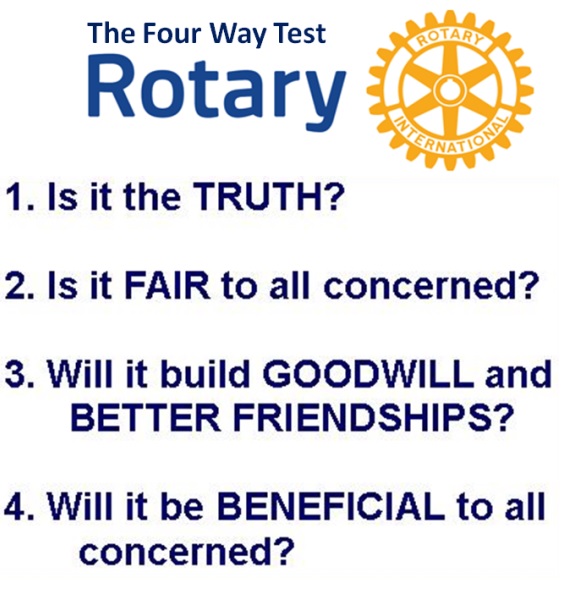
Will it build goodwill and better friendships?

[this is my open draft blog]

​Friends, if you believe there are gentle ways to speak challenging truths please seek them out, share them, and hold each other to a standard.​​

There's a quote that roughly goes "honesty without humanity is brutality."

​While we could say "it's never your responsibility to deal with how other people feel" the reality is that a lot of people are dealing with fragility that merits some kind of care​ as the instability from negligence and stress often leads to volatile and risky behavior when it doesn't have to be so​.

I can say so from firsthand experience if the literature on neuroscience, psychology, and leadership aren't enough.

Our society sucks at making that kind of shared vulnerability and opportunities for finding strength.
To me, the truth with proper context, is always good.

We have every right to be infuriated that our education systems, federal government, and the healthcare industry failed to prepare and present a cohesive strategy for us to navigate and protect public health. 
While it's important to learn and have the skills, people shouldn't have to scramble to become public health professionals just so they can learn how to protect themselves and their communities.

And I see truth in a statement by Brit Marin that says "all storytelling is inherently political" because politics is the articulation of desired action.
Western academia and science were designed for us to look at things, almost never for us to take action. Most politics as we see it on TV and at dinner table discussions winds up being more about appearances and what we want them to represent than solutions.
But we're in a crisis that pushes almost every other crisis many of us have been working to prevent or solve since this country came to be.

Sharing useful information while honoring the reality that people may be afraid or in need of comfort and psychological assurances is challenging work.
Most scientists deal with data but as they get deeper into their work know that the human connection and communication is where realities and appropriate action can be won or lost. 

Knowing is different from doing, so if you see a way we can communicate hard truths and uncertain risks with gentler hearts, please let us know wherever you see the opportunity as appropriate.

Meanwhile, here are our priorities as we see it for those who care:
1) Step up public health education for public health protections and for navigating the pandemic -- educating yourself? Good, seek multiple and contrasting--even conflicting sources. Try to reason them out + get help and discuss it with others.2) Support health care workers -- PPE, food, emotional support, opportunities to prioritize a life that exists outside of work
3) Support the community -- maybe it's checking in on friends or a neighbor with a call to see what they need, or advocates who are working to make sure residents in Detroit whose water is still shut off, or folks working to make sure prisoners can return safely with everything needed to make a second chance a success

Monday, January 28, 2019

Screening Your Resolution for Effective Outcomes

​Screening for Persuasive Resolutions

The most important thing for resolutions
to manifest is committed self-persuasion. [1]
But that doesn't mean a resolution must be achieved by yourself alone.

With a quiet turn of the New Year, and now being able to say with some degree of confidence that I survived three full decades on earth, I'm starting to realize celebrations (many of which I barely partook in) also exist as a form of persuasion. And celebrations can be significant even away from other people, though never far or completely independent from others.

Just as important, the way we form our resolutions--setting intentions can be done in a way to remind us why we're committed to taking action toward something we want rather than discourage us from not reaching our goals.

Effective resolutions come from one's capacity for effective self-persuasion. What if, instead of mandating a specific future and living under the tyranny that comes with limiting one future for yourself, that people entertained the opportunities of their lifetime with questions to keep them moving forward? Like how scientists might create a hypothesis before diving into experimentation.

I often champion the worth of thoughtful questions because they allow you (or organizations [2]) to find and create new answers in multiple situations, time and time again. From a scientific point of view, the value of a hypothesis is that it lets us move closer to the truth by discerning whether a specific influence will have an effect on an anticipated outcome--and just as important, we can potentially let others replicate the results too. And my friend Onyx is often quick to warn people that "committing to only *a* future can be a dangerous false choice."

Life is a creative endeavor, why must our aspirations terminate into a specific sentence or outcome like "losing weight" when you can commit to experimenting with specific and intentionally chosen actions that will always contribute to manifesting multiple goals?
"How might I consistently improve my health?" or better yet, "How might *we* improve our health?"
"How might I enjoy more activities that contributes to my physical fitness?"
"What does eating well look like?"
"What does taking care of myself, or loving myself look like?"

When we engage in long-term efforts to create systemic change that require more than what an individual or group can explicitly control, and it's the same kind of thinking that's probably necessary for people to make meaningful change as individuals who live in a world filled with plenty of people and experiences that go well beyond their own selves.

Does it change the fact that we still need goals and milestones? No, what matters is the *resolution* our goals are framed with--and yes, that's a play on words. Think about resolution in terms of digital screen definition -- how granular is your goal?
If it's too specific, it warps your reality in unfavorable ways--watching a youtube video in high definition on a clunky old computer sometimes brings the entire computer to a halt. Watching it at a 180pixel resolution might not overburden your graphics card, but it might not do service to the viewer in showing the details of an event or a picture of a map that might be important to remember in the near future. How can you take more effective steps toward making a good resolution? Look to the trajectory of your past experiences and the ingredients playing into their circumstances. If none of it has changed and you're setting sights on lofty goals for your New Year's (or any other time of year) resolution, you might need to create more persuasive ways to reach that goal.

If eating healthily isn't easy because healthy food is rarely if ever available, maybe it's to find ways to increase your chances with being in places that offer healthy food--deepen your friendship with a local gardener, work toward a new job or promotion that provides better mobility for taking care of your basic needs. These are roundabout but important steps to your bigger priorities, and it's important that you honor the challenges even when it didn't seem like part of the bigger picture you envisioned when looking from the cusp of a new year.

        .       .       .

One of the many gifts genuine interpersonal connection brings us is that a friend, a sincere coworker, or even kind strangers can help "screen" out unnecessary information and put part of the reality you live with in check -- though it goes without saying to engage wisely as some don't know where you want to go, and bad relationships can have powerful negative repercussions. So another person's agency and ability to check in on you can count as a system, just like making commitments to yourself for exercising with goals or milestones with your rest, eating, and emotional health habits too.

In other words, friends can boost your ability to achieve what you set out to do that becomes a form of persuasion that better futures are possible--and you can do the same for them too!

Last year international life coach Bere and I put together an event called "Party Like it's 2019!!!" [3], where the value of the activity comes from being able to experiment with iterations of who you are, and set up systems that help keep you on track with what you aspire to do along the way. One of Bere's biggest points of emphasis in her coaching came from being able to break down big endeavors with specific and achievable goals.

In the world of organizational and systemic change (complex systems) I studied and worked with during and after University, the same concept's about recognizing how the things you have direct control over plus tangible reminders can create structure to influence your paradigms about the world [4].

It's how gratitude exercises often succeed by letting people realize visceral past experiences and outcomes can present them with reasons to be happy (or satisfied, or hopeful) because they show us a different trajectory of choices available that we didn't see before.

That's the magic of empowerment too--that you can suddenly generate 300% more with 100% of the ingredients you already had with a simple shift in perspective.

Confidence at its essence is about trust--trust in oneself, trust in others, or trust in an endeavor--including the promises or resolutions we make. Often when we're overwhelmed, we lose track of what we've done before and what we remain capable of doing.

My friend Marnese Jackson and I would also check in with each other on a weekly basis as we worked through unstable housing, irregular transportation, living with kids, family challenges, and professional priorities that also extend into community and civic impacts. Sometimes the best thing that came from it was the ability to unpack our overwhelm and remember what we've done or sought out to do.

And as strategists, futurists, and science fiction writers might all agree: good strategy is the practice of good science fiction. When we create believable futures, they're often rooted with discernable, plausible, and replicable truths that allow us to leap beyond the ingredients we know into new places.

Since the future becomes the present with every moment, you'll have plenty of opportunities to find a persuasive resolution. Hopefully you're finding something for moving together forward now.
[1] https://lighttelecommunication.blogspot.com/2019/01/persuasive-resolutions.html

[2] http://ismotion.co/2013/12/purpose-in-questions/

[3] https://www.eventbrite.com/e/refreshing-your-vision-party-like-its-2019-tickets-43259414072# 

[4] https://drive.google.com/file/d/0B6ZWASyBqmHHcGFyVkxWNTEyYTA/view

https://www.inc.com/young-entrepreneur-council/how-turning-your-goals-into-systems-can-change-your-life.html

Possibly related and useful--for setting more feasible systemic goals; one of my biggest challenges was the feasibility side of goal setting, a lot of visioning processes and goal setting processes are admittedly very time and effort intensive to the point of feeling overwhelming--I have some ways for dealing with it but I'm certain there are better and curious to see how the following turns out:
https://www.inc.com/heather-wilde/3-simple-steps-for-setting-your-next-business-goals.html


Photo by Josh Hild on Unsplash
I don't know who this woman is but she's definitely looking at a screen and reaching
with what could be described as resolve. By the way, staring at
blue light from screens can degrade your eyes
so try to look out to the real world instead.


Saturday, November 24, 2018

Designing to Demystify Development Doings

Last year, I advised the 2018 Detroit City of Design Strategic Action Plan's creation as part of a group of other UNESCO/Detroit Design-connected peers (if you want the fancy technical term, we're referenced as the Peer Advisory Board on p. 147) -- though I'd be remiss to say a lot of the comments and advisory I contributed went unheeded by the consulting firm tasked to do the report.

In particular:
1) the need to address the legacy of economic suppression, divestment, or even outright oppression that made and let institutionalized racism continue in the city
i.e. from removing skilled trades and the arts from k-12 in recent years and dismantling the public school system's efficacy, or a highly segregated population that results from a mix of insurance and housing policy that resulted from remnants of the early 1900s when supremacist/terrorist groups groups like the KKK openly influenced and controlled business districts and cities.
2) the need to shift toward skill-based "gig economy" resilience rather than building more job pipelines
3) the role of cultural competency and "industry translation" for delivering genuine inclusion and better informed public decision making that lets people take advantage of the projected surge in industry and Detroit's shiny new "UNESCO City of Design" status.
One of the best ways to do that is to connect the every day practical things that normally seem out of reach to the average Detroiter with better communication, and not all of it should rely solely on written word (and yes, I realize criticizing the bias in communicating with text with an equally lengthy article-sized written narrative isn't optimal but we're starting here with a different audience in mind).

Which brings us to the Development industry. The more we learn about the development industry, the more I find it's traditionally about making debts profitable (at least for the big players, but really, when was the last time you ever heard about a small-player in the development industry, if you ever hear about the development industry at all?).

So with an article from early 2018 about Dan Gilbert's desire to use tax breaks and funds that normally would go to things like schools and corrections (go read it and then come back to finish this), it's an opportunity to demystify a bit of this further--here the question becomes whose debt and to what end does it become a profitable investment--for the public and/or Dan Gilbert's works.

In this case, by capturing the tax revenue via brownfield redevelopment incentives (for those without an environmental science or economic/city planning background: brownfields are land that's been contaminated with something like industrial waste, fuel spills, etc. that would make it unsuitable for normal living/farming etc.; but still useful for developing buildings on top of or "fixing" aka remediating the soil so that it's healthy again).

That normally would go toward basics like education. For others (like Ben Mallah of Koncrete's "Life for Sale" show), it's often by flipping large properties--sometimes accelerated by using bank-loaned money to achieve aggressive profit margins (i.e. 2:1 ratio of profit to investment) -- so they're constantly burning to find another bigger property to pay back the investing bank(s) before they get into hot water with their lender(s).

Yet even when we teach people to read in the U.S., we begin with picture books -- yet here we are attempting to learn and teach with the limits an ambitious and dedicated journalist is limited to working with by deciphering troves of text.

So here's a design challenge: I'm certain there's a way to turn the following chunk of text excerpted below into a diagram, infographic, or something that more people would be able to quickly understand:

So how does all this work when you get down in the weeds? One incentive Gilbert is using is called a "brownfield." It allows developers like him to collect property tax revenue to pay for remediation costs after they redevelop contaminated or seriously blighted properties.

In a hypothetical scenario that illustrates how brownfields work, Gilbert's Hudson site property is valued at $100 in 2018. Let' say later this year, the city and state approve a brownfield incentive for it. Next, Gilbert builds on the land, so it's worth $150 in 2019. The city and state continue to collect tax revenue off the original $100, but Gilbert collects tax revenue off the $50 increase.

Gilbert then captures tax revenue off the property tax increases for the next 20 years. So if the property is worth $1,000 in 18 years, Gilbert collects tax revenue off of $900, and the city and state still only collect it off of $100.

The property tax money that the government collects goes to several "jurisdictions," including schools, libraries, parks, jails, cities' general funds, and more. According to the MEDC, Gilbert will be collecting tax money intended for jurisdictions that fund education at the county and state level. So when the property tax revenue collected from that $900 goes to Gilbert, it doesn't go to schools.

In that way, Gilbert's use of the brownfield impacts schools.

But there's another layer. The projects are in Detroit's Downtown Development Authority district. The DDA currently receives the tax money that Gilbert will use — not the schools. Thus, Gilbert can claim that schools aren't impacted because the money is diverted from the DDA to his company. However, the DDA takes the money from the schools, so education taxes are ultimately what funds Gilbert's projects.

-Excerpted from:
https://metrotimes.com/news-hits/archives/2018/01/11/yes-dan-gilbert-wants-to-use-school-money-to-fund-his-new-downtown-projects

You could especially visualize this as an elegant sankey diagram of sorts -- see this for a black and white example in petroleum energy and this with colors in energy; better yet check out Canada's energy systems and imagine how it might be done to demonstrate tax and business investment.

For a crude attempt, here's my take on what I just read:

In a hypothetical scenario that illustrates how brownfields work, Gilbert's Hudson site property is valued at $100 in 2018. Let' say later this year, the city and state approve a brownfield incentive for it. Next, Gilbert builds on the land, so it's worth $150 in 2019. The city and state continue to collect tax revenue off the original $100, but Gilbert collects tax revenue off the $50 increase.

2018 Value (note: let each + = $10 )

$100 ++++++++++

2019 Value: Gilbert Builds on the Land ( note: let each ~ = $10 in 2016 )
$150 ++++++++++~~~~~

Gilbert then captures tax revenue off the property tax increases for the next 20 years. So if the property is worth $1,000 in 18 years, Gilbert collects tax revenue off of $900, and the city and state still only collect it off of $100.

$900 (note: each ++++++++++ = $100, and if I understand the lines above correctly, that money still comes from you, the tax payer)

Gilbert's $900 (which he and his companies will make some kind of argument that says the jobs created and the business they attract, especially for remediating contaminated soil to build upon, will make it worth while for Detroiters and maybe the state--if you're extremely lucky, maybe you can figure out a way to become a shareholder or take equity in the project to influence what happens, the odds however are extremely slim for the average person)

++++++++++
++++++++++
++++++++++
++++++++++
++++++++++
++++++++++
++++++++++
++++++++++
++++++++++

Meanwhile, Detroit's $100 (which, from the ashes of taxpayer dollars, we'll hope good things will rise for the tax paying residents again--in other words, this is the hypothetical portion that the public has the highest likelihood of maintaining accountability and influence over for ensuring the revenue goes toward actual priorities in the interest of the city's residents) remains the same, possibly unadjusted for inflation too:

++++++++++


Total Hypothetical Property Value coming from the Detroit Tax Base: $1000

++++++++++
++++++++++
++++++++++
++++++++++
++++++++++
++++++++++
++++++++++
++++++++++
++++++++++
++++++++++

There's still a much better way to depict this which I've not taken time to illustrate with my ascii art rendition above. How could we show the money flowing from the tax base? I'd reference the petroleum diagram in terms of what the fund actually supports and how it gets prioritized for this particular development scenario. And then add the colors etc. to make it more visually appealing.

Yet where do we go to make this kind of development and data literacy happen? Design advocates would say "Designers! Ask the designers!" and inevitably you'll find there's a high-end design firm lurking somewhere in a trendy downtown office hungry for a commission or contract from someone with a decent pocket book.

As the public waits, where can we go? Perhaps someone might wish a non-profit for supporting design might exist to provide these services. In Detroit, the Go-To clearinghouse might be Design Core Detroit (formerly DC3), which is the Org I referenced at the start of this post. But they're a clearinghouse who tends to pursue big-picture funding and reputation with a limited team, it's easy to suspect a measly infographic isn't really in the scope of their perceived responsibility. In function, they're a Chamber of Commerce who laid claim on Detroit's "creative + design industry" and replicated all the traditional organizational functions a typical Chamber of Commerce does to keep its membership and influence in a city.

Say what you will about the New York Times, but spend enough time looking at their work and you'll find outstanding work when it comes to conveying some of the data they use to examine stories -- take for example this piece that points to school segregation and success by comparing money, race, and student success.

For the City of Detroit (and the world at large), one thing that would distinguish its industry might be the way it communicates important data -- the kind that's visceral to our day to day lives like traffic accident statistics, crime, disinvestment/investment/development, accessibility, education, home and utility affordability, glocal civic engagement (as in, how local decisions and elections intertwine with global issues) etc. in a way that accelerates public literacy and competence around the issues.

While data for literacy rates in Detroit might be a contested topic, the reality that most people tend to do better with pictures

On the other end of the spectrum, we might appeal to the Designer's Guild for Justice or maybe some kind of diasporic remnant of the Occupy Movement's Design and Research collectives.

For now however, I'll leave this question "who's going to do the design work?" to all of you...


Detroit native Aurora guides a group through the stories in this Detroit youth-made mural during an anniversary observance of Vincent Chin's murder and in solidarity with the Detroit Asian American community on the final remains of Detroit's Chinatown. Shortly after telling her story, she expressed her frustration and surprise that she discovered the city of Detroit was bidding on a rail transit development proposal through a late night broadcast on BBC World News before hearing anything from the City.


REFERENCES

Life for Sale: Focuses more on large multi-unit buildings (Apartments, Senior Citizen Homes, Shopping Plazas), but gives you a taste of how developers would focus on large tracts of land. I don't necessarily agree with or enjoy his sense of humor, you'll still learn a lot about the scale of investment in the industry from watching the early episodes in the series.

This episode turned on the "Aha." for demystifying how real estate development works and looks like:
https://www.youtube.com/watch?v=8gC8dUcoKFE

The trick is to continue buying and selling else he'd have to pay tax--I don't understand all the details yet but I get the impression there are a lot more millionaires out there who are just as caught up in a similar game:
https://youtu.be/TGEPle4uFPU

Awaiting the close of a deal between a bank loan, etc.:
https://youtu.be/3YoAbBRCa34

Buying/Flipping a Senior Citizen Complex:
https://youtu.be/GjCBJtibA7k
https://www.youtube.com/watch?v=3Zfq5-Sj4GU


Detroit's #1 Billionaire, Dan Gilbert technically does want to use money that funds schools for his development projects; also thinks people miss the nuances to why big developments deserve tax breaks.
https://metrotimes.com/news-hits/archives/2018/01/11/yes-dan-gilbert-wants-to-use-school-money-to-fund-his-new-downtown-projects

NOTE to people about tax breaks:
For environmental science students who took Dr. Riebesell's land use planning and management course, development incentives -- especially brownfield redevelopment, etc. -- these are typically emphasized as a good thing. A brownfield is normally a contaminated (i.e. risky, somewhat toxic or at least polluted enough that you can't just set up and do typical building on) site that people stay away from--real estate developers are more likely to sprawl out their developments and encroach upon pristine land (i.e. cut down a forest, drain a wetland, or push out a historic neighborhood as the likely alternatives).
However, I question whether certain habits become relevant once an individual or entity reaches a different scale. A billionaire like Dan Gilbert might be able to defend his actions by pointing to the basics for how a profitable business needs to run. Yet he no longer operates a basic business or like a normal business person starting at ground zero from scratch--he literally influences governments and entire media cycles with his mere presence. He has the capacity to look at prioritizing his funding and investments in ways that consider the constraints and needs of the environment he chooses to operate in beyond a traditional charitable-foundation model. So unless he's operating on archaic development business practices, cleaning up a brownfield development project likely can be done without taking all of the incentives that the media suggests he's requesting.


Sankey Diagrams:
Petroleum Energy -- Black and White, corresponds to a common source
https://goo.gl/images/vDLyJY

Energy -- Note for Colors
https://goo.gl/images/wknBV2

Canada's Energy System -- Probably the best of the three diagram examples I provide yet
https://goo.gl/images/u11J6t


NY Times Interactive Data: Money, Race, and Success -- see how your school district compares to others:
https://www.nytimes.com/interactive/2016/04/29/upshot/money-race-and-success-how-your-school-district-compares.html
Wednesday, November 14, 2018

Qhipu! (Or Khipu - does a K or Q really matter?...)

This article reads like a thriller, the title begs us to question who "we" really are though:
https://www.newscientist.com/article/mg23931972-600-we-thought-the-incas-couldnt-write-these-knots-change-everything/

​​Imagine a friend hands you a bundle of knotted thread and you smile without breaking eye contact as you "read" what it says without looking. This is what the Incan knot system, qhipu, likely let people do--you could "read the threads" by looking, and probably "read" simpler threads by feel too.

It's also why it's silly to judge others and assume "written language" and "thinking in words" is the only form of tangible or abstract path for communication or the only way to think. A good chunk of the time, people often make hasty calls choosing convenience over learning the nuances -- only to live in the irony of their own arrogance when time makes its final call.

"English is the first form of programming most of us learn."-Onyx Ashanti

Language is the first form of programming that people learn, and it often reveals a lot about how people tend to think, how they organize, and what governance tends to look like too. We can only infer, but from the article it sounds like the government and economy functioned very similarly to the way the qhipu is made and organized: federalized with a control economy, much like how one core thread serves to anchor lots of other pieces in place.

When you look at how English (and likely other Western, especially Romance, languages) is written and constructed, much of it points toward consolidation and objectification--about 70% of the language exists as nouns --"people, places, or things" -- relationships are frequently couched in transactional terms, and how we refer to non-people also lends it to "thingness".
i.e. "Who owns that dog?" remains reflexive vs. "Who leads that dog?"
We're still in an age that, for most U.S. Americans, comfortably refers to other living things from a frame of ownership -- just a few percentage points away in DNA from chattel slavery.

In an excerpt from the book, Braiding Sweetgrass, the author notes that Potawatomi (an Aanishinaabemowen language -- so related to Ojibwe and shares some common roots with Algonquinaak* [the name for the Algonquin language?] ) is comprised of about 75% verbs. Lots of the things we consider as things in their noun-form are described in states of being. The rock is being, a river is being, etc.
So imagine referring to a trail or road as a noun and verb at the same time--"I MichiganAvenued [to] work today." would mean you drove on Michigan Avenue, which might imply all of its potholes, construction, and traffic patterns that are typical of the avenue for where you live. The place and thing has its own dynamicism while maintaining a degree of specificity to it that doesn't need to become an abstract geographic fact to memorize disconnected from the rest of its social and physical context. One beauty of a language with this orientation offers is that it suddenly puts almost everything we engage into context as a relationship--things suddenly have a degree of action, dynamicism, and maybe even agency to them.

Verbs are the grammatical abstraction of a relationship -- it's an action which implies cause, consequence, and something or one as a party to initiate or orient around the action. Relationships invite the opportunity for more nuanced ethical consideration -- we're literally called to reckon how an action to a relationship might affect an entity that's likely connected to its own set of behaviors and relationships.

There are more examples which you can read from the Braiding Sweetgrass book or hear at a discussion from Dylan Atminer who introduced it to many Detroiters this year, but for now let's return to news about the quipu and the research connected to it.

What's also exciting about this research that helps us relearn the literacy and thinking behind the quipu is that the techniques for decrypting it likely translate well into physical gestures too--know how to communicate using common syllables, words, or general concepts and you can assign them to physical movements. That's something my friend Onyx is playing with as he develops his own sono-cybernetic system.


From http://ciencias.pe/sites/default/files/styles/slide_principal/public/field/image/quipu-wari.jpg?itok=vPsFV8mw

NOTE: this post was edited part way on Nov. 30th when I realized I forgot to finish a sentence that actually connected to an entire section about other languages hehe .
References:

Braiding Sweetgrass by Robin Wall Kimmerer
https://milkweed.org/book/braiding-sweetgrass

Dr. Dylan AT Miner, a Metis native artist and scholar
http://www.wiisaakodewinini.com/


Debt: The First 5000 years by David Graeber
https://en.wikipedia.org/wiki/Debt:_The_First_5000_Years

[I've yet to read it though suspect it's very relevant given how transactional everything is--"owe a life", "forgive us", "I'm indebted to your kindness", etc.:]

Conversations and observations (plus probably some essays on his blog which I haven't yet read) with Onyx Ashanti


Monday, August 21, 2017

Choices: Life on Dignity or Terror

Choices: Dignity in Life, Choices over Terror and Death

There’s duality in fear for living and embracing death. For samurai, choosing a worthy cause to die for is a means of embracing the presence of life and inevitable reality of death. The result: life is fleeting, live in the present as if you will die today.
Choice is fundamental for human dignity, yes. Terror happens when one’s in a situation that makes severe irreparable harm or death seem imminent and you’re unable to find or create any other choices for living.
Plum blossoms, a close relative to cherry.
-A fragmented note to myself from 11/3/14 found in my draft box
…
Back to the present:
Approaching life from grasping death first can be a very severe, spiritually violent, and overall dark approach.
Even for me today, the opening sentence was a little unclear. I think I was also touching on moments when someone is genuinely afraid of stepping into living their life fully — because with all the joys it can bring, you’re also choosing to accept and embrace the consequences of failures too.

A caveat on foolhardy failure:
In my experience, the slogan “fail faster” that gets hyped in silicon valley/startup circles glorifies the downside and understates the resources necessary for recovery. Failing faster also requires proportionate tools and support to respond or rebound quickly. For people living in severe situations where balancing life and death, genuine poverty, etc. are at stake it’s a naive and misleading attitude.
We need to set parameters for failure. It doesn’t need to intrude on the sum of your existence, find ways to contain, govern, or facilitate it. Failure isn’t always bad, if you learn and grow from it. But what we’re really supposed to focus on are controlled or informed risks that we can successfully navigate. Where possible, fail forward — choose to fail in a direction of your preference so you can learn from it and still know how to stay on track. Immersing yourself in failures that go beyond your capacity to move on or focus on what’s worth failing for however, becomes a detriment one’s existence.
But this idea, really deciding to commit to living your moments fully, genuinely overwhelmed me into nihilism at times. The most overwhelming moments looked like shutting down, or believing it was important to stay with any accessible pain because that seemed like an essential part of living fully.
When some aspect of the idea made less sense to use as guidance for life, it also manifested into isolating myself in existential angst and numbness for months at a time. Of course, I still sought to show up online in minor ways and at work to keep me up to date with the rest of reality on topics I knew were important, but bridging the gap between what you think and what you believe can be quite the challenge.
The connection to choice: Life, Death; Dignity, Terror
Understanding the link between choice and dignity matters as much or even more than understanding how terror works. Terror is designed to happen when it deprives people from their sense of choice. Choice is fundamental to dignity. It requires a degree of consciousness to discern and make a genuine choice. Paraphrasing my mom: “Even into death, you have choices.” The trick is to see what they are, choose from the best, or create better ones.
Dignity and terror reflect life and death in their simplest forms. They hinge on your ability to discern, and choose with some sense whether active or intuitive.
The best practical tools for overcoming the designs of terrorism I know of boils down to three things: Joy, Truth, and Love.
It sounds unrealistically naive and Utopian at first — especially when considering that I came across them listed in a song written by my friend, Markita Moore. But the more I thought about those three around the time the Orlando shootings took place, the more I realized each element has clear, practical components that allow most of the public to deal with reality in a way that doesn’t make them beholden to reactions spurred by fear from terrorist acts.
Of course, counter-terrorism work still has an important place in the world, but for the general public in the long-term, I think this goes a long way to prevent or overcome terror:
Joy can be shared, draws people together, and builds cohesion. It inspires curiosity and deeper understanding on a voluntary basis. People are often drawn to humorous and positive moments. It can soften entry to challenging dialogues and conversations through assurance that comes from sharing a common experience — so long as it’s not used divisively at someone’s expense. It’s a significant topic in research for effective education.

Truth
, upholding it and understanding it, shows us that we have more choices than what terror wants us to believe. It reminds you that a supremacist ideology is flawed putting your beliefs into proper scope with additional realities. Presenting or facilitating the truth also holds people accountable.

Love
revolves around manifesting the best in and with people, which includes celebrating them as they are and the effort, history, and legacy that surrounds them in its most humane light. You can look at it in subtle forms like the discipline it takes to prepare meals for your kids even when you’re dead tired, care for the state of society, or consider the camaraderie and solidarity earned from common hardship and purpose.

Love is one of the most powerful motives used for framing purpose. Military boot camps in part are designed to cultivate an iteration of love — in terms of camaraderie — among service members and for the country. Simon Sinek, an anthropologist focused on leadership, cites similar examples in several of his talks. If you spend time speaking with service members, veterans, or yourself served you probably hear this too.

Coincidentally, scientists notice love and hate share many neurological pathways in common. What distinguishes a lively hate group from a healthy successful organization is the way they force dependent relationships and control information. But they start out and often frame their cause in terms of loving an identity, or protecting who they are. The rest of the hallmarks of their process actually mirror characteristics you’d see in healthy organizations that would appear in a Zappos/Delivering Happiness case study.

As a nation, the same applies: beyond taking care of the basics, don’t react to terrorism out of fear — else you play into someone else’s game by doing so. Focus on the things people would do in the first place when combat isn’t imminent: joy, truth, and love. It draws people to the righteous reality from their own volition, or asserts the truth without necessarily escalating violence.

But I keep returning to the general concept that making choices for death and life presents us. Major turning points basically revolved around thinking: “what’s something worthy of dying for/living for?” there’s more to say about the question itself, but that was a big starting point for my life in 2012.

Last year I met a wonderful woman who demonstrated the same idea but with an opposite (in my opinion, much healthier) approach — I’m still working on going about it from a joyous angle but it’s the same goal as far as living fully is concerned. Perhaps all of the above gives you a jump start too.

REFERENCES
On “fail faster”Example of common narratives around “fail faster” — I may or may not have a tendency to attempt living ideas to straw-man proportions, if you must try in that fashion too, don’t do it the way I did. Resilience comes from the ability to rebound instead:
https://www.youtube.com/watch?v=rDjrOaoHz9s
What would have been nice to hear more often with “fail fast”
https://venturebeat.com/2015/03/15/heres-what-fail-fast-really-means/ 
I especially wish this was something I read in 2014 to affirm some of my own questions about the slogan, but it’s nice to see today now that I’m reading up on how other people looked at it. Also note that someone created an entire company/consulting practice around “fail forward” — focused on dissecting failures. I guess it was bound to happen:
https://www.forbes.com/sites/robasghar/2014/07/14/why-silicon-valleys-fail-fast-mantra-is-just-hype/#27c7ac0124bc
Three Chords: Joy, Truth, and Love (song excerpt by Markita Moore)
https://www.youtube.com/watch?v=-0QqQ_zKj1E
[side note for those following our band’s progress: we’ve finalized the recording, moving to fundraise for filming a video with the students who sang in the song and coordinate its release with the video, ideally around October]
Humor in education (need to follow embedded links within this article for the research):
https://www.facultyfocus.com/articles/effective-teaching-strategies/humor-in-the-classroom-40-years-of-research/
Humor in Education via the APA, learning — it seems mostly focused on higher education, I’ve yet to read in-depth for source articles, etc.:
http://www.apa.org/monitor/jun06/learning.aspx
Other iterations of love, many Latin rather than Greek, a good framework, I think Ubuntu should be considered too though it’s of African origin:
http://www.yesmagazine.org/happiness/the-ancient-greeks-6-words-for-love-and-why-knowing-them-can-change-your-life
Military — trust, co-operation as interpreted by Simon Sinek in his research referenced multiple times in his talks:
https://www.ted.com/talks/simon_sinek_why_good_leaders_make_you_feel_safe
Simon Sinek speaking on “Why Leaders Eat Last”:
https://www.youtube.com/watch?v=ReRcHdeUG9Y
First-hand story on service leadership from Lt. Col. Drowley (the A-10 pilot mentioned in Simon Sinek’s book and talk, “Why Leaders Eat Last”):
http://www.hankschuurman.com/videos/johnny-bravo
Recovering from hate: how hate groups function and the neurological wiring behind love/hate
http://www.pbs.org/wgbh/nova/next/body/hatred/ 
On choosing worthy reason(s) to die. Also contains practical instruction for one-strike swordsmanship (iaido) in addition to the philosophical context that informed/s the martial art: Flashing Steel, Second Edition: Mastering Eishin-Ryu Swordsmanship by Masayuki Shimabukuro (Author), Leonard Pellman (Author)
https://www.goodreads.com/book/show/833931.Flashing_Steel
[seek out the second edition, supposedly a worthy improvement from an already excellent first edition]

Wednesday, July 29, 2015

Co-opting common words

Clarifying an ambiguous concept; co-opting a common word

There's a video floating on the internet from a woman who contends she doesn't need feminism and thoughtfully explains why:


What she really highlights is a problem about how nuanced academic concepts get lost in public advocacy--her arguments apply more to feminist advocates and organizations.

To many, she still qualifies as a feminist. Specifically because she's pointing out injustices which men experience that people don't hear. I'll explain:

Feminism (in academia) at the core is about power inequality (doesn't matter for what gender or group of people), and by questioning the way we tend to look at power dynamics [1]. Feminism focuses on prevailing oppression and the injustice that an oppressed/minority group tends to suffer in situations that could be resolved ethically.

Unfortunately, the way the language is used, feminism sounds like it dismisses all the other realities that men face.

It's a lot like how #BlackLivesMatter and #AllLivesMatter hashtag users run into dispute, or when scholars/social justice practitioners talk about "blackness/whiteness" without giving appropriate context and room for the public to take ownership of a word that seems like it had a common definition.

It sounds divisive because the labels seem to focus on the issues on face (black people and white people--similar to the way feminism comes across as 100% a divide between females and males), rather than the dynamics of the relationship that makes one group dominant or oppressive.

Lauren (the woman in the video) brings great perspective from the practical/advocacy side of things--all the stats and her arguments work, she takes ownership of the word "feminism" from a different (valid) perspective.

I'm willing to guess the core group of people who really drive the "movement" for feminism (or even the racial justice movements) have yet to recognize or acknowledge how the name "feminism" can lead to confusion to someone new to the idea don't realize it can cover more than just the genders implied by the name.

It's a severe flaw in the way we use "fuzzy" language, or when a group of people take ownership of ideas that seemed to have common appeal and understanding.

After this becomes public understanding, developing guidelines with peoples' "rights and responsibilities" for common language seems like the next step for people to take.

The fundamental ethical (and practical) question revolves around asking:
"how much right do individuals, or a significant population of people have for taking ownership of a common word or phrase's meaning?"

Today, conservatism and progressivism exemplify very specific political ideologies and histories in the U.S. Conservatism rarely if ever means including land conservation to a politician unless they want to appeal to the "outdoor sportsman" (AKA Hunting/Fishing) community. Progressive now gets stigmatized with government-sponsored care programs, rather than government policy that breaks out of political gridlock and actually functions to serve the people it's supposed to serve. It's frighteningly easy to associate

It's a subtle but classic example of a "tragedy of the commons" problem in our current events. And yes, we can beat the tragedy of the commons. It requires we trust, then verify to communicate and collaborate.

[1] Feminism, see it in action here! Julie Nelson's critique about how most economists avoid ethics in their considerations, what it means for making "objective" interpretations, and how feminism applies to it. http://scholarworks.umb.edu/econ_faculty_pubs/32/

Fuzzy concepts, wikipedia has a satisfying enough description: https://en.wikipedia.org/wiki/Fuzzy_concept

Tragedy of the Commons:
http://college.usatoday.com/2015/07/17/psychology-professors-tricky-extra-credit-question-goes-viral/

Real-life Tragedy of The Commons examples:
http://www.dummies.com/how-to/content/ten-reallife-examples-of-the-tragedy-of-the-common.html

Beating the Tragedy of the Commons:
http://dlc.dlib.indiana.edu/dlc/bitstream/handle/10535/8104/Elinor_How%20Communities%20Beat%20the%20Tragedy%20of%20the%20Commons%20(Slides).pdf?sequence=1

Monday, December 8, 2014

Art guidelines for the uninspired

"Artist friends,When you are feeling hopelessly uninspired (and frustrated/desperate enough about it to post a Facebook status asking for help), how do you fix it? Any and all advice appreciated." -K
I take comfort in the following guidelines when making art for myself. Hopefully they're useful in showing possible paths to making meaningful work for others and pulling the uninspired out of their ruts:

0) Approach art as a form of communication that stirs curiosity and wonder. Curiosity for yourself, or for others--it's up to you.


How? Choose one, some, or all of the following as a start:
1) suffer and/or empathize
2) explore, experiment, play
3) mix all of the above


0) Consider art a form of communication that evokes a deep curiosity—about yourself, about the world around you.
Do you have something to say or convey to the world? Make it so.


“Art ain’t about paint. It ain’t about canvas. It’s about ideas. Too many people died without ever getting their mind out to the world.” — Thornton Dial, SR.

1) Suffer or/and empathize
If you find nothing compelling within your imagination and memory, then expose yourself and empathize with genuine suffering or an injustice that can capture your heart's attention. OR re-imagine something familiar from a different perspective or through a different medium. It might be an analytic endeavor at first, but sometimes those will yield artful discoveries too. In any case, find the contents of a story worth telling/making/re-presenting.

In the sense of finding and creating stories worth sharing, good artful acts of creation can exist in conversation too.

2) Treat creating as an act of play or experimentation--where the process of exploration matters more than the outcome [1], then revisit with intention.

3) Sometimes, you'll mix all of the above, or discover integral themes emerge, or poetic parallels.I may hear a snippet of melody that compels me to experiment. At the same time, I may witness or work on something that galvanizes the idea in time with current events and overarching themes of human endeavor [2]. I then set out to bridge meaning between the two. Sometimes it's an organic blend from the start, others I force together before they melt into one, and sometimes, it's creation without attachment or any explicit meaning necessary.


Angular study in azure--familiar subjects and experimentation.

Compelling outcome? Perhaps not to most.

I did, however, learn that corners of rooms can be

interesting for experiments with image composition.
[1] I really enjoyed hearing Eric Gordon's characterization of play (where process matters more than the outcome) at the IADB's 2014 Demand Solutions summit in DC. Imitating play (whoa, meta!), by playing around with odd notes on a piano? Yes, you can do that too!

[2] Emotive Mechanics started with me pondering experiences in life, and then sitting down to improvise on a tune of mine as my mind processed the ideas (see video description for initial circumstance).

Edit: I recently read Sabina Berman's [most excellent] novel, "Me, Who Dove Into the Heart of the World" and really appreciate the notion of "letting the world think through you." That's exactly what I'd use as the core principle for the above: let the world think through you. That said, I believe my guidelines can remain useful for retroactively thinking about what you've done or getting into a frame of mind that allows creative processing.

Wednesday, November 6, 2013

[He]artful dialogue: Co-creating artful conversation with courage


New life-challenge: turn curiosity into courageous questions quickly.

Not so new but still challenging for me to do: elicit passion and wisdom from other people as soon as appropriate.

“Art ain’t about paint. It ain’t about canvas. It’s about ideas. Too many people died without ever getting their mind out to the world.” — Thornton Dial, SR.

Art, as I’ve come to understand, exists as a special form of communication. It’s communication that inspires a sense of wonder—a deep curiosity that has us ponder the encounter and ideas behind what we engage. It compels us to activate our curiosity as we wonder about the possible implications an encounter can have on our lives or the that of others.

I saw Thornton Dial SR.’s quote in the Smithsonian American Art Museum’s folk artist exhibit. It was liberating as much as it was validating: To make art, one requires no rigorous history of training, art degree, special materials or extraordinary circumstances to start. To me, Thornton Dial’s quote was an invitation to make whatever was on my mind if I so wished to do so. Better yet, it comforted me to know there’s boundless opportunity to share any idea, including those that can’t be experienced in writing. Perhaps what we have to share comes forth as good and beautiful. Whatever we choose to do, the act of honestly communicating our ideas certainly brings us closer to truth for our minds and hearts. Whenever that happens, it’s an invitation to live life artfully.

Looking at Mr. Dial’s quote again, it also applies to how I look at living life when speaking with and listening to people. There’s an art to good conversation and dialogue. If we consider Seth Godin’s distinction between the characteristics of work and art, artful conversation becomes a palpable ideal. Godin believes that work can be recognized as something people want to do less of, while art is something people want to make more. In that sense, we can all strive to make artful conversations. Both are important, good work can be necessary for creating better art.

.      .      .

I believe everyone benefits being in and moving from a place of passionate curiosity. Being as Rachel Carson describes, in a “sense of wonder”. When activated, it entices profound intrigue straight from the spirit. Whether mentally or physically, that place could be our own, among others, or perhaps better yet: shared. What matters most is that we speak with the flames of inspiration, those burning deeply from within our being to create that place.

If there’s dead space or if confusion nags at your attention in a way that prevents peace for everyone in the conversation, call it out and help shake things up. Time and life in the presence of another person are too precious an opportunity to squander. For anyone who grants me the privilege of sharing a conversation, this applies to us too. Call me out if I don’t do so first. Just because I’m familiar with the recesses of awkward pause doesn't mean I necessarily need or want us to stay there.

Perhaps the cost of very good conversation comes from committing yourself wholly to the people you speak with by thoroughly listening and keeping the courage to share what really matters to you. But do so in the greater interest of co-creating an enriching dialogue for everyone involved. Live boldly. Don’t be cautious, but be considerate with presence, intelligence, and equal heart. With this in mind, we can strive to create heartful conversations.

I’m still learning how to do so with excellence. But I like the idea that it’s an endeavor to live and share.

Monday, October 14, 2013

Greatness in your voice

There is greatness in your voice.

I can hear it.  You can feel it.  We know it.

If it quavers and shakes in fear:
let it be for the reasons we share with you.
Speak your truth with courage, and all your heart.

Inspire, then move us--with each word you expel, and each breath you spend.  We'll catch our breaths, and then we'll respire.

We'll breathe as we move closer toward something worth every spirited breath of speech, story, and song before our lives expire.

But it ends not at your life, nor ours.  Greatness flows over and through endeavors of legacy everlasting.

Free it with your voice and contribution to the world.
Let it ebb and flow from heart to heart: yours to mine, theirs to yours.

Call again!

Through sacred passage of wisdom in your call and listening--let your curiosity open the greatness of others, share your reliable truths, and always ask for the greatest of truth even when the only answer may be silence from your fellows.

The echoes of utterance will be great, and the world may quaver and shake in new movement as it awakens with the warmth of your voice for the reasons we share with you.

Share our Truth with courage and all hearts.


Hollow tree in Interlochen State Park, MI

#09:34 16 X 2013

Wednesday, July 10, 2013

The "Pub" in Publication

I just realized "Publish" has "Pub" in it--as in "public".

A quick check on the definition of "publish" shows the word "public" is intrinsic to its meaning and etymology as well:


pub·lish
[puhb-lish] Show IPAverb (used with object)
1. to issue (printed or otherwise reproduced textual or graphicmaterial, computer software, etc.) for sale or distribution to thepublic.
2. to issue publicly the work of: Random House publishes Faulkner.
3. to announce formally or officially; proclaim; promulgate.
4. to make publicly or generally known.
5. Law. to communicate (a defamatory statement) to some personor persons other than the person defamed.
Origin:
1300–50; Middle English publisshen < Anglo-French *publiss-, longstem of *publir, for Middle French publier < Latin pūblicāre to makepublic
publish. (n.d.). Dictionary.com Unabridged. Retrieved July 10, 2013, from Dictionary.com website: http://dictionary.reference.com/browse/publish

Yet many academics "publish" their papers in exclusive academic journals which the public rarely ever engages--either because the world doesn't know about it, or because the costs inhibit casual curiosity from further engaging the information.  If no one knows about it, and few people know how to find the information, then it's an unlikely source for public access that leaves the information exclusively to an intellectual elite.

Edit: By coincidence, I just realized I'll be meeting with people at a pub (alehouse) to discuss the framework and plannings for a sharing economy festival today!

Friday, April 19, 2013

Buzzword or Fuzzy Concept?

I think people (especially the author of this "article") confuse buzzwords with "fuzzy concepts"--ideas or words that can mean a lot of things depending on who you are and what you know. But here's the good news: when you hold the people slinging these "buzzwords"--which may actually represent something transformative and invigorating or simply reflect superficial frenzied hype in our communication--accountable through intentional dialogue (yes, another "buzzword"), eventually you'll find common ground. That's the whole issue with sustainability: people say "we want a sustainable future" and don't actually want things to continue as they do. They want something better. I champion (another buzzword?) for comprehensive sustainability--which means it coheres social well-being along with prudent economic action and environmental integrity. Many people might assume sustainability means installing twirly CFL light bulbs to end anthropocentric climate change and recycling to solve all our other environmental challenges. It's a "wicked problem" or "wicked process".

For full link to above mentioned "article": http://www.deadlinedetroit.com/articles/4564/jason_lorimer_addresses_meme_without_actually_addressing_it

People seem take issue with not seeing the words he uses in the way that the community of foundations and community investment institutions do, but I suspect that's why he talks about dialogue and participation--so that everyone can find common ground and language to move together with. Pardon the contrary opinion, but I think Jason's statement is probably the most respectful approach to action: to explicitly declare actions beyond seeking participation and dialogue would be arrogant--he'd have to impose initiatives and look like he's doing so on behalf of Detroit. If people's participation and involvement are there, it's a bit simpler, but looking at his work, I think he recognizes that lasting change requires an inclusive co-creative approach. At this point figuring out sound actions probably matter more than imposing grand statements and agendae. For those whom the statements and agendae do matter, he's opened the door to discuss it and establish some degree of trust with them. That makes a lot of sense for the wicked problem/risk governance/democratic/restorative practice processes I've come across.

I've never met the guy in person, nor do I know his tendencies beyond the few items of information I've seen so far. That said, I don't think anyone's in a position to judge an individual in such a context. Have we had the opportunity to meet and maintain some degree of meaningful dialogue with the guy? Very few of us can say so. In sustaining our relationship with the person, is it possible and can we know whether our interactions have shifted their character and ideas over the course of a few years? People can change. Can you help highlight better paths for them to engage?

Yes, and for the sake of where and how we all live, I hope you'll strive to do so. Let's dialogue?

(buzzword?  I think not, link goes to a thoughtful definition posed by the Public Conversations Project.)

Monday, January 7, 2013

Blues lexicon | industrious but not so luminous

I just realized that blues music has its own lexicon.  A singer isn't necessarily limited to these words, but hearing words like "rollin'", "crossroads", and "river" is a lot more comforting in familiarity than words like "transcend".  Yet if you do it right, you can slip a few words that we don't always find among the usual company of words.

Keep on rollin'
You know that we can all transcend time.
If only I knew solfège or the chords to what's in my head well enough to convey the tune in writing...

.   .   .

Also, again "Industry does not behoove humanity..."  I had a remarkably productive day, but if asked whether I enjoyed it, I know I barely settled in enough to savor its many bright moments.  That's disappointing, you can say to yourself: look at all of these things I've checked off a list!  How industrious of me!  Yet at day's end, when you've calmed yourself just enough to start to appreciate the day, you realized you've lost something.  It's the humane side of things that warms the memory of a day.

.   .   .

Friday, November 23, 2012

For emotive arachnologists

The latest in the development of emoticons:

\oOOo/

It's an alarmed jumping spider!


[ inspired by the end of this video: http://www.youtube.com/watch?v=91oMXO1cFkM&feature=plcp ]


Tuesday, October 30, 2012

Keeping people cool during weather agitated by climate change

Mi (original post--names are shortened for confidentiality):
global warming my ass

Mar:
talk to the astronomy professor at UMD... the man is totally against this global warming nonsense. and yeah, that wind's a blowin out there

Me (Ian):
Hate to be that guy but I learned too much science to let this slide by:
Mar, most academic astronomers are theoretical physicists. They deal with mathematical models and rarely deal with real-life long-term biological and atmospheric systems (climate is not the same as weather--weather is a short-term occurrence). What people worry about is severe weather agitated by climate change and our possible effect on accelerating it. Any causal arguments about climate change that beguile people to say "it's not true" or "it's part of a natural cycle" don't hold muster to those literate with basic atmospheric science. For those seriously engaged in the atmospheric/environmental scientific and economic communities, the most important concern comes from the ethical consequences of inaction. New York city had 10,000 911 calls per hour last night, ten times above its average. People live in areas that are unprepared for severe weather. There are at least 16 deaths [edit Nov. 1st 2012: during Hurricane Sandy. {death toll in the U.S. and Canada as of today is 82, don't forget places in the Caribbean like Haiti got hit too, with approximately 71 deaths there.}], and this incident certainly will put a dent in coastal economies that weren't ready to deal with the damage.
For common [climate skeptic] arguments refuted with good research:
http://www.skepticalscience.com/argument.php
In some way, many people realize that the severity of the weather--and thereby, the death toll--can be mitigated or reduced through our actions, even those that can contribute to likelihood of future events like the weather.

I posted the above dialog because it lists what I think it takes to responsibly and civilly respond to a situation like this.

I think what most people involved with climate change advocacy really work on and worry about severe weather agitated by climate change.  I don't mind if a person's liberal or conservative, I believe our political choices are fundamentally motivated by a desire to live well--if not for ourselves, than for future generations (my father says he wants to vote for a candidate whom I disagree with because he thinks it's important for my future).

Could a responsible conservative who recognizes the national debt and deficit being on an unsustainable course justify financial apathy?  The same principle idea applies to environmental conservativism.  What I don't appreciate about most global warming/heating/climate change advocacy is that many people tend to articulate it in ways that disempower people, and in that capacity, distracts people from connected tangible and real issues of public health, environmental justice, and the problems that arise when considering the economics in context with the science and ethics (read here for an example).  Furthermore, many advocate from a position that bolsters defensiveness and entrenchment when education and compassion are most needed.


While brandishing sticks might be a valuable tool in policy, when it comes to interacting with conscientious people whom you rub elbows with in the community, I think the greatest privilege one can have, and the greatest respect one can extend to another, is through education that respects their own autonomy as individuals.  To my pleasant surprise, the reply from Mar was positive (liked it) and appreciative (Thanks for the comment!).

Sunday, September 16, 2012

We've witnessed the "Devil Music" era of Hip Hop, and we're climbing out...

Wisdom inspired by conversations with Willie of the Wellness Center: much like the thrilling days of Rock and Roll, Hip Hop entered its "devil music" phase circa the entry of Snoop Dogg [Lion] et al.  In particular, when they set precedent with prolific profanity by degrading people as "Bs and Hs".

Yet there exists a definite counter to the industry standard which bubbles up from the ground up.  Though spread out, there certainly are groups and individuals who strive to integrate a positive message into the music, and utilize the medium for community and societal transformation.  I'll point to the Hip Hop Congress, 5E Gallery, and Rap for Food as particularly notable organizations.  I heard an employee from the East Michigan Environmental Action Council (EMEAC) lay down his verses this evening too.  These aren't necessarily religious movements in themselves, but they certainly strive to bring light to their audiences, and I think it's much needed.  Utility music (Gebrauchsmusik) is alive and well...

[Whoo!  What a bunch of links.]

Edit 18 IX 2012:

I just realized an interesting irony.  Rock and Roll, which once was labeled as "devil music", now has its own sub-genre of "Christian Rock".  I'm sure there's something out there like "Christian Rap", though I mostly appreciate witnessing the relative clarity of movements and causes emerging in hip hop at this time.

Saturday, July 28, 2012

Waiting for Wisdom

I just realized how important it is to recognize the timeframes between taking a break and forgetting. The intention behind this behavior is essentially to wait for wisdom--time can give additional perspective to a problem. Papers, projects, conflicts, puzzling life problems, etc. benefit from breaks in chunks, but if you wind up needing a lot of time just to figure out what you were trying to do, the break may have taken too long.

At this point, the behavior can be a tremendous detriment--I'd liken a challenge to the development of a fruit:

A plant needs time for fruit to develop, we may recognize its transition from bloom to a fruit, and may wait for it to ripen. Wait too long, and it loses its potentially nourishing and rejuvenating properties. Wait much longer and you may be baffled to discover a new plant in its place.

I frequently wonder if I confuse delay with patience, and how to make the distinction. Discerning necessitates a clear understanding for the definition of patience, as I'm certain that waiting is a vehicle of patience, but does not embody patience. To the dictionaries (note, I omitted a few irrelevant definitions though the phrase "what's in the cards" comes to mind)!

{Randomhouse} pa·tience [pey-shuhns]
1.the quality of being patient, as the bearing of provocation,annoyance, misfortune, or pain, without complaint, loss oftemper, irritation, or the like.
2.an ability or willingness to suppress restlessness orannoyance when confronted with delay: to have patience witha slow learner.
3.quiet, steady perseverance; even-tempered care; diligence:to work with patience.
{World English Dictionary} patience (ˈpeɪʃəns) — n

1. tolerant and even-tempered perseverance
2. the capacity for calmly enduring pain, trying situations, etc
3. chiefly ( Brit ) US equivalent: solitaire any of various cardgames for one player only, in which the cards may be laid outin various combinations as the player tries to use up the wholepack
4. obsolete permission; sufferance

There we have it, my rough summary: the capacity and willingness to to endure misfortune, pain, other presumably unpleasant circumstances with calm. Good to know!

The etymology is interesting too, I suspect when we speak of a person who exhibits piety, especially among christians, it has very strong ties with the concept of pain: early 13c., "quality of being patient in suffering," from O.Fr.pacience, from L. patientia "patience, endurance," frompatientem (nom. patiens), prp. of pati "to suffer, endure," fromPIE base *pei- "to damage, injure, hurt"

Enough tangent, let's return to edible things like fruit again!

There's something I like to call "scorched wisdom". Insight from an experience--particularly a traumatic one--has a ripening period. However, when kept within for too long, or when the conditions which incited insight lose their novelty, an individual starts to take it for granted without getting it across. At which point, anecdote begins to lose its vigor. One of my composition professors, Lee Brooks, likened writing a paper to cooking. We muster many ingredients, assimilate or integrate them into one place, and the heat introduced by our thinking presents a unique outcome.

Dwell too much on the same thing however, and a dark, hardened mass emerges from the process. I liken this to encountering people who have endured tremendous challenges, but were so taxed by the experience that they've burned out or are inclined to give bitter nuggets of truth. I've certainly been there before too.
We can use John Kingdon's concept of policy streams and "windows of opportunity" to weigh out what's happening. When problems, solutions, and politics (I define this as an articulation of desired action) are together, it creates a window of opportunity for us to take coherent action toward. For a person who's experience was burdened for too long by a problem, complacency with their situation becomes a real possibility. If one takes complacency, they eventually lose their desire to engage the problem and articulate some kind of action. At this point, even if they're later introduced to viable solutions, the window of opportunity shuts when it comes to actually doing something useful.


Image sourced from: http://www.scielosp.org/scielo.php?script=sci_arttext&pid=S0042-96862006000800021 fair use disclaimer: I've not copied this image, it's directly linked to its source host and used as an educational aid toward understanding political and philosophical concepts.

The solution to this is simple: communication with others. Share what you've learned, even if it's still an ongoing experience.

Notes and additional references:


Even when I'm not trying, I tend to describe something before I can interpret what I actually tried saying.  I originally gave this post a temporary descriptive title "Patience, breaks, forgetting, and scorched wisdom" that delineated the sequence of concepts I wanted to cover in the post.  I later realized this is a lot about behavior, and I ponder over the structural link between the "waiting for wisdom" and "scorched wisdom" ideas.

The idea for scorched wisdom came up some time around June 24th, and I've forgotten the details behind how they arose. Fortunately, I wrote something on paper about it so I'll try to put it up here later on too.


patience. (n.d.). Dictionary.com Unabridged. Retrieved July 28, 2012, from Dictionary.com website: http://dictionary.reference.com/browse/patience


patience. (n.d.). Collins English Dictionary - Complete & Unabridged 10th Edition. Retrieved July 28, 2012, from Dictionary.com website:http://dictionary.reference.com/browse/patience