Showing posts with label science. Show all posts

Saturday, May 2, 2020

Decolonizing Geology: Sincere Apologies are Never Controversial


Decolonizing Geology
Here is a controversial topic.
“One of the existing traditions and legacies of colonialism is the renaming of geological features after Europeans.
This practice undermines indigenous contributions to human knowledge & rewards European Colonialism.
Returning to indigenous names is vital to Decolonising Geology.”
Discuss. — A Post Prompted in a Geomorphology Group

I don’t think it should be controversial if there’s honest accountability for what the colonization of names entailed. How often are overdue but sincere apologies controversial among people who are interested and willing to do the right thing?
Decolonizing the name of a place is often a step toward acknowledging the cultural genocide imposed on the people who originally live/d there considering how often erasure of a language and culture is tied to the negation and dehumanization of people.
On many nations, the names of places are sacred in that they often connect people to sense of purpose and cosmology — it’s not just the name of a person, it might be part of their creation story, or the language is a form of inductive reasoning once you learn the context to its words.
While Western Science is premised on process for discerning replicable truths mostly through deductive reasoning, several languages embed ways of knowing or looking at the context for existence into the meaning of their words — the language is often a direct device for inductive scientific reasoning, not just a means to deducting how things come to be, behave, or are.
I wish I knew enough Vietnamese etymology and linguistics to point to my own heritage but I can point people to consider Ojibwemowen which is one of the indigenous languages spoken where I live — gichigami tends to refer to “big water” or “fresh water sea” as I understand it and is suffixed to the name of our various Great Lakes. Linked you’ll see a map of the Great Lakes from an Ojibwe point of view — the map is East Facing in accord with their creation story.
Apparently Gaa-zhigaagowanzhigokaag (At the Place Abundant with Skunk-grass) describes what most of us now know as Chicago, IL; Gaa-zhigaagowanzhigokaag even in a simplified translation says a lot about the potential soil, ecology, and climate conditions in ways that Chicago, IL does not.
If we think about how invasive species disrupt an ecosystem from ecological point of view as analogous to colonizing names for places, there’s an apt parallel: the connections that often uphold a community in name, relationship, and refined experiences that become reliable truths over time are often severed.
The word for Autumn, Dagwaagan, has been translated by some as “the time for bending trees”
As I think of it: in many places throughout the NE United States, you can find bent trees that often served as major trail markers or sign posts pre and post colonization by native people.
Bend a tree in the spring and the growth spurts throughout the season can rupture part of the tree just like how tomatoes will burst with stretch marks when there’s too much rain after a drought. But in the fall, a tree is on its way to dormancy and the various growth hormones do not come into play until after the winter subsides into springtime. It’s reasonably the best time of year to bend a tree without risking great harm to it.
Granted these are a few examples gleaned by a non-native learner from an entire language — it’d be a logical fallacy to claim one word or name represents everything so do what you want if you feel the data is insufficient.
If I could dig up the Radiolab episode for an optical phenomenon (Zimulski effect? some Russian name) that Arctic indigenous people used as a way to gauge shifts in climate I’d link it here as an example also.
But on the whole, I think it’s important to consider decolonization as a process for recognizing and acknowledging that there’s intrinsic value and context for people and different epistemological methods beyond the Western approach.

I’ll add that decolonizing the sciences like Geology likely makes it easier to tackle abstract issues like Climate Change and even defending science-based guidance.
From a scientist’s point of view: Localizing contexts to different ways of validating certain realities that don’t require the kind of institutional resources climate and air quality data we normally use (which is still important).
But beyond that, the kind of social + public engagement necessary to connect, respect, and learn or reconcile different epistemological and cultural approaches is sorely needed.
In a society where we can hardly communicate basic public health, medical, and epidemiological scientific guidance for safety with residents (and government officials[!]) who are vulnerable to mis/dis-information and obfuscating rhetoric — consider the US President and much of his supporting base, not to mention low-income people or the MANY people living in places where fundamental education for scientific literacy and climate science are non-existent.
Navigation for most “wicked problems/processes/systems” like climate change or COVID-19 eventually boil down to cultural, social, and behavioral challenges — the scientists and other technical professionals tend to figure out the answer or at least good guidance earlier on than what the public (including the politicians who “represent” them) is willing and able to accept.
In large part it’s because most scientific findings are disseminated piecemeal and haphazardly with little guidance on how to process or embrace what it means and how dynamic the prescriptive approaches tend to be.
The information yielded is often imposed in ways that the public has no meaningful stake in aside from dependency on a small population of trained professionals and their institutions. Those institutions were never designed for public engagement — and the media has little to no incentive for accurate and precise scientific communication reporting when most results are really about “risks” and putting nuanced disclaimers for “statistical significance” [very important, but rarely to the media] and a call for “further research needed” to validate a study.
“Citizen”/”Community” Science initiatives like Project Budburst (phenology which potentially points to climate change — budburst.org for those who want to check it out; this is probably the best time of year to get involved if so!) provide a glimmer of hope and are a step in a positive direction. It can potentially scale out scientific inquiry and learning much faster than we’re used to seeing from academia.
But more often than not, the average participant tends to be used as a data funnel for scientists rather than being given the literacy and agency to shape actual experimentation or study at a local level.
Taking the deliberate path to decolonizing (and maybe even re-indigenizing) science eventually leads us to a more robust range of capabilities for addressing what we need so long as we’re willing to look at the skills embedded in the endeavor beyond the compatibility of expected outcomes and epistemic paradigms.

Thursday, April 9, 2020

From story-to-science

Open story-to-science and Eastern medicine ponderings (this post will be a thread for pasting research and considering science across cultural traditions):
In Ojibwe, the word for medicine--mashkiki--translates to "strength of the earth." [I'll post a video later on that]

Chinese and Vietnamese traditional medicine share a lot of similarities--often changes take an environmental approach over a longer periods of time rather than targeted at one particular ailment, and the effects are often gradual too.

i.e. eating bitter squash/melon a few times a month winds up preventing or flushing out parasitic infections. It's also used in the Philippines as a way to regulate insulin.

Or when ill, agitating the skin with a coin (called "coining" = think of a massage, dragging/scraping the edge of a coin with the force of an itch across your back+front etc. for boosting circulation--most medical pictures on the internet are horror stories of it done wrong) to promote circulation and menthol/peppermint oil + absorption (and maybe circulation too) is a traditional practice that I also grew up with and found useful especially whenever I had respiratory ailments, especially with the flu and fevers.

In the past decade, there's a growing body of Western research showing properties in menthol and peppermint oil that support the practice [will post NIH/other peer reviewed links below].
1) you're increasing circulation, and often decreasing inflammation
2) they have antiviral+antibacterial properties

As I think about the Chinese COVID-19 MediXchange cases, several hospitals noted that they also issued Traditional Chinese Medicine along side with conventional medical treatments that the U.S. is trying to test to confirm now. Vietnam is it's own country with some of its own practices but I wouldn't be surprised if coining with a menthol is part of the mix too. In retrospect, the fact that the most popular ointment I grew up with has Chinese characters all over it probably means that it's a Chinese practice too...


...

And yeah, some folks would consider Asians Eastern, and Native Americans in the "West" (excluding the folks who consider land-bridge migration and pre-colonial African migration part of the history).

But the Ojibwe creation story begins in the East, plus their maps would start with East on top too. So I'm drafting the Aanishinabek brothers and sisters back into the Eastern delegation as this season's top pick along with the Wu Tang Clan.

Monday, April 6, 2020

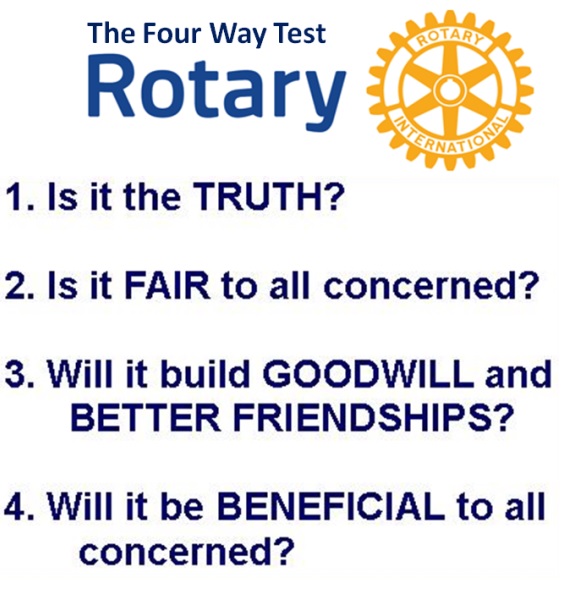
Will it build goodwill and better friendships?

[this is my open draft blog]

​Friends, if you believe there are gentle ways to speak challenging truths please seek them out, share them, and hold each other to a standard.​​

There's a quote that roughly goes "honesty without humanity is brutality."

​While we could say "it's never your responsibility to deal with how other people feel" the reality is that a lot of people are dealing with fragility that merits some kind of care​ as the instability from negligence and stress often leads to volatile and risky behavior when it doesn't have to be so​.

I can say so from firsthand experience if the literature on neuroscience, psychology, and leadership aren't enough.

Our society sucks at making that kind of shared vulnerability and opportunities for finding strength.
To me, the truth with proper context, is always good.

We have every right to be infuriated that our education systems, federal government, and the healthcare industry failed to prepare and present a cohesive strategy for us to navigate and protect public health. 
While it's important to learn and have the skills, people shouldn't have to scramble to become public health professionals just so they can learn how to protect themselves and their communities.

And I see truth in a statement by Brit Marin that says "all storytelling is inherently political" because politics is the articulation of desired action.
Western academia and science were designed for us to look at things, almost never for us to take action. Most politics as we see it on TV and at dinner table discussions winds up being more about appearances and what we want them to represent than solutions.
But we're in a crisis that pushes almost every other crisis many of us have been working to prevent or solve since this country came to be.

Sharing useful information while honoring the reality that people may be afraid or in need of comfort and psychological assurances is challenging work.
Most scientists deal with data but as they get deeper into their work know that the human connection and communication is where realities and appropriate action can be won or lost. 

Knowing is different from doing, so if you see a way we can communicate hard truths and uncertain risks with gentler hearts, please let us know wherever you see the opportunity as appropriate.

Meanwhile, here are our priorities as we see it for those who care:
1) Step up public health education for public health protections and for navigating the pandemic -- educating yourself? Good, seek multiple and contrasting--even conflicting sources. Try to reason them out + get help and discuss it with others.2) Support health care workers -- PPE, food, emotional support, opportunities to prioritize a life that exists outside of work
3) Support the community -- maybe it's checking in on friends or a neighbor with a call to see what they need, or advocates who are working to make sure residents in Detroit whose water is still shut off, or folks working to make sure prisoners can return safely with everything needed to make a second chance a success

Sunday, October 12, 2014

Reality aesthetic and the art of living

Science is the conscientious process for discerning Truth. Ethics are a qualitative science for discerning what is good. We seek to discern what is truly good, yet the process of discovery goes beyond understanding, it is also lived. When we do good, life can be beautiful. I strive to find beauty through experiencing, recognizing, re-presenting and creating reality in its truest forms.

Engaging experiences in the arts and amid the built and natural environment can elicit a tremendous curiosity. "The sense of wonder", a phrase coined by Rachel Carson, captures this phenomenal experience well. It awakens a timeless reverence for beauty that is inspirational, simple, and mysterious at the same time. To contextualize the significance of this phenomenon, I'll refer to the wisdom of a quote from Baba Dioum:

"In the end we will conserve only what we love. We will love only what we understand. We will understand only what we are taught."
We can surmise that we'll best learn when our interests are ignited for discovery through exploratory inquiry. Discovering these facets of creativity and inquiry through the sense of wonder, I believe, is key to authentic learning and appreciation for the people and world we live with alike.
Engaging experiences--the arts, outdoors, courageous conversation, etc.--compel us to relate with the world through our sense of wonder, present a nexus between living and deeper learning. For that reason, I champion pedagogical methods that foster deep learning through exploration, mutual inquiry, reciprocity, and re-integrating our connectivity for a better understanding of the world and one's abilities to purposefully live with it.


When the insight of an individual or community can discern and constructively elicit beauty from parts of life that were once mundane, they've discovered what I call the reality aesthetic. It's how people find profound inspiration, dignity, and meaning in their work. It's the art of living and shines brightest when our basic needs are met with love.

Thursday, May 22, 2014

New game! "Science Says"

Hooray, an idea for a new game: "Science Says"

As justification for play/games and open fun for better engagement, innovation,productivity, and clearer thinking.

Inspired by spending too much time in stiff conference environments (this time at the USGBC's Midyear Meeting held in the Westin Book Cadillac, Detroit). I found myself wishing we had jungle gym equipment for professionals, or an actual time in the conference schedule designated as "recess".

Consider it an improvement upon the old game "Simon Says", which I suspect was intended to hammer children into complacency and obedience.

"Simon says..." "jump up and down!" to be more creative!

With "Science Says", it's actually about advocacy--advocating for better outcomes using some truth of science (e.g. fitness and creativity research). Yet people have an opportunity to ask why, experiment to find out what the results may be, and see if it's something they can replicate.

[edit: also inspired by witnessing Adam S. Poswolsky's game/silliness agenda item at his book marketing rapid prototyping day (see the agenda in the picture!) for his new book "The Quarterlife Breakthrough". ]

Hooray!

Saturday, April 6, 2013

How did they know!?!


True stories:  I care a lot about the Great Lakes, did a lot of work with watershed education, advocate for citizen science, and also tutored English to English as Second Language (ESL) learners.

There's a set of "serious games" which educate people about citizen science or help ESL learners learn American English:

http://www.filamentgames.com/projects/citizen-science
http://americanenglish.state.gov/trace-effects

While I haven't played the ESL game, I did try out the Citizen Science game last year.  I approve of it too: it covers critical discourse (debate/evidenced based dialogue), watershed education, science, outdoor recreation, hanging out with other animals, and other forms of community and interpersonal engagement across urban, suburban, rural, and natural areas (frequently by foot) with the occasional excursion via water craft.

I'm also amazed that the images from both the Citizen Science game and the ESL game happen to look a fair bit like me.  For the photo on the left, I pretty much look like that guy.  For the one on the right, I've at least got the same shirts though my face isn't quite as angular and I doubt I've ever had my hair grow that far out.  Still, they're enough to make one wonder...

Wednesday, January 30, 2013

DIY Research: trees and mortality rates

Interesting to see your hometown mentioned in the first lines of a national magazine.

As I'm a bit pressed for time, here's a "see for yourself" bit of comparison to try that may suggest or affirm the research reported.

( see here for the full academic paper: http://www.ajpmonline.org/webfiles/images/journals/amepre/AMEPRE_3662-stamped_Jan_8.pdf ).

1)  Read and take a look at the map on counties afflicted by the Emerald Ash Borer (which killed off many ash trees in our region) on this page:
http://www.theatlantic.com/health/archive/2013/01/when-trees-die-people-die/267322/

[Side note: UM SNREds will/should recognize the Kaplan power couple in this article!  The Kaplans do a lot about the effects of exposure to nature and health, note this article (likely cited in the Atlantic article above): http://deepblue.lib.umich.edu/bitstream/handle/2027.42/30542/0000175.pdf;jsessionid=BD88BC9D74A27630675D7FABA20F7556?sequence=1 ]

The study notes that researchers claim to have isolated all other possible variables, let's see if there's a good correlation with your area.

2)  Check out this map and enter your zip code:
http://www.npr.org/news/graphics/2011/10/toxic-air/#4.00/39.00/-84.00

3)  Note the ranking of air quality from local [stationary AKA "point"] sources (1 being good, 5 being very poor).

Did you find any similarities between the air quality where you live and the counties afflicted by the Emerald Ash Borer?

If so, we can ask the people who conducted the research questions like "why was air quality from point sources not as strong a correlation for health in comparison to the presence of trees?"
Also, is it possible that many of these places are in close proximity to heavy traffic (highways, etc.)?

I wonder...

Saturday, January 5, 2013

Being "completely wrong about GMOs": Scaling responsibility with technological escalation

In reply to this blog post by Torie Bosch of Slate about an advocate's change of heart toward Genetically Modified Organisms (GMO) for meeting world hunger: http://www.slate.com/blogs/future_tense/2013/01/03/mark_lynas_environmentalist_who_opposed_gmos_admits_he_was_wrong.html
Bosch's post was irresponsibly framed.  It misleads the public into thinking the challenges behind GMO practices are settled.  Maybe* (I'm very, very skeptical but will remain open minded.) there's a case for GMO methods in genetic/medical research and such in very controlled spaces, but when it comes to claiming they're necessary for world hunger, it's like trying to justify nuclear energy for meeting global energy demand when we have yet to guarantee a safe legacy of fuel extraction and waste disposal that doesn't compromise the health of others.  Alternative strategies and technologies exist that have fewer negative legacies.  Granted, a lot of it can be harmless, but we're operating on a level that's so profound that it can cheat the defenses of our evolutionary protections in ways that we're incapable of knowing until we've met its consequences.  It transcends our known responsibility to a point that we don't know how we're ethically accountable.

As acknowledged in the article, a fair share of anti-GMO advocates don't appreciate the monopolization of large chemical companies and their strategic business models.

Consider common approaches to Monsanto's GMO business:


1) Develop pesticide/herbicide/fungicide resistant crops so that farmers can use a lot of pesticides, herbicides, and fungicides on their plots--as a chemical company that pioneers GMO techniques and patents cultivars/dna for pesticide/herbicide/fungicide resistant crops, it wins in two ways: people buy their seeds, and people use more of their chemicals.

2) Patent genetic sequences, allow the DNA to spread into the wild/neighboring non-GMO crop farmer land (this is a kind of negligence that the every day person has yet to find legal redress for),  let the crop cross-pollinate with untainted crops/wild plants, sue any cross-contaminated farmers.

3) Develop self-terminating "suicide" gene that creates infertile crops like corn,  allow the DNA to spread into the wild/neighboring non-GMO crop farmer land, once it's cross-pollinated, hybridized GMO plants (including those tainted in the wild or owned by non GMO using farmers) self-terminate after a season, create absolute dependency on the supplying GMO seed company in the region.

A prevailing concern with GMO work that isn't addressed is the uncertainty of outcomes when integrated back into the environment and living systems like a person's body.  If there are people willing to take the risk, fine, but it never ought to be done at the expense of those who cannot voice or choose to opt out.  GMO in food gambles with our evolutionary abilities.

Other things people might want to note about this "confession":


1)  An activist, while many are worthy of respect in their own right, isn't necessarily a scientist (which Mark Lymas acknowledged).

Just because an outspoken person changes stance on a complicated issue (this one's the kind that gets a technical classification as a wicked problem from complex system scientists), it doesn't mean the problems of the issue are no longer valid.  In stating he was "completely wrong" about GMOs denies many ethical problems that have yet to be understood and resolved.

I don't fear genetically modified food, I worry about its unintended consequences in other living things and the rest of the world.  Living things are relatively resilient, but we I don't appreciate a gamble that goes against what my evolutionary background prepared me for.  Most people don't even know about the things that I'd be concerned about.  Unless you've had vigorous scientific environmental and biological exposure and training, the things I would add as important arguments probably aren't heard and appreciated by the lay person on a regular basis.

2)  Science is different from engineering and industrialization.  It's also not the same as advocacy.  

Science is the process of discerning truth.  Advocacy is a change-oriented political act that summons the perceived truths ("facts") found by science to champion a hypothesis/claim (i.e. GMOs are good or bad).  Engineering and industrialization strive to maximize functions--productivity, efficiency.  Aside from science, none of these acts that people try to champion (i.e. we need more free enterprise so that small businesses can compete with the giants)--more doesn't always mean better.  What difference does it make if the majority of the small-scale GMO competitors also maintain unethical practices?  Quantity does not speak to quality.  Furthermore, none of these "civil virtues" (engineering and industry) are wholly accountable to comprehensive reasoning and justification for the sake of humanity.  While they behoove profit for those privileged to leverage them, they don't guarantee that people will respect the dignity of other beings as ends rather a means to their end.  Even people who truly adhere to Ayn Rand's notion of objectivism would find concern in that argument (there's a paradox to her definition of objectivism that I've found, so I see something bigger that's missing to her framework of objectivism).

3)  The world already produces enough food to feed everybody.  

I don't even need to dive into academic peer review literature to back this claim, see here (worldhunger.org), here (oxfam Canada), and here (The UN Chronicle).

If anything, the world's people need to learn how to live better within their means in ways that don't necessitate intensive land use.  Look up your estimated ecological footprint, if everyone lived the way I did, it would need about 4 and a half times the arable (farmable) land that our planet earth currently has to offer.  For an American living in the Metro-Detroit area, this is a fairly efficient footprint considering how much we tend to rely on automobiles and imported foods.  The average American's (footprint stands at 5), and it's really challenging to minimize further unless big changes in housing and infrastructure (i.e. transportation, substantive renewable energy as a primary source) are involved.

The world's people might not be good at figuring out how to innovate or discipline itself in living with, maintaining, and cultivating sustainable environments, but food shortage is best articulated as a local challenge.  I'll dare say food sustainability is inappropriate to reduce into a singular global problem to be solved with a large international monetary fund (even the IMF/Worldbank eventually tries to consider problems at a local scale) and technological wonder crops from exotic places or chemical companies that pioneer GMO methodology.  I might be lacking direct sources at the moment, but read to the bottom and you'll find a few things that give you leads into how I've come to this opinion (hint, college courses in sustainable ecology and agriculture).


4)  Also, let's have the death of environmentalism now.  

We don't defer all of our ethical behavior to ethicists, we let them inform us about better ways of living, but the responsibility remains our own.  Environmental issues don't affect environmentalists only, they matter to everyone, and everyone needs to find ways to exercise ethical actions that contribute to making the world a better place.  Nordhaus and Shellenberger have a better articulation about this in their essay called "The Death of Environmentalism", feel free to read that too.  The world doesn't need to be saved.  People need to save themselves in ways that don't necessitate the compromise of other living things' fundamental well-being.

So what should we do?

I'm short on time to spell out answers, but in the context of this post, I'd recommend getting vigorously acquainted with the principles of sustainable agriculture, ecology, and ethics.

Ask Dr. David Susko at The University of Michigan-Dearborn for his thoughts. teaches an excellent course on plant ecology.  His thesis work found ways for farmers to successfully (environmentally and economically) transition from conventional agriculture to organic practices.  The rest comes down to dialog.

Here's a place to start, though I'm not sure what their contents will cover yet, University of Florida's teaching it online for free:
https://www.coursera.org/course/sustainableag

Tuesday, October 30, 2012

Keeping people cool during weather agitated by climate change

Mi (original post--names are shortened for confidentiality):
global warming my ass

Mar:
talk to the astronomy professor at UMD... the man is totally against this global warming nonsense. and yeah, that wind's a blowin out there

Me (Ian):
Hate to be that guy but I learned too much science to let this slide by:
Mar, most academic astronomers are theoretical physicists. They deal with mathematical models and rarely deal with real-life long-term biological and atmospheric systems (climate is not the same as weather--weather is a short-term occurrence). What people worry about is severe weather agitated by climate change and our possible effect on accelerating it. Any causal arguments about climate change that beguile people to say "it's not true" or "it's part of a natural cycle" don't hold muster to those literate with basic atmospheric science. For those seriously engaged in the atmospheric/environmental scientific and economic communities, the most important concern comes from the ethical consequences of inaction. New York city had 10,000 911 calls per hour last night, ten times above its average. People live in areas that are unprepared for severe weather. There are at least 16 deaths [edit Nov. 1st 2012: during Hurricane Sandy. {death toll in the U.S. and Canada as of today is 82, don't forget places in the Caribbean like Haiti got hit too, with approximately 71 deaths there.}], and this incident certainly will put a dent in coastal economies that weren't ready to deal with the damage.
For common [climate skeptic] arguments refuted with good research:
http://www.skepticalscience.com/argument.php
In some way, many people realize that the severity of the weather--and thereby, the death toll--can be mitigated or reduced through our actions, even those that can contribute to likelihood of future events like the weather.

I posted the above dialog because it lists what I think it takes to responsibly and civilly respond to a situation like this.

I think what most people involved with climate change advocacy really work on and worry about severe weather agitated by climate change.  I don't mind if a person's liberal or conservative, I believe our political choices are fundamentally motivated by a desire to live well--if not for ourselves, than for future generations (my father says he wants to vote for a candidate whom I disagree with because he thinks it's important for my future).

Could a responsible conservative who recognizes the national debt and deficit being on an unsustainable course justify financial apathy?  The same principle idea applies to environmental conservativism.  What I don't appreciate about most global warming/heating/climate change advocacy is that many people tend to articulate it in ways that disempower people, and in that capacity, distracts people from connected tangible and real issues of public health, environmental justice, and the problems that arise when considering the economics in context with the science and ethics (read here for an example).  Furthermore, many advocate from a position that bolsters defensiveness and entrenchment when education and compassion are most needed.


While brandishing sticks might be a valuable tool in policy, when it comes to interacting with conscientious people whom you rub elbows with in the community, I think the greatest privilege one can have, and the greatest respect one can extend to another, is through education that respects their own autonomy as individuals.  To my pleasant surprise, the reply from Mar was positive (liked it) and appreciative (Thanks for the comment!).

Monday, July 30, 2012

Transcending known responsibility

What happens when the solution which the world looks to science for really tells us we must be more responsible than ever imagined?

We tend to seek a quick fix through facts yielded by science.  Perhaps someone in history asked: "What happens when we exploit a heavy element like Uranium?"  With intent to answer a perceived need: "we need something to make us more powerful in this war".

The short term answer they sought was yes, atomic reactions can afford a user tremendous power.  But the fundamental truth derived from it was an answer that asks the inquirer "are we responsible enough to consistently meet the challenges that emerge from consequences of this never-before imagined scale of magnitude?"  Whenever we discover a new level of complexity, the responsible answer immediately resets to a decisive "no."  Until everyone is capable of understanding complexity and the ethical implications of the system, it is irresponsible to engage such a system, especially when much of the world potentially has access to it or its potential impacts.


I gave a parallel example to a problem I've been thinking about spurred by a domestic (well, domestic in a national sense) human rights advocacy issue.  It isn't nearly as destructive, but the implications in the science are tremendous and unsettling.  It's not information that you can broadcast to the world unless an established and thoughtful community dialogue of substantial reach is already in place to handle any unrest that may arise.

That said, the issue itself merits action, and countless people are already working on it out of ethical drive even without having all the "hard" empirical data at hand.  This is the uncertainty of courage.  Even if you have few or any reason for an optimistic outcome, it's better to act so that you least put forth the effort.  It's an odd balance of ebb and flow:  there comes a point when one may be the best acquainted and prepared to bring forth challenging and discomforting issues--you become the smartest person in the crowd simply because you know enough about the problem and its possible solution to manifest the transformation of reality.  Therefore, you are responsible for bringing it to light.


Understanding this status incites dramatic shifts in the default attitudes enforced by most of society--we're used to delegating responsibility and may even draw from a sense of entitlement in attempt to justify doing so.  It's ingrained into our elections, in our governmental agencies, and at almost any workplace.  Any time you hear the phrase "it's not my job" in response to another person's problems, I challenge you to carefully reconsider the statement.  What matters fundamentally is not the individual's job, it's their responsibility.  Usually, a "job" is the prescribed objectification of an identity and its associated responsibilities.  This beguiles many in becoming an excuse for them to deny their ability to discern and act on their own behalf.  There exists privilege in being a dedicated audience:  knowing what you do now from hearing--which may place you among a select few--you have the ability to focus your discernment and learn on a different level than others who create.  In doing so, you may cultivate wisdom and act upon it from a different perspective.  Yet bringing wisdom forward with persuasive authenticity requires a degree of courage that almost necessitates one to act beyond measured reasoning.  You anticipate no favorable response from the people you interact with, but you reserve hope your assertions will find constructive reception.

I'll add a slew of paraphrased quotes that reinforced several of my convictions in late February (the 20th) of this year:  The Honorable Representative Shanelle Jackson of Detroit came to the University of Michigan-Dearborn to share her experience as a grassroots elected representative.  She urged everyone to "be an ambassador... [despite knowing a lot of people who love their city], they don't have that Detroit fire-hunger... The people here now need to vest and be an example, ultimately that will draw the new Detroiters".

She also reaffirmed my belief that apathy and complacency only serve to perpetuate injustice.  In response to a question regarding disenchantment with elected officials and Detroit's municipal government:  "When people get apathetic and step away, aren't you endorsing that corruption?  By doing that, you take away your positive energy--the only checks and balance for the desired status quo."

Jackson followed up by saying:  "local safety, clean neighborhoods, some problems are too big for government to solve--that's one on one, hand to hand community work that must be done." [I have 80% confidence in retention of original words in this last one as I wrote them down in shorthand at the event.]

I'm convinced I need to act swiftly.  I cannot un-learn what I've discovered in the research, and it would be irresponsible to leave the issue of concern as is.  Yet without proper educational and community context, I'm definitely concerned about disclosing all of the details to people whom I cannot maintain a face-to-face dialogue with at this time.