Beneath anger, there's grief. Within grief, there's gratitude. Anger channels the fire stoked by violated boundaries. It can clear the brush as wildfires do when there's too much left dry and crowded in the plain or forest to make way for the new. Or it can scorch the earth barren when years of fire suppression policy turn a regular event for maintenance into a congested pyre waiting to raze everything around it including the earth below. Rage emerges when perception for our normal paths of influence loses efficacy in the face of unrelenting anger. Rage emerges because there is a profoundly unmet need for healing.
Gratitude chooses something we honor from a situation and expresses it in ways that allow us to grow--it finds the warmth in the ember of the fires, or the paths and prairies cleared by the flames. Peace is being able to take genuine action in and from a place of love.
But how will you hold someone accountable when you won't hold them in the first place? Who's responsible for holding whom, and historically who has done the most work to hold the other?
Most cultures avoid imagining anger in its full context--if anything, we tend to invalidate, avoid, and ignore its explicit presence.
What's the healthiest expression of anger you've ever witnessed?
Who teaches you when it is safe and appropriate to express joy?
Who teaches you when it is safe and appropriate to express anger?
As a nation, what events do our US History books celebrate or commemorate as a formative nation?
Was the 1770 Boston Massacre revered in US History as a moment for non-violent protest or did it become propagandic cause for honoring victims of an oppressive force that led to a certain Declaration of Independence?
Was the Boston Tea Party a violent protest because a British tea company chose to sell tea from China without paying taxes to the North American colonies?
The U.S. behavioral play book is littered with unacknowledged feats of anger, but crafty authors weave narratives to make it look like we've always solved our problems by muffling or omitting the work and hardship that more often than not remained unresolved.
We're only three generations away from Civil War-era slavery -- community elders in their 70s have great-grand parents, some whom they've met, who were slaves during the civil war.
The Civil War was a Union military victory by conventional standards, but the KKK emerged as a terrorist insurgency with so much influence, the reconstruction era policies and constitutional amendments remained gutted well into the late 1960s.
State's Rights was the civil rallying cry for secessionist Confederate states long after they were defeated on the battle field. Separate but Equal rulings were put into place as a justification for segregating schools. The tax structure for school districts was then designed to further segregate school populations. By the time integrated schools were providing official US History textbooks to Black children across the nation, the American Legislative Exchange Council's founder began championing the privatized school industry as a way to legally perpetuate segregation by wealth.
So the basis for unresolved conflict and the modeling for destructive action has been with us since the beginning of the nation's settlement. War is a form of conflict where the most influential cohesive parties acknowledge their will to risk abuse and annihilation for the sake of asserting their interests.
Conflict is a necessary phase of peace when it can exist with clear intention and phase into resolution:
There are times for peace building to prevent or help us better embrace unnecessary conflict.
There are times for peace making to intervene with conflicting trajectories of interest and apathy.
There are times for peace keeping to steward healing and restoration so that we can better build beyond our capacity for dwelling amid destruction.
And they cycle into one another so long as intention exists to guide that.
Destruction is also intrinsic to growth so long as we have capacity to identify the patterns and intention that allows for integrity to stand amid perceived chaos.
But let us remember there were and always will be more people who are looking to heal, some seeking to heal from past episodes of bloodshed, and still more whose deeper cause for rebellion comes from a need to heal something with immense impact that it extends to the societies we live in. Medicines are best used to prevent unnecessary suffering. They embody conflict with intent. They exist with ceremony and ritual--the processes that foster emotional and intellectual solidarity for treatment to be trusted and implemented well.
Healing restores our capacity to care for ourselves and each other. Wealth is a form of collective health when our capacity to care for each other exists with the special kind of regenerative endurance we tend to call resilience.
Let us choose to make all of this be with the intentional arc of our healing in mind.
The good news is that you're not alone--there's probably a lot more folks who'd be labeled with Complex Post-Traumatic Stress "Disorder" around in high-functioning contexts than you'd think.
And at times like this, a lot of those behaviors actually aren't disorderly--they're necessary for survival, deeply human, and for better or worse always have been in our society given the context of experience many people endured.
But the more I learn about myself and others I've been privileged to know as friends and family-- veterans, returning citizens, refugees, domestic abuse survivors, friends from communities like Detroit that still suffer from legacies of racism and colonialism -- the arc of behaviors and healing from them are also fundamental to everyone's experience.
Dissociation and intrusive thoughts certainly have unpleasant directions--and I suspect they're also not too different from how people slip into daydreams. And literally as of 6 hours ago, I learned there are really sensible tools for changing that.
My friend Onyx Ashanti likes to say "the mind is the programmable conduit for intuition that exists between novelty and memory."
Grief is a profound iteration of gratitude that entails latent
recognition of unidentified or yet to be realized loss which leads to
mourning within oneself and/or a community.
Guilt can be a kind of grief where the wrongdoing in the absence of action or trespass of one's values entails a profound sense of loss to oneself and those the guilty individual may have (or may not have but perceived to have) harmed. Guilt is a form of grief over an action that the individual or community perceives as "wrong"...
Shame is a kind of guilt that happens as a kind of loss of connection to one's sense of self. It's often characterized by the sense that there's something deeply (harsh personal narratives might even say irreparably) wrong with who the individual is as a person by essence of their existence. Maybe shame is also a sign of blind self-grief. That blindness is what perpetuates a toxic negative feedback loop -- ergo my expression that "shame is the leukemia of mental health." when left in isolation without supportive signals that help ashamed individuals see qualities of their truest selves more completely in healthy light.
Yet what is "wrong" and what would be good in contrast to it?
Adopting a significant part of Aldo Leopold's maxim in his Land Ethic essay, I characterize as follows:
A thing tends to be good when it tends to preserve and advance the beauty and integrity of the biotic and abiotic community.
[biotic = living organisms, abiotic = non-organisms like rivers, mountains, rocks, etc.]
So "wrongs" are only useful insofar as they are used to guide us toward what typically will preserve and advance the beauty and integrity of the communities we live with--and since we are integral to those communities, it means "wrongs" must also preserve and advance our own beauty and integrity with respect to the communities we live with as well.
Beauty was a tricky thing for me to grasp, but thanks to a Kyudo demonstration and talk from two Japanese exchange students studying in Hawaii, they've illustrated a fundamental trio of Eastern concepts used in the martial art and even in my mother's line of family members:
Zen, Bi, Shin
Truth, Virtue, Beauty
In that sequence. Begin with truth. It can be a challenging and messy process, but committing to finding the "correct" or "good" form and developing a consistent relationship with goodness brings us into virtuous practice. Beauty emerges from recognizing the complete relationship between truth and what makes finding truth consistently a process. As a relationship, we then create the possibility for ethical consideration to exist--how we might improve our relationship with a truth using systemic processes for discerning and replicating "goodness" as guidance--in other words, we apply an iteration of science to our existential endeavors.
Recognizing the complete arc of truth, virtue, and beauty is the process for realizing grace. How elegance can manifest from the mundane.
Wisdom comes from our reliable truths. It's an incarnation of beauty that comes from a place of intelligence be it cognitive, kinesthetic, intergenerational, or otherwise.
Gratitude as I practice it comes from choosing to acknowledge something from an experience and/or relationship as an endowment--a gift, considering what that quality says about the situation/individual from a place of appreciation, how it brings out something genuinely worthy of appreciation in me, and expressing it in a way that's meaningful, hopefully relevant and visceral to all parties concerned.
I'll link back to older posts, but I'm glad to know and share that there's an arc toward healing and I've been able to document much of it over the past few years.
This article succinctly sums up the arc of my own stumblings in healing in ways that I didn't realize would happen among relatively mainstream sources. Around 2015 was the first time I ever heard of Complex Post Traumatic Stress Disorder (CPTSD), and even then it was through a friend who was going through her symptoms from experience that were far worse than what I had. I'm really glad to see more people working through it now, and also people critical about the way that psychology in practice traditionally approaches anxiety, trauma, and depression tends to be inadequate if not completely uninformed.
I was trying to compile whatever guides I came up with a while ago in a way that would make it easy for you to proceed through but struggled to allocate the brain space (or computing capacity) so this is the next best thing--you might need to just run with whatever embedded links are in one of these posts (I think it's the first one) to see how I mapped/linked various things I was working through circa 2014/15 and what I did for intervening with them:
Emotional numbness can feel like a blessing and a curse--it took a long time for me to "be okay" with the feeling. Though it's helped me keep the clearest mind when it was time to pull a friend out of a fight, I sometimes questioned whether I'd be able to be emotionally perceptive when it matters.
There's a video floating around the internet about a Ukrainian physics professor who started recording his lectures and demonstrations for students who were sick. Interviewed about how he felt knowing that his lectures are now famous worldwide with physics students and aspiring physicists, and how he tries to answer all of their questions. His reply:
"To be understood is to be happy. This makes me happy to know that there are people who want to learn about physics and understand what I'm trying to teach with enthusiasm."
Having shared a meal with dear friends in the North End, I realize this is simultaneously one of those ways and special moments that let you see what's life like to break out--or perhaps more appropriately, grow out, of that numbness.
Be well or at least know you're on the path to better.
Shattered, we lose sight.
Chasing the restless answer.
Sun rises soon, rest.
Coming round from a sort of episode between current events with U.S. immigration policy, I've been thinking about the effects of complex PTSD and the patterns that appear during an episode after the major traumatic incidents -- by the way, to anyone reading who might be sensitive to heavy topics like this, what I'm writing might not be for you to read.
How many people, including many friends and colleagues, appear to function in society, show up to work, and either get ostracized, shunned, or simply choose to cope in isolation so that they don't appear in public because they could be a danger to other people?
It feels like there's a part of life that's getting cheated in trade for some semblance of safety. Yet courage often happens at the threshold of comfort and necessity, and living life fully to overcome that existential shearing point normally means eventually choosing to move forward consistently enough that you don't let your perceptions of life collapse on itself. So we decide to push, we show up for other people and execute as high performers when we can see it really counts as long as we can focus on looking forward outside of ourselves. But when it comes to connecting with who we are and directing care inward, it's often a failing point. Someone who works with impeccable precision and attention to detail when intervening with crisis shuts down for days or, if they're isolated, weeks and months under normal circumstances.
There's a haunting word sitting firmly in my memory from part of the *internet version* Hopi Prophecy about people who are born with "sampacu -- no light in their eyes" -- I think about how the children of substance abuse, kids who grew up or the effects of young children separated from their parents as a result of the way our nation's current immigration policy is interpreted and enforced. People who self-medicate with cannabis, alcohol, or other substances also come to mind--where the goal is to slow oneself down enough that they numb the anxiety or edges of life's pains.
You probably have a stereotype or image in your head from seeing movies or reading articles that portray the condition in its extremes--flashbacks, someone reacting violently without reading the situation well, etc.--but what happens when someone is functionally working through an episode while working in the midst of other people that I think is underrepresented.
It shows up in subtle ways, maybe illogical spurts and fits in disproportionate response to another person's current or past actions which one thought they left buried long ago only to realize they've incubated the same alertness to similar kinds of pain.
For the individual experiencing those symptoms, it can feel like stepping into an intense stance is compelling and necessary. In some ways, it very well may be--at least if they're able to examine and understand how the dynamics of their present episode echoes unhealed moments in their past. The truth, with proper context, is always good. Yet when it burns brightest, it's often challenging for most people to engage it in its rawest state--there's too much to fit in a brief conversation, meeting, or decision. So the proper context will ultimately become one of your own making, and I like to believe that it sometimes comes after the fact that you may or may not have burned people during your efforts to illuminate the roots of your reality while simultaneously igniting the debris that hampered your capacity to genuinely engage others who may be near with clarity and truth from your being.
The best answer I've seen to this is to recognize the moment, learn what you can before you choose to dive in all the way, rest in reason remembering that another opportunity to move in rooted passion will arise soon with each new day.
Sun rises soon, rest.
* * *
"Rest in reason, move in passion." --a line from the poet Khalil Jibran
"Many of people in this will be empty in Spirit they will have Sampacu. No life force in their eyes."
Side note: Sampacu shares a very similar context and definition to sanpacu in Japanese -- I'm wondering if it's a typo or a common term.
Choices: Dignity in Life, Choices over Terror and Death
There’s duality in fear for living and embracing death. For samurai, choosing a worthy cause to die for is a means of embracing the presence of life and inevitable reality of death. The result: life is fleeting, live in the present as if you will die today.
Choice is fundamental for human dignity, yes. Terror happens when one’s in a situation that makes severe irreparable harm or death seem imminent and you’re unable to find or create any other choices for living.
Plum blossoms, a close relative to cherry.
-A fragmented note to myself from 11/3/14 found in my draft box
…
Back to the present:
Approaching life from grasping death first can be a very severe, spiritually violent, and overall dark approach.
Even for me today, the opening sentence was a little unclear. I think I was also touching on moments when someone is genuinely afraid of stepping into living their life fully — because with all the joys it can bring, you’re also choosing to accept and embrace the consequences of failures too.
A caveat on foolhardy failure: In my experience, the slogan “fail faster” that gets hyped in silicon valley/startup circles glorifies the downside and understates the resources necessary for recovery. Failing faster also requires proportionate tools and support to respond or rebound quickly. For people living in severe situations where balancing life and death, genuine poverty, etc. are at stake it’s a naive and misleading attitude.
We need to set parameters for failure. It doesn’t need to intrude on the sum of your existence, find ways to contain, govern, or facilitate it. Failure isn’t always bad, if you learn and grow from it. But what we’re really supposed to focus on are controlled or informed risks that we can successfully navigate. Where possible, fail forward — choose to fail in a direction of your preference so you can learn from it and still know how to stay on track. Immersing yourself in failures that go beyond your capacity to move on or focus on what’s worth failing for however, becomes a detriment one’s existence.
But this idea, really deciding to commit to living your moments fully, genuinely overwhelmed me into nihilism at times. The most overwhelming moments looked like shutting down, or believing it was important to stay with any accessible pain because that seemed like an essential part of living fully.
When some aspect of the idea made less sense to use as guidance for life, it also manifested into isolating myself in existential angst and numbness for months at a time. Of course, I still sought to show up online in minor ways and at work to keep me up to date with the rest of reality on topics I knew were important, but bridging the gap between what you think and what you believe can be quite the challenge.
The connection to choice: Life, Death; Dignity, Terror
Understanding the link between choice and dignity matters as much or even more than understanding how terror works. Terror is designed to happen when it deprives people from their sense of choice. Choice is fundamental to dignity. It requires a degree of consciousness to discern and make a genuine choice. Paraphrasing my mom: “Even into death, you have choices.” The trick is to see what they are, choose from the best, or create better ones.
Dignity and terror reflect life and death in their simplest forms. They hinge on your ability to discern, and choose with some sense whether active or intuitive.
The best practical tools for overcoming the designs of terrorism I know of boils down to three things: Joy, Truth, and Love.
It sounds unrealistically naive and Utopian at first — especially when considering that I came across them listed in a song written by my friend, Markita Moore. But the more I thought about those three around the time the Orlando shootings took place, the more I realized each element has clear, practical components that allow most of the public to deal with reality in a way that doesn’t make them beholden to reactions spurred by fear from terrorist acts.
Of course, counter-terrorism work still has an important place in the world, but for the general public in the long-term, I think this goes a long way to prevent or overcome terror:
Joy can be shared, draws people together, and builds cohesion. It inspires curiosity and deeper understanding on a voluntary basis. People are often drawn to humorous and positive moments. It can soften entry to challenging dialogues and conversations through assurance that comes from sharing a common experience — so long as it’s not used divisively at someone’s expense. It’s a significant topic in research for effective education.
Truth, upholding it and understanding it, shows us that we have more choices than what terror wants us to believe. It reminds you that a supremacist ideology is flawed putting your beliefs into proper scope with additional realities. Presenting or facilitating the truth also holds people accountable.
Love revolves around manifesting the best in and with people, which includes celebrating them as they are and the effort, history, and legacy that surrounds them in its most humane light. You can look at it in subtle forms like the discipline it takes to prepare meals for your kids even when you’re dead tired, care for the state of society, or consider the camaraderie and solidarity earned from common hardship and purpose.
Love is one of the most powerful motives used for framing purpose. Military boot camps in part are designed to cultivate an iteration of love — in terms of camaraderie — among service members and for the country. Simon Sinek, an anthropologist focused on leadership, cites similar examples in several of his talks. If you spend time speaking with service members, veterans, or yourself served you probably hear this too.
Coincidentally, scientists notice love and hate share many neurological pathways in common. What distinguishes a lively hate group from a healthy successful organization is the way they force dependent relationships and control information. But they start out and often frame their cause in terms of loving an identity, or protecting who they are. The rest of the hallmarks of their process actually mirror characteristics you’d see in healthy organizations that would appear in a Zappos/Delivering Happiness case study.
As a nation, the same applies: beyond taking care of the basics, don’t react to terrorism out of fear — else you play into someone else’s game by doing so. Focus on the things people would do in the first place when combat isn’t imminent: joy, truth, and love. It draws people to the righteous reality from their own volition, or asserts the truth without necessarily escalating violence.
But I keep returning to the general concept that making choices for death and life presents us. Major turning points basically revolved around thinking: “what’s something worthy of dying for/living for?” there’s more to say about the question itself, but that was a big starting point for my life in 2012.
Last year I met a wonderful woman who demonstrated the same idea but with an opposite (in my opinion, much healthier) approach — I’m still working on going about it from a joyous angle but it’s the same goal as far as living fully is concerned. Perhaps all of the above gives you a jump start too.
REFERENCES
On “fail faster”Example of common narratives around “fail faster” — I may or may not have a tendency to attempt living ideas to straw-man proportions, if you must try in that fashion too, don’t do it the way I did. Resilience comes from the ability to rebound instead: https://www.youtube.com/watch?v=rDjrOaoHz9s
I especially wish this was something I read in 2014 to affirm some of my own questions about the slogan, but it’s nice to see today now that I’m reading up on how other people looked at it. Also note that someone created an entire company/consulting practice around “fail forward” — focused on dissecting failures. I guess it was bound to happen: https://www.forbes.com/sites/robasghar/2014/07/14/why-silicon-valleys-fail-fast-mantra-is-just-hype/#27c7ac0124bc
Three Chords: Joy, Truth, and Love (song excerpt by Markita Moore) https://www.youtube.com/watch?v=-0QqQ_zKj1E [side note for those following our band’s progress: we’ve finalized the recording, moving to fundraise for filming a video with the students who sang in the song and coordinate its release with the video, ideally around October]
Humor in Education via the APA, learning — it seems mostly focused on higher education, I’ve yet to read in-depth for source articles, etc.: http://www.apa.org/monitor/jun06/learning.aspx
First-hand story on service leadership from Lt. Col. Drowley (the A-10 pilot mentioned in Simon Sinek’s book and talk, “Why Leaders Eat Last”): http://www.hankschuurman.com/videos/johnny-bravo
On choosing worthy reason(s) to die. Also contains practical instruction for one-strike swordsmanship (iaido) in addition to the philosophical context that informed/s the martial art: Flashing Steel, Second Edition: Mastering Eishin-Ryu Swordsmanship by Masayuki Shimabukuro (Author), Leonard Pellman (Author)
“You develop an instant global consciousness, a people orientation, an intense dissatisfaction with the state of the world, and a compulsion to do something about it. From out there on the moon, international politics look so petty. You want to grab a politician by the scruff of the neck and drag him a quarter of a million miles out and say, ‘Look at that, you son of a bitch.” ― Edgar D. Mitchell
What's the healthiest expression of anger you've ever seen?
Bonus points if it didn't devolve into petty tit-for-tat/bickering.
Also for anyone interested in diving further:
How did it allow you/the people involved to take care of their needs?
Did it allow both parties to do so or only one? Why?
Was forgiveness involved in resolving, reconciling, or embracing the anger?
Context:
I think a lot of us lack good examples. People are often afraid to talk about it, and by the time we're close to it, it's definitely challenging to navigate. Most of the time people are even afraid to walk the line between acknowledging and declaring their own boundaries and proceeding to do something with the experience(s).
And if we're honest about human beings and evolution, we know that even destructive or violent behaviors are part of life--within specific circumstances they once provided a benefit.
Not too long ago,
http://thehill.com/blogs/in-the-know/in-the-know/328787-group-knocks-trump-by-holding-first-protest-in-space
The more I think about it, some of my favorite examples of righteous mischief or frustration might be an example of that. The quote I opened with from astronaut Edgar D. Mitchell came to mind because part of it was used by a group that created the first protest (protesting the current president) from outer space (see article from the Hill).
Thinking of a similar statement that always stood out to me:
"You get to the point where you evolve in your life where everything isn't black and white, good and bad, and you try to do the right thing...You might not like that. You might be very cynical about that.
Well, fuck it, I don't care what you think. I'm trying to do the right thing. I'm tired of Republican-Democrat politics. They can take the job and shove it. I come from a blue-collar background. I'm trying to do the right thing, and that's where I'm going with this." - The Honorable State Senator Roy McDonald (speaking on his decision to vote for legalizing gay marriage. It takes a certain degree of gravitas for a statement of plain and profane words like that to work.)
A woman chooses to show up to work dressed up in Cosplay every day since her boss thinks her headscarf and any cultural cloths covering her hair are "unprofessional" even though the company had zero dress code. I know a few cosplayers and I think this is quality trolling. Though of course, trolling easily loops into cynical taunts and can differ from productive outcomes.
The Vermont (I think) man who drove in the high occupancy vehicle lane with a filing cabinet of papers is another example. He was protesting the Citizens United supreme court ruling by carrying a filing cabinet of business papers in his car, and using the "corporations are people" argument to demonstrate how he legally is permitted to drive in the carpool lane (requires more than one "person").
Huh, wow--so there we have it. A few examples, maybe not direct but they're a places to start for me at least.
It's important to acknowledge that whatever pain you experience is important. I've created or used exercises which I often share and hope will be/are helpful for others.
I also recall one thing that was eventually helpful for me was not to fixate on the idea of "getting done" with grief as if it was something I can finish if I try hard enough.
(It took a long and tumultuous time for me to arrive at this point of view so hopefully the insight comes sooner for you, reader.)
Instead, I came to realize that it's important to recognize it exists and engage it when the time seems appropriate. This is like learning the terrain on foot even though you already know what's on the map and roughly when or where it's all at.
I also found I have choices in the density of other experiences and emotions I can engage, and drew a reference from Brian Chesky's account on how for him, the depth of saddening moments didn't change after AirBnB became a success, but the frequency and volatility did (around this mark from a 3 hr fireside chat).
Basically, you can have a role in adjusting--facilitating the density/frequency of your experiences. Sometimes they're subtle but can yield Buckminster Fuller's "trimtab" effect.
I believe--even as someone looking from the outside with limited understanding about your experiences--that when you look at the patterns for what you're doing, you'll see the trajectory is positive even if it's rough and mysterious. In my experience, there's a degree of awe inspiring strength that comes from seeing it clearly which you'll carry forward.
Getting beat up does not make you a better fighter
In most of my experiences, if there's clear focus and deeper reason for doing something, any harm experienced should become a minor if not negligible concern. When I focus on what I genuinely wish or strive to do, the fears that hint to potential injuries from failure tend to get outweighed by the experience.
At the same time, courage doesn't always remind you which direction actually brings you closer to living your own life on a better path--whatever "better" means to you. Which is where it can be easy to commit yourself to terrible situations for the sake of trying to withstand whatever you can because you think you're doing the "right" thing.
I benefited from growing up in circumstances where "Tighten up your defense, stay relaxed, and avoid as many shots as you can until the fight is over." was the only realistic way for operating intact around people who were two to seven times your age or size. I sometimes used the "go out like a warrior and die on your shield" approach from time to time. Regardless of the approach however, it was really challenging to realize the situation was always a losing one.
Johnny's articles on boxing interest me because he takes an insightful approach with very intentional and intensive experiences. He applies wisdom garnered from ballroom dance to boxing rings. He looks deeply into fight strategy and tactics, and like the below excerpt, there's typically something worth learning about life outside of boxing.
Getting beat up does not make you a better fighter
Sure, it MIGHT make you tougher. But it also MIGHT make you a more psychologically damaged fighter. Your ego can only take so much abuse before your self-esteem is damaged. I can bet you right now that the most confident fighters you see in the gyms are probably not going to be the most beat-up ones.
Often, the reason why fighters are scared of getting hit is because they’ve subjected themselves to getting hit hard. They’ve somehow made up in their mind that they need to get hit hard in order to learn how to fight.
I'm not sure where I stand on how Johnny looks at self-esteem in this case--I suspect that recovering that might be possible even if it takes a lot more work and time.
One thing I'm sure about is that I wish I learned this earlier in my life--it applies beyond fighting in a ring. It certainly would have spared me a lot of pain and confusion.
Odd ironies for reducing unnecessary injury:
Today (I'm finishing this post on May 11th/12th), Chayn Labs published a "How to build your own domestic violence case without a lawyer" guide I helped develop. The intent is to help people (the organization was focused especially on women, but it applies to anyone) put themselves into healthier situations.
Here I am contemplating Johnny Nguyen's boxing advice about skillfully losing fights and overcoming punches that upholds the importance of smart self-preservation.
To an extent, some physical injuries are a bit easier to deal with: with good fortune, you can assess and understand what needs to be done to heal or adjust accordingly.
It's not about feeling hurt that matters, anyone willing to face life will know that happens. What matters is when someone doesn't know what to do about the pain, doesn't know whom to look to for help, or not knowing why something's wrong that keeps people in a world of hurt.
Emotional injuries, the deep kinds that darken your outlook on life and the world for years when left unchecked, needs honest perspective from wherever you can find it.
Getting beat up does not make you a better fighter.
Don't get beat up anymore than what's necessary for doing what you need to do.
Get up, get out and [figuratively or if necessary, literally] kick ass in the world.
FYI, no photographers were harmed in the making of this picture.
The photo was taken in good fun--a roommate intended the wood for
windchimes, I couldn't resist using them for a Bruce Lee-esque moment.
Resources cited
How to build your own domestic violence case without a lawyer via Chayn Labs and friends (myself included--you're welcome to reach me if you have questions and I'll try to direct you to support as feasible): http://chayn.co/how-to-build-your-own-case/
In a way, I sort of regard him as a big brother even though we've never met. Perhaps it's because he grew up in a similar part of California where I was briefly raised (before memory), I can easily imagine how boxing might have become my primary art rather than music had I grown up in the area longer.
I started looking at mental health and some emotional states like habits--we don't always notice when we start doing things, and left to its own or when isolated, the mind has its own tendencies too.
Hope can be found in knowing how to change habits, and in creating a clear vision for a healthier and more desirable way of being.
Aside from this guide for coping when isolated or among others, the following are possible first steps for recognizing what you might experience and how to shift out of it in-the-moment. Longer-term changes can come from changing your environment and how you're supported in pursuing better habits, as well as from shifting how you perceive your environment and actions.
Anxiety - focus/isolate attention to very simple sensation & senses--concentrate on one sensation or stimulus at a time and selectively add/reduce what's going on around you, try to embrace something [rampant, toxic] Shame - make the suffering tangible and put it into context with something worthwhile; reconnect with people who can help you do so/help see yourself more completely Depression - push yourself/reconnect with what matters
[for the above three, the following cycle and long-term intervention objectives to prevent them from consistently feeding into one another. Note that other loops and cycles may exist with any of these mental states/emotions too, I'm only familiar with the above.]
Grief - deep gratitude Unrelenting Anger - focus it toward constructive/disruptive engagement, energetic outbursts, seek humbling
Fear - (how to distinguish from anxiety?) what is the courageous choice? Acknowledge heightened body function as aid/reframe as excitement, accept and focus on overarching intention/purpose
Dead numbness/emotionally hollow - *?
Breathe sharply and deeply, note Sabina Berman's passage (last three paragraphs of p. 239 "I am Me, but what's new is that I am..." -240 "Which means, plug back in to the real world with every sense" below),
push yourself/try these (among the simplest: seek healthy sources of pain, physical activity, try to activate empathetic thinking and if/when possible, actually empathize)
[*I'm still figuring this out]
A few overlapping areas I've yet to sort out: Inert/indifference/apathy/definite lack of clarity or recurring uncertainty/ambiguity - commit to something aligned with higher intentions and dive in. Despondent - see above + depression
(images above: excerpted pages 338-341 of "Me, Who Dove into the Heart of the World" by Sabina Berman)
One thing I was reminded about myself last year: when unmet with care, mental health challenges can link closely to abuse, it's actually more subtle and prevalent than the public (even most people I know) make it out to be, and most people are less competent at intervening with detrimental behavior than they'd like to acknowledge—even when it’s their own behavior.
It's sometimes upsetting, but it’s somewhat comforting to know overwhelming suffering isn’t the same as unbearable suffering. You’re cognizant of overwhelming suffering—frustration, anger, fear, anxiety, apathy—you can observe it come and go. If you're at the brink, it's a good time to call anyone for help.
When something's overwhelming yet bearable, the line between what we're able to withstand versus what we're willing to tolerate blurs. At that point one compromises their own quality of life, and in a terribly negative feedback loop, it also takes down others', which tends to make their situation worse.
The guide linked below's helpful for roughly recognizing and coping with some behaviors, but it's missing some nuance and 40% of it feels condemning still--maybe because it focuses on what behaviors fail to fit with a "normal" or "healthy" individual rather than how those behaviors might be exercised to an advantage, and acknowledge that choosing to work through mental health issues is a healthier choice. In October I concluded (but in some part refuse to accept) that some things don't ever really heal, we just get better at managing circumstance and how we respond to suffering until we reach the end of our line. Failures and suffering are inevitable, but you can make them necessary to your life's path and fail forward—fail in a direction aligned with your most genuine aspirations.
The best tweaks for reactively handling stress I can share tend to be (listed from simplest/smallest and most desperate starting point to most significant):
1) Find presence/regain clarity of mind and attention by doing simple things that engage your senses (touch/motion, sound, smell, etc.)
e.g. feel pain (a safe alternative to harming oneself: eat a lot of hot sauce, quickly), try to hold something/someone tightly, cook, garden/farm, do dishes by hand, create music
2) Find your "flow states" and do what's needed to get there--things that immerse and engage your attention in ways that you lose sense of effort, time, and self (aka, get "into the zone" athlete/musician/artist/dancer/physicist etc.)—create the environment or circumstances necessary for you to get engaged to re-stabilize.
3) To alleviate anxiety and nerves and increase your capacity to cope with stress, push yourself through intense if not stressful situations (especially exercise and intensive work) earlier in the day, and devote time to de-escalate from them (intentional breathing/meditate, read a paper book, hike slowly outdoors, etc.)
4) Find and let yourself fail safely in the presence of caring (actually, if possible loving--in the sense they're willing to help you be at your best or celebrate you as you are if you're already living as yourself at your fullest) people (or animals) to talk it/feel it through with, or at least knowing that they're present, so it can help you re-examine the parameters and mechanisms of your own mental threshold.
"Courage cannot be taught, but when it’s scaffolded, it’s encouraged."
5) Redirect your own awareness of anger/anxiety/sadness/apathy toward preventing recognizable circumstances that contribute to other peoples' or your own unnecessary suffering
Note: The five points are also listed for starting in situations where one might have little agency for leaving their surroundings (e.g. isolated.stuck) to situations that allow more time, attention, and space with various privileges or luxuries assumed (e.g. if you're fortunate to have people you can trust). #4's particularly rare and most challenging to find for me--I'm basically resorting to #5 in hopes of creating #4.
Top left: "When at cusp of ambiguous commitment to action, meaning and zeal will be found by leaning into the ambiguity and ensuring that you choose to commit to those actions in alignment with your greater sense of purpose/intention." e.g. not sure how you feel about something you claimed you'd do/losing sense of purpose about doing it. Assumes clarity one's own intention/purpose already established/underway or at least nascent outside of the particular situation.
Midsection: distinguishing kinds of discomfort in ambiguous situations. Side note lower left corner on ambiguity/uncertain risk references this guide to embracing complex systems with risk governance.
For examples with context, note post on desperation. Summing them here: Intrinsic discomfort: am I willing to forsake something good enough most people try to rely on--though evidence and experience points to it not working--and believe that a better way for living exists?
Circumstantial discomfort: if desperation constitutes the core subject for laughter and ridicule in the film among viewers, and an individual actually lives under the same stresses created by those circumstances--is it better to stay in hopes of learning something new or leave to preserve peace of mind? For both the guiding question might be "what is the courageous choice?"
Upper right: A=Anxiety D=Depression S=Shame All three link into a negative self-sustaining loop. All three have near-term potential tactics for intervention.The note on "Healthy forgiveness" references this particular interpretation of forgiveness.
I'm still figuring out how to look at it in a way that doesn't weigh me down. I definitely felt like a victim of statistics a few weeks ago when reading about it. I do have a few things that help and have shared that here too.
Saw this Saturday, which led me to find the term "Alexithymia." Though I don't drink coffee, I'm glad to know that's what some people would call it. Hopefully it's a useful resource to you/people you know.
Looking at it with strategic clarity in a way that's not condemning remains an open endeavor. I've given a few days to look at it with different eyes. What's helped:
1) Every behavior has a benefit from the an evolutionary biology perspective. In my life, I know from a lot of reflection times where I benefited from it and probably why it came about.
2) There's a spectrum of behaviors that most human beings encounter, this is a blip on it and doesn't represent the entirety of someone's personality, and "Your tendency need not be your destiny." - quote on the walls of Macomb County correctional facility
3) "Tranquility's something everyone seeks, but only you yourself can find." - homeless gentleman in Lansing
Some descriptions: "you don't live, you just exist. You don't feel, you just function." I'd describe it as being emotionally hollow, inert, or emotionally blocked/stagnant. It often blends with depression and ASD/PTSD. This tune was the closest I got to articulate what it's like to deal with that state a few years ago--stuck, mentally trying to work it off, but not really getting anywhere.
In 2012 I started to realize absence of feeling/emotion was a problem while at a friend's apartment. Later during a class reflection activity at Ryan Correctional facility, we were asked to share how we felt. I didn't know what to do and didn't have anything to say. I realized when everyone started laughing that I was the only one who was genuinely confused among university classmates and people who spent most of their lives in prison alike. In some parts of my life it's been helpful, but it's also been destructive, detrimental, and frustrating in other aspects.
A few resources exist, one in its early stages with a test, most of the posts (often lengthy) are from people discovering, trying to cope, grieving (many heavy stories), or describing their experience as someone with Alexithymia/being with someone with it. The online community remains fragmented.
As far as I can tell, few carry focus on solution/resolutiontechniques at the moment. Those who shared insight for pulling through mention art, exercise, and laughter in comments online elsewhere. Also, at least one person believes learning directly from others helps resolve it, and I suspect the list of feelings described in Non-Violent Communication might be another approach for wrangling emotion into articulation too.
I've been practicing some solutions for myself. At the least, ways to prevent it, minimize it, or open up when it does happen--I've mentioned running in advance of my day, play, and dancing to open up my capacity to feel. I'm starting to manage how I engage and give space to process situations to find emotion differently.
I hope it helps someone, thanks for letting me share with all of you.
Ian D. Tran
Friday, April 12, 2013
Last week I briefly attended an event held at the N'Namdi gallery by artist ____ fleur, who discussed how the future of Detroit's aesthetic will likely move from a grungy/gritty presentation to something brilliant and colorful--she pointed to traditional African aesthetics, and even the diversity of existing architecture in Detroit. I used to think about parallels between abuse and the Detroit aesthetic--its music, a lot of its art, the stories in the news. There's something about some people who experienced deep and sustained harms where we find an attitude that's a mix of resilience and a weary-worn frankness. Sometimes, an element of guarded shame stands as a likely possibility. It's often comfortable to recognize it. You know you're at peace in their company but there's a certain darkness to how they live--unanswered or seldom explored questions remain like mysterious gashes: no one can tell whether they're still wounds to be healed or closed scars, and we've either developed habits for moving in ways that don't aggravate them, or are too afraid to move any further. Knowing that a lot of media and negative imagery already exists for both, I never expressed it to anyone before.
However, I happen to know several people who endured sustained abuse, sometimes terrifying in its truest sense, who can embody the most vibrant aspects of life. They often define what's possible for living in a better world, or demonstrate how to carry on by living amid its realities. In spite of misfortune, they continue, we live well. I also had the privilege to know so many brilliant people who know Detroit as their home do brilliant things. Their actions and the communities they create exist as the tinder and fuel aflame--the growing feathers of a phoenix--through which the city finds itself amid its ashes. While I've been through gunshots on the East side, I've also been to the Alkebu-Lan Village which soon celebrates a 35 years of exceptional karate in Detroit and sustained community enrichment that's drawn the attention and admiration of companies known for their mid-town investment presence like Quicken Loans.
Going back to the idea of parallels in mental illness and community: In a lot of ways, the negative media and identity stigma that many Detroiters loath mirrors the same imposition of identity a person undergoing mental health challenges meets when labeled with a certain disorder/illness. Identity becomes objectified by another, opportunity for change is denied in the reality constructed by those who impose/accept it as such.
“What we need to match the science of human health is what the ancient Israelites called ‘hocma’—the science of the heart... the capacity to see... to feel... and then to act... as if the future depended on you. Believe me, it does.”-Bill Moyers
Some of the most evocative artists also happened to have very severe mental health challenges.
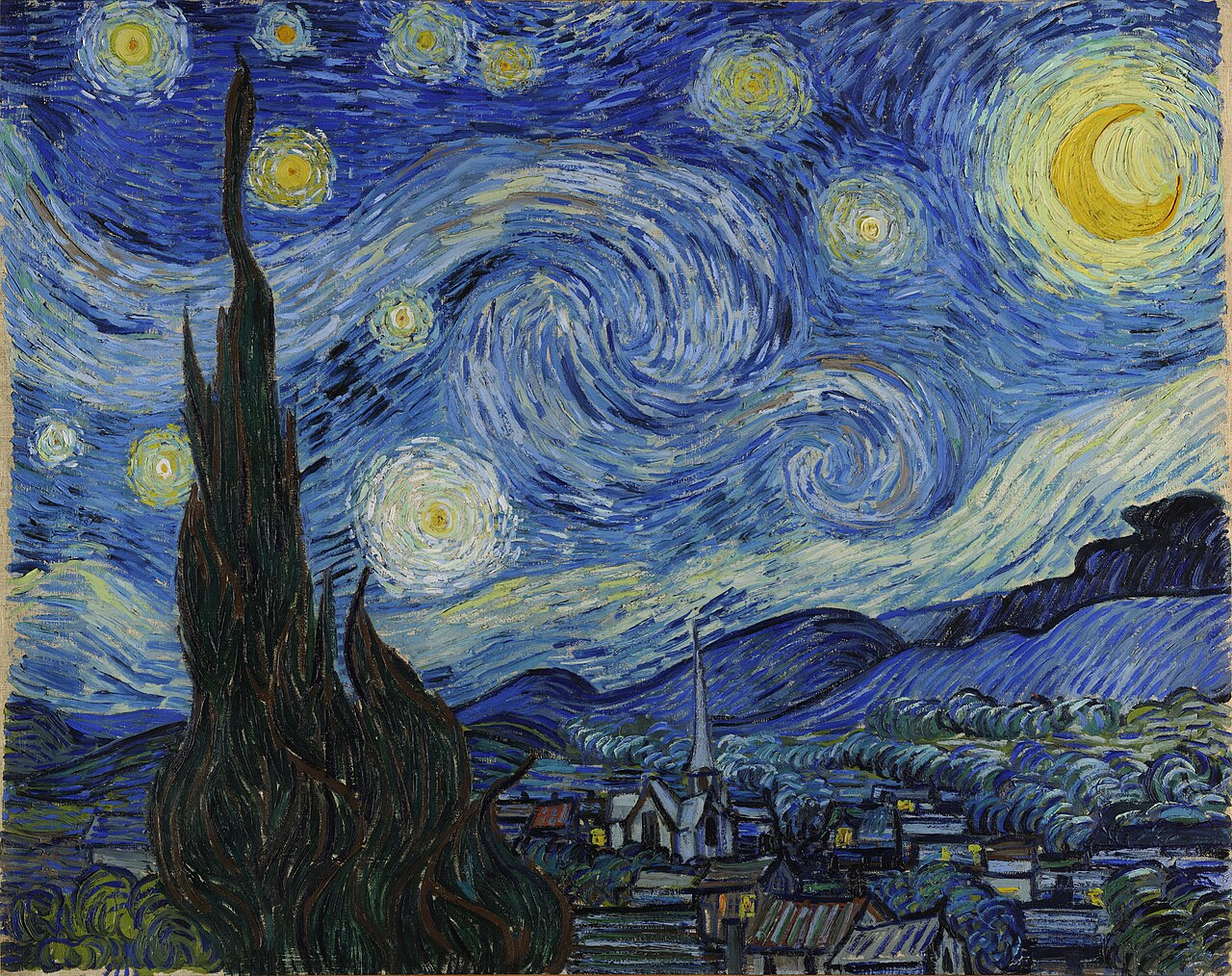
Vincent Van Gogh (of starry night fame, among other paintings), would be labeled with bipolar disorder, schizophrenia, and a host of other illnesses (those who want to point to his missing ear as possible evidence of mental illness may need to reconsider recent interpretations of events though).
Recently, I've had a cello tune by Robert Schumann visiting my head with vigor. I first learned and listened to Schumann's music via a recording of his "five pieces in folk style" performed by the cellist Natalia Khoma. The piece that really stood out was the first from piece in the set labeled with a brief suggestion in German: "With Humor" (Mit Humor). I really liked the tune, but always imagined it had an adversarial kind of sound to it. Now, with the benefit of many years of new experience in performing and the wonders of youtube, I've listened to several other performances of the piece and decided that the piece is challenging to play with humorous conviction unless you're in a REALLY good mood.
While searching for other recordings of the piece, I noticed one youtube playlist that contained a lot of Schumann's music was titled "Music for a troubled mind." After a brief search on Wikipedia (and elsewhere, but Wikipedia was most accessible so I'm giving it credit foremost) about his life, I had confirmed my suspicion that he too, had a rough time grappling with life on the now and then.
In some ways, I was disappointed, there's a research article with a disempowering title called "the dark side of creativity:" and a subtitle that says "vulnerability and negative emotions lead to greater artistic creativity"[1], Schumann reaffirmed its findings. At the same time, I was relieved: over a hundred years later, living people actually perform and presumably enjoy listening to his music.
Realizing that, I'm reminded of a pondering that started earlier this summer: how many people actually wanted to be with Van Gogh or Schumann not because they enjoyed their works, but because they knew they were ill and truly wanted to understand, or possibly help them?
The current media buzz from recent shootings suggest that we as a public are quick to impose a label and therefore, imbue an identity onto another person. When we refer to people with mental illness who behave poorly around others or worse yet, commit injustices, we strip away the complexities of their history, circumstance, and potential as people. In light of shootings like the Colorado shooting that took place in the theatres, or the recent shooting at Sandy Hooke elementary, people say "that's sick" with sneering hate in their voice and tones of disbelief. Yet they forget what it means to be sick. Killings of that sort are certainly inexcusable and unjust acts. But in saying someone is sick under most circumstances, we'd hopefully recognize sickness as a state of poor health with the intent to improve it to a better condition. We rarely say someone's an absolute loss and dead already.
In instances of the shooters in the aforementioned incidents, one of them (James Holmes) looked like he was in disbelief about his circumstance and actions during the trials, the other (Adam Lanza) had been killed before he went to trial.
While it might not be accurate or true to the circumstances of the previously mentioned criminals, I'll offer an unusual perspective as a possible ingredient for empathy:
Some people hurt so much that they wish they'd do something to deserve the pain and shame they've felt. Why? Because they don't understand where it truly came from, why it happened, or what they can meaningfully do about it. Sometimes the confusion, pain, and anger are a legacy of outcomes from bullying, terror, neglect--abuse.
At the same time, recovery has little space to exist in our society. We delegate responsibilities of care by sending people to hospitals or rehabilitation centers. Often, they're cut off from people whom they might actually need for humane interaction that goes beyond vital statistics, food delivery, and psychiatric testing. This is a similar challenge that prisoners face. Granted, they're frequently inexcusable and still responsible for their own actions, but I've met enough to know that there are some who also want to live as better human beings for the sake of others in their community or family. One of them is a mentor of sorts to me and many others at the University of Michigan-Dearborn.
Furthermore, we're in a society where meeting sophisticated social needs frequently becomes a rare occurrence--mental healthcare for many is inaccessible if it means we must invest burdensome financial capital and traverse great distances to reach whom we'd hope are vigorously trained and keenly attentive health specialists. But what happens if therapy amounts to paying for the privilege of talking to someone who just might choose to offer you medication instead of helping you embrace and resolve your conflicts? Our fundamental intentions with most of these sessions come from a deep desire to meaningfully communicate with another person in a safe environment, and know that someone else cares about your well being. These "specialized services" happen to be many of those that people ought to expect out of a good friend.
Let's consider a line of questions:
1) When someone we know grieves because a loved one died, what's the likelihood that they'll do so in a way that can't be described as some kind of illness?
2) What accurate ways exist to gauge one's mental health?
3) Will that person remain an injured and fatally broken person forever?
4) Does a state or institution have the right to take them (and in turn, impinge upon their freedoms) away from the rest of the world away by labeling them as "sick" or "mentally ill" for suffering humane experiences?
Sometimes, you'll discover that they too, deeply wish to get better. I suspect in severe cases, more often than not, they've had to confuse themselves into believing they're unworthy of aid and redemption. In my case, I think it's a form of shame and self-hatred that some people are willing to perpetuate because they don't really grasp an alternative reality to how they can live and who they can be.
When someone is ill, the rest of us also have choices that actually challenge our perceptions of responsibility as a community:
Do you take up apathy?
Will you let them continue to suffer?
Will you embrace their challenge and aid them to get better?
If you want to live in a better world, these questions become your charge and duty. If you're preparing for fields in medicine or justice, this is the challenge you're charged to meet at any moment, sometimes through witnessing subtle realities slip in and out of a window of opportunity many times in one day.
I started to write this post around December 19th of 2012 in reaction to realizing that a talented and fun loving person who quickly and, likely, genuinely considered me a friend did so as I was still wondering if I was in stable mental and emotional health.
This brings me to a quote from Bill Moyers which you've seen at the beginning of this post:
“What we need to match the science of human health is what the ancient Israelites called ‘hocma’—the science of the heart. . . the capacity to see. . . to feel. . . and then to act. . . as if the future depended on you. Believe me, it does.”-Bill Moyers
You may be the only individual with the privilege of interacting with someone who suffers from mental illness. Recognizing that possibility exists, even brief encounters with other people can define your relationship if it's no longer sustained. I've come to believe we're obligated to make sure we've made a positive difference in other people's lives whenever we're privileged to reach another person.
"Depression is real. Just because you’ve never had it doesn’t make it imaginary. Compassion is also real. And a depressed person may cling desperately to it until they are out of the woods and they may remember your compassion for the rest of their lives as a force greater than their depression."-an excerpt posted on an online social network by someone who pulled a quote from the depths of another social network
I'm convinced that many people with mental health challenges also contributed some of the most profound ideas, expressions, and acts of compassion known to history.
Van Gogh, Schumann, I've mentioned before. There are more I can list, but I'll choose Buckminster Fuller as the closing example for his resolve to do something out of what began as despondent angst:
"He ultimately chose to embark on 'an experiment, to find what a single individual [could] contribute to changing the world and benefiting all humanity.'"
Just read about him, he made amazing things and had great insight for design/complex systems theory.
[I don't completely agree with his techno-centric vision, but he was certainly prolific and lived a life worth knowing something about-read the section on his depression and epiphany for the segment that most.]
Now on the converse, you don't need to be sad, immensely depressed, or ill to do great things. If that's where you're at great! As human beings however, we're capable of it all. Can you make the most of life and see what you can do with the hearts of other people?
Research doesn't tell us the answer, the actions you choose to live for do. It's up to you to hone hearts, to do what the future depends on you for.
[1] The Dark Side of Creativity: BiologicalVulnerability and Negative Emotions Lead toGreater Artistic CreativityFor just the abstract: http://www.ncbi.nlm.nih.gov/pubmed/18832338