Showing posts with label artistry. Show all posts

Saturday, April 11, 2020

ATCQ's space program(s)

Everyone might not be ready to see and hear it, but the messages are essential for everyone to recognize what's at the root of so much struggle.

Listen and observe for the story being told and for the stories yet to be made.


A Tribe Called Quest
"The Space Program"

(feat. Vincent Price)
I'mma deal with a bigger insult, man
The heat, the heat, the heat, the heat
It's comin' down hard
We've got to get our shit together

It's time to go left and not right
Gotta get it together forever
Gotta get it together for brothers
Gotta get it together for sisters
For mothers and fathers and dead niggas
For non-conformists, one hitter quitters
For Tyson types and Che figures
Let's get it together, come on let's make it
Gotta make it to make it, to make it, to make it, to make it
To make something happen, to make something happen
To make something happen, let's make something happen

Word to Phifer
Gonna bring it to the overlord, drinkin' Cisco
Chilling with the gold microphone cords
And we grip our balls every time we stuntin' on tour
'Cause we never bore, responding to the ready crowd's roar
And promoters try to hit us with the art of war
We about our business, we not quitters
Not bullshitters, we deliver—we go-get it
Don't be bitter 'cause we not just niggas
Jarobi, my fiber wove into different cloth
Ain't nothing forbidden, this nigga get his written off
Hardest spit in the city y'all niggas spitting kitten soft
Confused and amazed, shook up with your brain missing lost
They planning for our future
None of our people involved
Pouring Henny and Smirnoff to get it cracking off
Cracking off a Smirnoff to quickly turn to Molotov
Molotov the spaceship doors before that bitch is taking off
It always seems the poorest persons
Are people forsaken, dawg
No Washingtons, Jeffersons, Jacksons
On the captain's log
They'd rather lead us to the grayest water poison deadly smog
Mass un-blackening, it's happening, you feel it y'all?
Rather see we in a three-by-three structure with many bars
Leave us where we are so they can play among the stars
They taking off to Mars, got the space vessels overflowing
What, you think they want us there? All us niggas not going
Reputation ain't glowing, reparations ain't flowing
If you find yourself stuck in a creek, you better start rowing
Used to see the TV screen as the place to land my dream in
And the car stereo where they would promote the show
Optimistic little brother with a hope you know

(Move on to the stars)
There ain't a space program for niggas
Yeah, you stuck here, nigga
(Move on to the stars)
There ain't a space program for niggas
Yeah, you stuck here nigga
(Move on to the stars)
There ain't a space program for niggas
Yeah, you stuck here, nigga
(Move on to the stars)
There ain't a space program for niggas
Yeah, you stuck, stuck, stuck
(Move on to the stars)

Sit and wonder sometimes, I read the paper every day
All these happenings is cycular, just happen different ways
And the president's refined, in her wing she's confined
With about thirty Percocets and five bottles of wine
Carolina nothing finer than a Black woman who climbs
To the top of the State building claiming that that flag is mine
Now, people on top of people, feels like we can't breathe
Put so much in this muthafucka, feel like we shouldn't leave
Put it on TV, put it in movies, put it in our face
These notions and ideas and citizens live in space
I chuckle just like all of y'all, absurdity, after all
Takes money to get it running and money for trees to fall
Imagine for one second all the people are colored, please
Imagine for one second all the people in poverty
No matter the skin tone, culture or time zone
Think the ones who got it
Would even think to throw you a bone?
Moved you out your neighbourhood, did they find you a home?
Nah cypher, probably no place to
Imagine if this shit was really talkin' about space, dude

Time to go left and not right
Gotta get it together forever
Gotta get it together for brothers
Gotta get it together for sisters
For mothers and fathers and dead niggas
For non-conformers, won't hear the quitters
For Tyson types and Che figures
Let's make somethin' happen, let's make somethin' happen
Gotta get it together for brothers
Gotta get it together for sisters
For mothers and fathers and dead niggas
For non-conformists, one-hitter quitters
For Tyson types and Che figures
Make make make
Let's make somethin' happen, let's make somethin' happen
Gotta get it together forever
Gotta get it together for brothers
Gotta get it together for sisters
For mothers and fathers and dead niggas
For non-conformists, one-hitter quitters
For Tyson types and Che figures
Let's make somethin' happen, let's make somethin' happen
Gotta get it together for brothers
Gotta get it together for sisters
For mothers and fathers and dead niggas
For non-conformists, one-hitter quitters
For Tyson types and Che figures
Make make make
Let's make somethin' happen, let's make somethin' happen
Gotta get it together forever
Gotta get it together for brothers
Gotta get it together for sisters
For mothers and fathers and dead niggas
For non-conformists, one-hitter quitters
For Tyson types and Che figures
Let's make somethin' happen, let's make somethin' happen
Gotta get it together for brothers
Gotta get it together for sisters
For mothers and fathers and dead niggas
For non-conformists, one-hitter quitters
For Tyson types and Che figures
Make, make, make
Let's make somethin' happen, let's make somethin' happen

The danger must be growing
For the rowers keep on rowing
And they're certainly not showing
Any signs that they are slowing!
"We're there!"
"Where?"
"Here!"
A small step for mankind
But a giant step for us
Oompa, loompa, doopa dee doo
I've got another puzzle for you


...
 To muse on the lyrical meanings with others online:
https://genius.com/A-tribe-called-quest-the-space-program-lyrics

Tuesday, January 8, 2019

Reframing risky actions with rhythm

In high school, I briefly joined the our high school [U.S.] football team because, among the un-cut sports, it seemed like one of the most well-balanced for conditioning and teaching someone how to get started with intensive fitness.

While I joined too late to really grasp and take part in critical parts of it (especially camp and scrimmages) that probably would have given the best of the applied fundamentals, I enjoyed what I learned during off-season conditioning in the weight room (mostly thanks to a handful of hilarious and goofy Junior Varsity (JV) and Varsity teammates who’d blast “Coach’s 80s [Music] Favorites” between sets), defense and hitting drills on the blocking sled (basically a big padded dummy for you to run up to, block and push).

Of course there were things that come to mind when you’re very inexperienced in the middle of a sport that has an aggressive reputation — some are reasonable like how to tackle properly (I missed the chance to do a lot of that by joining late and missing the camp) and build confidence on the field, people get bigger and more lethal with their hits as they progress beyond freshman year into JV and Varsity teams.

But what spooked me most after the season was over was a dream where my actions crossed into the real world: I’m at practice doing drills with the blocking sled, hitting it, driving forward, and hearing the coach say “Good hit.” and running back into position before waking up to realize I shoved my pillow from across my bed into a wall at the side of my bed.

I’ve been reluctant to deeply train in a lot of striking combat sports because of that event:
The muscle memory and actions in my subconscious were real, and I realized if I wasn’t able to keep a simple motion like basic blocking, doing a more aggressive push or hit could potentially injure other people too.

Would that stay with me forever? What if stayed with a girlfriend and when a dream or nightmare like that comes up and I wind up attacking her without knowing what I was doing?


Recently I’ve been focused on how to cohere the sounds that come from working on practical tasks — construction for example — into something that people can approach, engage, enjoy, and celebrate from the perspective of music.

If you’ve heard or partaken in some of my participatory pieces before, Watershed (using “raindrops” from clapping, etc. like you might have heard elsewhere), or Breathing (breath and wind-aesthetic noises), there are ways to cohere random noises that

On a spectrum starting from the precise control a composer might have with a traditional instrumental or symphony vs. what happens when embracing random (the musical term is aleatory) events in music like John Cage’s 4 minutes and 33 seconds or Pauline Oliveros’s games for deep listening, there’s an in-between place where you can facilitate noise and “frame it” that’s especially interesting to me in music that can have a role in accelerating the way a community takes care of its basic needs while giving room for people to explore and build their own skills (again, construction in Detroit neighborhoods and a dream that inspired ways to merge both concerts and construction into the same event).

Which brings us back to percussive hitting motions.

Returning to a classic* (at least, classic for dating back to 1997 haha) video of a shamisen and Taiko drum duo, I realized that building the stamina and coordination involved with striking a large drum might actually be very similar to the kind of practice that goes into learning how to strike and build up the basic form and endurance that’s conducive to (though definitely not a substitute) learning the basics in some combat sports/martial arts like boxing.

This isn’t as big a leap as one might think. Johnny Nguyen ( I like to imagine him as my big brother or cousin as we share LA-Vietnamese roots ) stakes much of his professional image in teaching about boxing, his website is titled Expert Boxing, and at the same time, he swears by the role dance had in transforming his ability to move and work the ring as a better fighter.

You know how after working out, you feel pretty good as the endorphins release, and then your capacity to be present with or navigate past lots of silly and otherwise petty events magically goes up? I’m pretty sure being a taiko drummer would do that on a lot of levels. Even in my brief experience with playing in the University of Michigan-Dearborn’s West African Drum Ensemble, the joy and mental clarity that came from playing on the sanban (a medium sized laundry hamper-sized drum often heard in West Gunean drum ensembles) or dunnun (the largest drum, think of an extra long barrel) was second to none.

Unlike playing a stringed instrument, where you’re suddenly met with countless variables plus the risk of carpel tunnel, there’s a kind of peace that comes from the simplicity of being very physically engaged as a drummer.

So seeing the drummer in this taiko video swinging giant drum sticks to literally (albeit rhythmically in an artful sense) and noting that he looks as fit as someone who does lots of pushups and chinups on a regular basis, it wouldn’t be too far off to look at learning an endeavor like boxing with the same attitude: there’s an art and rhythm that comes with striking the bag (or opponent, though whether one chooses to engage another person is a different case), and when sparring with an opponent, there’s an element of improvisation and pacing that comes in which is very similar if not the same as learning to improvise with another musician during a jam — albeit the outcomes and goals might differ greatly.


https://www.youtube.com/watch?v=_M4K5wk9DCM


[Feel free to ignore my comments -- rarely in spaces where talking about this stuff with people who interface with symphonic/orchestral music at an analytical level so I'm taking the opportunity to ramble reflections out loud]

Listening again to Orient and Occident all the way through for the first time in probably over a decade, I'm starting to appreciate some new layers to the piece. There are the overt elements of counterpoint in the call/response which strike us right away, and then there's a subtler dimension of stylistic counterpoint too -- a lot of unison voicings (akin to what's heard in traditional Turkish/Arab orchestras) and some embedded octaves/artificial harmonics but also harmonies and chords (presumably on the occidental side) in a way that drastically go against the "oriental" traditions. A Turkish friend once scolded me for adding drone notes during an improvisation on a melody that reminded him of traditional Turkish music. I'm shuddering from the recollection now that I can listen closely with more seasoned ears than my high-school self would have ever known haha

Monday, December 8, 2014

Art guidelines for the uninspired

"Artist friends,When you are feeling hopelessly uninspired (and frustrated/desperate enough about it to post a Facebook status asking for help), how do you fix it? Any and all advice appreciated." -K
I take comfort in the following guidelines when making art for myself. Hopefully they're useful in showing possible paths to making meaningful work for others and pulling the uninspired out of their ruts:

0) Approach art as a form of communication that stirs curiosity and wonder. Curiosity for yourself, or for others--it's up to you.


How? Choose one, some, or all of the following as a start:
1) suffer and/or empathize
2) explore, experiment, play
3) mix all of the above


0) Consider art a form of communication that evokes a deep curiosity—about yourself, about the world around you.
Do you have something to say or convey to the world? Make it so.


“Art ain’t about paint. It ain’t about canvas. It’s about ideas. Too many people died without ever getting their mind out to the world.” — Thornton Dial, SR.

1) Suffer or/and empathize
If you find nothing compelling within your imagination and memory, then expose yourself and empathize with genuine suffering or an injustice that can capture your heart's attention. OR re-imagine something familiar from a different perspective or through a different medium. It might be an analytic endeavor at first, but sometimes those will yield artful discoveries too. In any case, find the contents of a story worth telling/making/re-presenting.

In the sense of finding and creating stories worth sharing, good artful acts of creation can exist in conversation too.

2) Treat creating as an act of play or experimentation--where the process of exploration matters more than the outcome [1], then revisit with intention.

3) Sometimes, you'll mix all of the above, or discover integral themes emerge, or poetic parallels.I may hear a snippet of melody that compels me to experiment. At the same time, I may witness or work on something that galvanizes the idea in time with current events and overarching themes of human endeavor [2]. I then set out to bridge meaning between the two. Sometimes it's an organic blend from the start, others I force together before they melt into one, and sometimes, it's creation without attachment or any explicit meaning necessary.


Angular study in azure--familiar subjects and experimentation.

Compelling outcome? Perhaps not to most.

I did, however, learn that corners of rooms can be

interesting for experiments with image composition.
[1] I really enjoyed hearing Eric Gordon's characterization of play (where process matters more than the outcome) at the IADB's 2014 Demand Solutions summit in DC. Imitating play (whoa, meta!), by playing around with odd notes on a piano? Yes, you can do that too!

[2] Emotive Mechanics started with me pondering experiences in life, and then sitting down to improvise on a tune of mine as my mind processed the ideas (see video description for initial circumstance).

Edit: I recently read Sabina Berman's [most excellent] novel, "Me, Who Dove Into the Heart of the World" and really appreciate the notion of "letting the world think through you." That's exactly what I'd use as the core principle for the above: let the world think through you. That said, I believe my guidelines can remain useful for retroactively thinking about what you've done or getting into a frame of mind that allows creative processing.

Sunday, October 12, 2014

Reality aesthetic and the art of living

Science is the conscientious process for discerning Truth. Ethics are a qualitative science for discerning what is good. We seek to discern what is truly good, yet the process of discovery goes beyond understanding, it is also lived. When we do good, life can be beautiful. I strive to find beauty through experiencing, recognizing, re-presenting and creating reality in its truest forms.

Engaging experiences in the arts and amid the built and natural environment can elicit a tremendous curiosity. "The sense of wonder", a phrase coined by Rachel Carson, captures this phenomenal experience well. It awakens a timeless reverence for beauty that is inspirational, simple, and mysterious at the same time. To contextualize the significance of this phenomenon, I'll refer to the wisdom of a quote from Baba Dioum:

"In the end we will conserve only what we love. We will love only what we understand. We will understand only what we are taught."
We can surmise that we'll best learn when our interests are ignited for discovery through exploratory inquiry. Discovering these facets of creativity and inquiry through the sense of wonder, I believe, is key to authentic learning and appreciation for the people and world we live with alike.
Engaging experiences--the arts, outdoors, courageous conversation, etc.--compel us to relate with the world through our sense of wonder, present a nexus between living and deeper learning. For that reason, I champion pedagogical methods that foster deep learning through exploration, mutual inquiry, reciprocity, and re-integrating our connectivity for a better understanding of the world and one's abilities to purposefully live with it.


When the insight of an individual or community can discern and constructively elicit beauty from parts of life that were once mundane, they've discovered what I call the reality aesthetic. It's how people find profound inspiration, dignity, and meaning in their work. It's the art of living and shines brightest when our basic needs are met with love.

Wednesday, November 6, 2013

[He]artful dialogue: Co-creating artful conversation with courage


New life-challenge: turn curiosity into courageous questions quickly.

Not so new but still challenging for me to do: elicit passion and wisdom from other people as soon as appropriate.

“Art ain’t about paint. It ain’t about canvas. It’s about ideas. Too many people died without ever getting their mind out to the world.” — Thornton Dial, SR.

Art, as I’ve come to understand, exists as a special form of communication. It’s communication that inspires a sense of wonder—a deep curiosity that has us ponder the encounter and ideas behind what we engage. It compels us to activate our curiosity as we wonder about the possible implications an encounter can have on our lives or the that of others.

I saw Thornton Dial SR.’s quote in the Smithsonian American Art Museum’s folk artist exhibit. It was liberating as much as it was validating: To make art, one requires no rigorous history of training, art degree, special materials or extraordinary circumstances to start. To me, Thornton Dial’s quote was an invitation to make whatever was on my mind if I so wished to do so. Better yet, it comforted me to know there’s boundless opportunity to share any idea, including those that can’t be experienced in writing. Perhaps what we have to share comes forth as good and beautiful. Whatever we choose to do, the act of honestly communicating our ideas certainly brings us closer to truth for our minds and hearts. Whenever that happens, it’s an invitation to live life artfully.

Looking at Mr. Dial’s quote again, it also applies to how I look at living life when speaking with and listening to people. There’s an art to good conversation and dialogue. If we consider Seth Godin’s distinction between the characteristics of work and art, artful conversation becomes a palpable ideal. Godin believes that work can be recognized as something people want to do less of, while art is something people want to make more. In that sense, we can all strive to make artful conversations. Both are important, good work can be necessary for creating better art.

.      .      .

I believe everyone benefits being in and moving from a place of passionate curiosity. Being as Rachel Carson describes, in a “sense of wonder”. When activated, it entices profound intrigue straight from the spirit. Whether mentally or physically, that place could be our own, among others, or perhaps better yet: shared. What matters most is that we speak with the flames of inspiration, those burning deeply from within our being to create that place.

If there’s dead space or if confusion nags at your attention in a way that prevents peace for everyone in the conversation, call it out and help shake things up. Time and life in the presence of another person are too precious an opportunity to squander. For anyone who grants me the privilege of sharing a conversation, this applies to us too. Call me out if I don’t do so first. Just because I’m familiar with the recesses of awkward pause doesn't mean I necessarily need or want us to stay there.

Perhaps the cost of very good conversation comes from committing yourself wholly to the people you speak with by thoroughly listening and keeping the courage to share what really matters to you. But do so in the greater interest of co-creating an enriching dialogue for everyone involved. Live boldly. Don’t be cautious, but be considerate with presence, intelligence, and equal heart. With this in mind, we can strive to create heartful conversations.

I’m still learning how to do so with excellence. But I like the idea that it’s an endeavor to live and share.

Wednesday, December 19, 2012

Mit Humor: Mental illness and our capacity for hocma


“What we need to match the science of human health is what the ancient Israelites called ‘hocma’—the science of the heart... the capacity to see... to feel... and then to act... as if the future depended on you. Believe me, it does.”-Bill Moyers

Some of the most evocative artists also happened to have very severe mental health challenges.

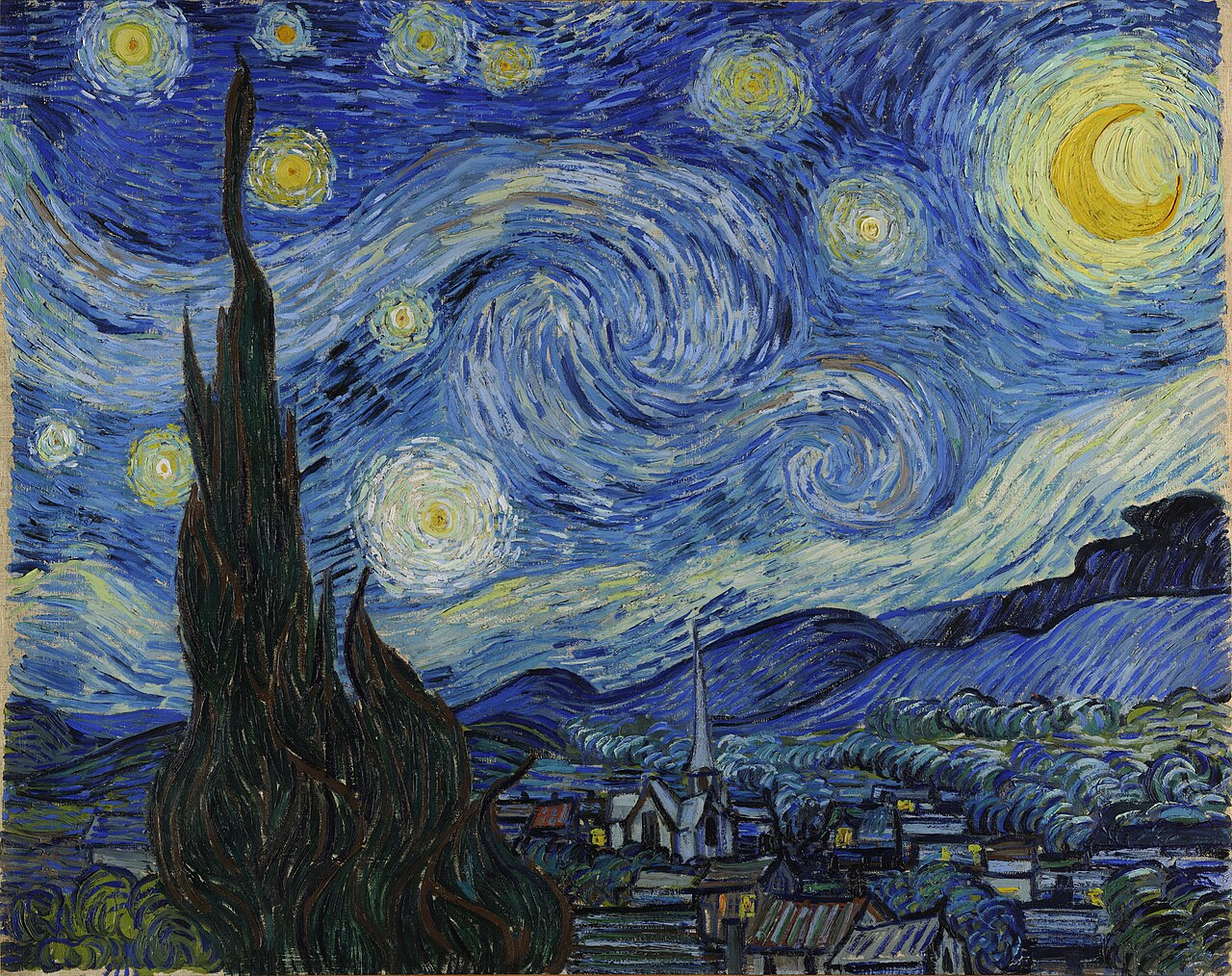
Vincent Van Gogh (of starry night fame, among other paintings), would be labeled with bipolar disorder, schizophrenia, and a host of other illnesses (those who want to point to his missing ear as possible evidence of mental illness may need to reconsider recent interpretations of events though).

Recently, I've had a cello tune by Robert Schumann visiting my head with vigor.  I first learned and listened to Schumann's music via a recording of his "five pieces in folk style" performed by the cellist Natalia Khoma.  The piece that really stood out was the first from piece in the set labeled with a brief suggestion in German: "With Humor" (Mit Humor).  I really liked the tune, but always imagined it had an adversarial kind of sound to it.  Now, with the benefit of many years of new experience in performing and the wonders of youtube, I've listened to several other performances of the piece and decided that the piece is challenging to play with humorous conviction unless you're in a REALLY good mood.

While searching for other recordings of the piece, I noticed one youtube playlist that contained a lot of Schumann's music was titled "Music for a troubled mind."  After a brief search on Wikipedia (and elsewhere, but Wikipedia was most accessible so I'm giving it credit foremost) about his life, I had confirmed my suspicion that he too, had a rough time grappling with life on the now and then.

In some ways, I was disappointed, there's a research article with a disempowering title called "the dark side of creativity:" and a subtitle that says "vulnerability and negative emotions lead to greater artistic creativity"[1], Schumann reaffirmed its findings.  At the same time, I was relieved:  over a hundred years later, living people actually perform and presumably enjoy listening to his music.

Realizing that, I'm reminded of a pondering that started earlier this summer:  how many people actually wanted to be with Van Gogh or Schumann not because they enjoyed their works, but because they knew they were ill and truly wanted to understand, or possibly help them?

The current media buzz from recent shootings suggest that we as a public are quick to impose a label and therefore, imbue an identity onto another person.  When we refer to people with mental illness who behave poorly around others or worse yet, commit injustices, we strip away the complexities of their history, circumstance, and potential as people.  In light of shootings like the Colorado shooting that took place in the theatres, or the recent shooting at Sandy Hooke elementary, people say "that's sick" with sneering hate in their voice and tones of disbelief.  Yet they forget what it means to be sick.  Killings of that sort are certainly inexcusable and unjust acts.  But in saying someone is sick under most circumstances, we'd hopefully recognize sickness as a state of poor health with the intent to improve it to a better condition.  We rarely say someone's an absolute loss and dead already.

In instances of the shooters in the aforementioned incidents, one of them (James Holmes) looked like he was in disbelief about his circumstance and actions during the trials, the other (Adam Lanza) had been killed before he went to trial.

While it might not be accurate or true to the circumstances of the previously mentioned criminals, I'll offer an unusual perspective as a possible ingredient for empathy:

Some people hurt so much that they wish they'd do something to deserve the pain and shame they've felt.  Why?  Because they don't understand where it truly came from, why it happened, or what they can meaningfully do about it.  Sometimes the confusion, pain, and anger are a legacy of outcomes from bullying, terror, neglect--abuse.

At the same time, recovery has little space to exist in our society.  We delegate responsibilities of care by sending people to hospitals or rehabilitation centers.  Often, they're cut off from people whom they might actually need for humane interaction that goes beyond vital statistics, food delivery, and psychiatric testing.  This is a similar challenge that prisoners face.  Granted, they're frequently inexcusable and still responsible for their own actions, but I've met enough to know that there are some who also want to live as better human beings for the sake of others in their community or family.  One of them is a mentor of sorts to me and many others at the University of Michigan-Dearborn.

Furthermore, we're in a society where meeting sophisticated social needs frequently becomes a rare occurrence--mental healthcare for many is inaccessible if it means we must invest burdensome financial capital and traverse great distances to reach whom we'd hope are vigorously trained and keenly attentive health specialists.  But what happens if therapy amounts to paying for the privilege of talking to someone who just might choose to offer you medication instead of helping you embrace and resolve your conflicts?  Our fundamental intentions with most of these sessions come from a deep desire to meaningfully communicate with another person in a safe environment, and know that someone else cares about your well being.  These "specialized services" happen to be many of those that people ought to expect out of a good friend.

Let's consider a line of questions:
1) When someone we know grieves because a loved one died, what's the likelihood that they'll do so in a way that can't be described as some kind of illness?
2) What accurate ways exist to gauge one's mental health?
3) Will that person remain an injured and fatally broken person forever?
4) Does a state or institution have the right to take them (and in turn, impinge upon their freedoms) away from the rest of the world away by labeling them as "sick" or "mentally ill" for suffering humane experiences?

Sometimes, you'll discover that they too, deeply wish to get better.  I suspect in severe cases, more often than not, they've had to confuse themselves into believing they're unworthy of aid and redemption.  In my case, I think it's a form of shame and self-hatred that some people are willing to perpetuate because they don't really grasp an alternative reality to how they can live and who they can be.

When someone is ill, the rest of us also have choices that actually challenge our perceptions of responsibility as a community:

Do you take up apathy?
Will you let them continue to suffer?
Will you embrace their challenge and aid them to get better?

If you want to live in a better world, these questions become your charge and duty.  If you're preparing for fields in medicine or justice, this is the challenge you're charged to meet at any moment, sometimes through witnessing subtle realities slip in and out of a window of opportunity many times in one day.

I started to write this post around December 19th of 2012 in reaction to realizing that a talented and fun loving person who quickly and, likely, genuinely considered me a friend did so as I was still wondering if I was in stable mental and emotional health.

This brings me to a quote from Bill Moyers which you've seen at the beginning of this post:

“What we need to match the science of human health is what the ancient Israelites called ‘hocma’—the science of the heart. . . the capacity to see. . . to feel. . . and then to act. . . as if the future depended on you. Believe me, it does.”-Bill Moyers

You may be the only individual with the privilege of interacting with someone who suffers from mental illness.  Recognizing that possibility exists, even brief encounters with other people can define your relationship if it's no longer sustained. I've come to believe we're obligated to make sure we've made a positive difference in other people's lives whenever we're privileged to reach another person.
"Depression is real. Just because you’ve never had it doesn’t make it imaginary. Compassion is also real. And a depressed person may cling desperately to it until they are out of the woods and they may remember your compassion for the rest of their lives as a force greater than their depression."-an excerpt posted on an online social network by someone who pulled a quote from the depths of another social network
I'm convinced that many people with mental health challenges also contributed some of the most profound ideas, expressions, and acts of compassion known to history.

Van Gogh, Schumann, I've mentioned before.  There are more I can list, but I'll choose Buckminster Fuller as the closing example for his resolve to do something out of what began as despondent angst:
"He ultimately chose to embark on 'an experiment, to find what a single individual [could] contribute to changing the world and benefiting all humanity.'"
Just read about him, he made amazing things and had great insight for design/complex systems theory.
[I don't completely agree with his techno-centric vision, but he was certainly prolific and lived a life worth knowing something about-read the section on his depression and epiphany for the segment that most.]

Now on the converse, you don't need to be sad, immensely depressed, or ill to do great things. If that's where you're at great! As human beings however, we're capable of it all.  Can you make the most of life and see what you can do with the hearts of other people?

Research doesn't tell us the answer, the actions you choose to live for do.  It's up to you to hone hearts, to do what the future depends on you for.


[1] The Dark Side of Creativity: BiologicalVulnerability and Negative Emotions Lead toGreater Artistic CreativityFor just the abstract: http://www.ncbi.nlm.nih.gov/pubmed/18832338
For the paper: http://psp.sagepub.com/content/34/12/1677.full.pdf+html
This might be useful solace for some:
http://www.storiedmind.com/recovery/patterns-recovery-depression-ptsd/
On the composer Robert Schumann:
http://en.wikipedia.org/wiki/Robert_Schumann

Link to Schumann's five pieces in folk style, with humor (the video's already embedded above):
http://youtu.be/DBDHOOBoNuA