We have been asked to share our research with a community school district in Michigan and we want to hear your response. Why is recess important? What is the importance of outdoor recess vs. indoor recess? How often should recess take place for K-6. Please share your research, links, and comments. Your response could make the difference. - from the Michigan No Child Left Inside Coalition facebook page (Posted by The Michigan No Child Left Inside Coalition page https://www.facebook.com/pages/Michigan-No-Child-Left-Inside-Coalition/132659406774553 )
A brief anecdote about outdoor play from a different angle: I used to play street hockey with friends in the summer. I spoke with a hockey player earlier this autumn who realized that kids no longer play outdoor sports on his street either. One of my neighborhood friends affirmed a similar observation. Recess outdoors is important to me because it demonstrates that people can have fun without sophisticated facilities. One challenge for working with an open area comes from making the rules for stimulating and fun low-resource intangible games (tag, etc.) accessible to generations whom may no longer be familiar with them. While it's possible to have fun indoors too, I think people are inclined to rely on toys or games that don't beneficially integrate other aspects of a person's growth (especially the kinesthetic/physical).
The indoors, as a controlled environment, denies people the opportunity to discover subtle realities of their environment. In turn, it can reduce a one's capacity to develop a better sense of the place they live in, and can deny them the opportunity to meaningfully engage with the world around them via self-motivated inquiry. An authentic curiosity and sense of reverence for an experience ignited from of one's own volition--the "sense of wonder" as Rachel Carson would coin it--is important for opening the door to deeper learning. Students in cities might notice something about their neighborhoods that most adults would not have. Though the neighborhood tire clean-up case study from a place like the STARR Academy in Detroit wasn't necessarily motivated by recess, it's a good example of people developing their sense of place and an empowering example of people recognizing their capacity for efficate action in their local environments. I also believe outdoor play is important for adults, but that's for a slightly different story.
This is a similar challenge for people interested in the No Child Left Inside movement who have an environmental education/nature background: how can we help people empower themselves to develop a focused sense of what can be done amid almost overwhelming choices? An empty yard or an empty field/vacant lot may look the same to the casual observer.
Natural history and systemic processes--the interesting stuff that many people eventually do find fascinating--behind the things we might take for granted are frequently unknown and intangible. Yet developing basic literacy for finding resources or recognizing natural phenomena also can inspire and impel a person (any age, not just k-6) to engage and appreciate whatever it is they find around them. Perhaps students with some education in geology would actually want to examine the cement near the school for rocks they can identify? Likewise, those who have some understanding of local flora and principles of ecology might be excited about seeing whatever weeds are growing up on the school grounds. Animals (including insects) probably would have been a better example, but I think I've demonstrated the idea. To quote Baba Dioum: "In the end we will conserve only what we love. We will love only what we understand. We will understand only what we are taught." I suspect fleshing out connections in education that make any outdoor experience coherent will be an important step.
I recently wrote a note to colleagues encouraging them to familiarize themselves with the emergency procedures, and to begin developing a department-specific emergency plan. However, as I said in my e-mail to them, I still think the best thing we can do comes from being kind and sincere in our encounters with people. I'm glad to have a great team at work.
I'm starting to suspect iterations of good personal questions also make good interview questions: they challenge your character and if you're unprepared, you're challenged to truly face yourself.
"What's your day like?"- Anna
"What do you think you want to develop about yourself?" - Chelsea
In some cases, people probably have a ready answer. I've asked myself an iteration of both of these questions before, but hearing it articulated or simply being asked by another person who does not know your answers sheds light on how another person can hold you accountable for your own life.
The funny thing is that I might have asked other people similar questions not long ago. I may have recently examined these facets of who we are and am ready to answer them--the stars align and I feel pretty good about it. Sometimes, it's been a bit too long and the salience of the question becomes especially incisive. You start to squirm, sometimes not even because of the person asking it--you might trust them a lot--but rather it's because you realize you never knew, or no longer know who you are at this time.
Self-help guru Stephen Covey, probably best known for his Franklin-Covey planners and his book(s) _# Habits of Highly Successful People (the number changes, last I checked I think it was at 7), talks about "Sharpening the Saw" as one of the habits and principles of self-improvement. In essence: make your own self-restoration a regular priority.
From contemplating these two questions from friends, I realize my biggest challenge comes from finding an appropriate time frame.
I think it's a good case for Richard Sennet's principle of participation for meaningful craftsmanship (ergo the title of his book "The Craftsman") as a means to making a "consumer experience"--in other words (my own), existentialism in marketing.
In fewer (albeit, less mature) words: called it!
That said, it's odd to hear young people speak about their product choices:
"Students really love showing off, and kids love showing off who they are," Stewart says. "And ... me spreading the word about how I designed these shoes led to all my friends wanting to design their own." -Lindsay Stewart, a senior at Holy Innocents' Episcopal School in Atlanta
There's certainly more to expression and a student's identity than Ms. Stewart's view, but you've got to admit she'd make for a great PR rep.
“What we need to match the science of human health is what the ancient Israelites called ‘hocma’—the science of the heart... the capacity to see... to feel... and then to act... as if the future depended on you. Believe me, it does.”-Bill Moyers
Some of the most evocative artists also happened to have very severe mental health challenges.
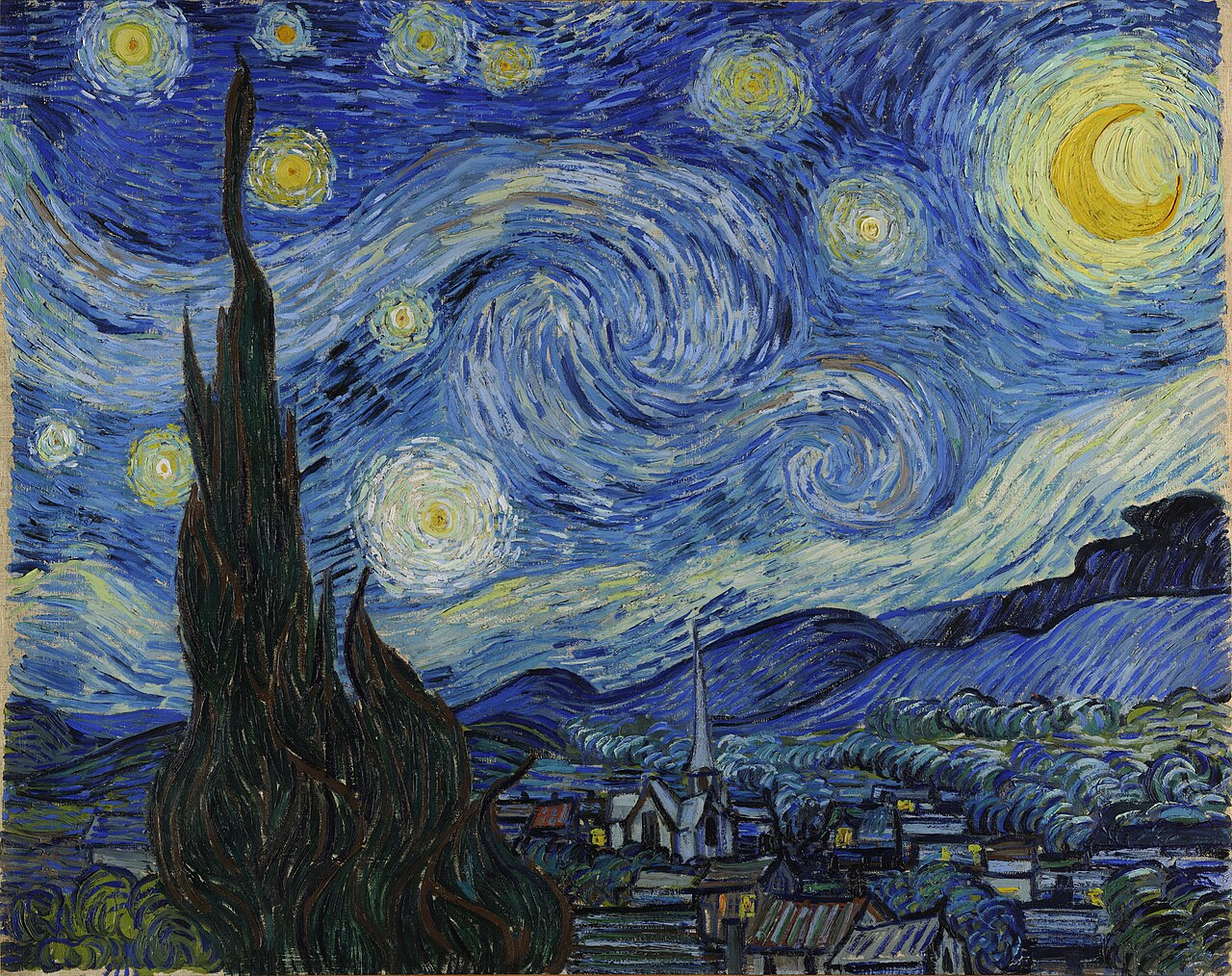
Vincent Van Gogh (of starry night fame, among other paintings), would be labeled with bipolar disorder, schizophrenia, and a host of other illnesses (those who want to point to his missing ear as possible evidence of mental illness may need to reconsider recent interpretations of events though).
Recently, I've had a cello tune by Robert Schumann visiting my head with vigor. I first learned and listened to Schumann's music via a recording of his "five pieces in folk style" performed by the cellist Natalia Khoma. The piece that really stood out was the first from piece in the set labeled with a brief suggestion in German: "With Humor" (Mit Humor). I really liked the tune, but always imagined it had an adversarial kind of sound to it. Now, with the benefit of many years of new experience in performing and the wonders of youtube, I've listened to several other performances of the piece and decided that the piece is challenging to play with humorous conviction unless you're in a REALLY good mood.
While searching for other recordings of the piece, I noticed one youtube playlist that contained a lot of Schumann's music was titled "Music for a troubled mind." After a brief search on Wikipedia (and elsewhere, but Wikipedia was most accessible so I'm giving it credit foremost) about his life, I had confirmed my suspicion that he too, had a rough time grappling with life on the now and then.
In some ways, I was disappointed, there's a research article with a disempowering title called "the dark side of creativity:" and a subtitle that says "vulnerability and negative emotions lead to greater artistic creativity"[1], Schumann reaffirmed its findings. At the same time, I was relieved: over a hundred years later, living people actually perform and presumably enjoy listening to his music.
Realizing that, I'm reminded of a pondering that started earlier this summer: how many people actually wanted to be with Van Gogh or Schumann not because they enjoyed their works, but because they knew they were ill and truly wanted to understand, or possibly help them?
The current media buzz from recent shootings suggest that we as a public are quick to impose a label and therefore, imbue an identity onto another person. When we refer to people with mental illness who behave poorly around others or worse yet, commit injustices, we strip away the complexities of their history, circumstance, and potential as people. In light of shootings like the Colorado shooting that took place in the theatres, or the recent shooting at Sandy Hooke elementary, people say "that's sick" with sneering hate in their voice and tones of disbelief. Yet they forget what it means to be sick. Killings of that sort are certainly inexcusable and unjust acts. But in saying someone is sick under most circumstances, we'd hopefully recognize sickness as a state of poor health with the intent to improve it to a better condition. We rarely say someone's an absolute loss and dead already.
In instances of the shooters in the aforementioned incidents, one of them (James Holmes) looked like he was in disbelief about his circumstance and actions during the trials, the other (Adam Lanza) had been killed before he went to trial.
While it might not be accurate or true to the circumstances of the previously mentioned criminals, I'll offer an unusual perspective as a possible ingredient for empathy:
Some people hurt so much that they wish they'd do something to deserve the pain and shame they've felt. Why? Because they don't understand where it truly came from, why it happened, or what they can meaningfully do about it. Sometimes the confusion, pain, and anger are a legacy of outcomes from bullying, terror, neglect--abuse.
At the same time, recovery has little space to exist in our society. We delegate responsibilities of care by sending people to hospitals or rehabilitation centers. Often, they're cut off from people whom they might actually need for humane interaction that goes beyond vital statistics, food delivery, and psychiatric testing. This is a similar challenge that prisoners face. Granted, they're frequently inexcusable and still responsible for their own actions, but I've met enough to know that there are some who also want to live as better human beings for the sake of others in their community or family. One of them is a mentor of sorts to me and many others at the University of Michigan-Dearborn.
Furthermore, we're in a society where meeting sophisticated social needs frequently becomes a rare occurrence--mental healthcare for many is inaccessible if it means we must invest burdensome financial capital and traverse great distances to reach whom we'd hope are vigorously trained and keenly attentive health specialists. But what happens if therapy amounts to paying for the privilege of talking to someone who just might choose to offer you medication instead of helping you embrace and resolve your conflicts? Our fundamental intentions with most of these sessions come from a deep desire to meaningfully communicate with another person in a safe environment, and know that someone else cares about your well being. These "specialized services" happen to be many of those that people ought to expect out of a good friend.
Let's consider a line of questions:
1) When someone we know grieves because a loved one died, what's the likelihood that they'll do so in a way that can't be described as some kind of illness?
2) What accurate ways exist to gauge one's mental health?
3) Will that person remain an injured and fatally broken person forever?
4) Does a state or institution have the right to take them (and in turn, impinge upon their freedoms) away from the rest of the world away by labeling them as "sick" or "mentally ill" for suffering humane experiences?
Sometimes, you'll discover that they too, deeply wish to get better. I suspect in severe cases, more often than not, they've had to confuse themselves into believing they're unworthy of aid and redemption. In my case, I think it's a form of shame and self-hatred that some people are willing to perpetuate because they don't really grasp an alternative reality to how they can live and who they can be.
When someone is ill, the rest of us also have choices that actually challenge our perceptions of responsibility as a community:
Do you take up apathy?
Will you let them continue to suffer?
Will you embrace their challenge and aid them to get better?
If you want to live in a better world, these questions become your charge and duty. If you're preparing for fields in medicine or justice, this is the challenge you're charged to meet at any moment, sometimes through witnessing subtle realities slip in and out of a window of opportunity many times in one day.
I started to write this post around December 19th of 2012 in reaction to realizing that a talented and fun loving person who quickly and, likely, genuinely considered me a friend did so as I was still wondering if I was in stable mental and emotional health.
This brings me to a quote from Bill Moyers which you've seen at the beginning of this post:
“What we need to match the science of human health is what the ancient Israelites called ‘hocma’—the science of the heart. . . the capacity to see. . . to feel. . . and then to act. . . as if the future depended on you. Believe me, it does.”-Bill Moyers
You may be the only individual with the privilege of interacting with someone who suffers from mental illness. Recognizing that possibility exists, even brief encounters with other people can define your relationship if it's no longer sustained. I've come to believe we're obligated to make sure we've made a positive difference in other people's lives whenever we're privileged to reach another person.
"Depression is real. Just because you’ve never had it doesn’t make it imaginary. Compassion is also real. And a depressed person may cling desperately to it until they are out of the woods and they may remember your compassion for the rest of their lives as a force greater than their depression."-an excerpt posted on an online social network by someone who pulled a quote from the depths of another social network
I'm convinced that many people with mental health challenges also contributed some of the most profound ideas, expressions, and acts of compassion known to history.
Van Gogh, Schumann, I've mentioned before. There are more I can list, but I'll choose Buckminster Fuller as the closing example for his resolve to do something out of what began as despondent angst:
"He ultimately chose to embark on 'an experiment, to find what a single individual [could] contribute to changing the world and benefiting all humanity.'"
Just read about him, he made amazing things and had great insight for design/complex systems theory.
[I don't completely agree with his techno-centric vision, but he was certainly prolific and lived a life worth knowing something about-read the section on his depression and epiphany for the segment that most.]
Now on the converse, you don't need to be sad, immensely depressed, or ill to do great things. If that's where you're at great! As human beings however, we're capable of it all. Can you make the most of life and see what you can do with the hearts of other people?
Research doesn't tell us the answer, the actions you choose to live for do. It's up to you to hone hearts, to do what the future depends on you for.
[1] The Dark Side of Creativity: BiologicalVulnerability and Negative Emotions Lead toGreater Artistic CreativityFor just the abstract: http://www.ncbi.nlm.nih.gov/pubmed/18832338
Drawing from the public's attention on the violence of recent events (particularly talk of escalation between Israel and Palestine, the shootings at Sandy Hooke, and a shooting I was in), I wrote a note to colleagues encouraging them to familiarize themselves with the emergency procedures, and to begin developing a department-specific emergency plan. However, I still think the best thing we can do comes from being kind and sincere in our encounters with people.
This year I've been around malicious gunfire that was so close I could taste the gunpowder shortly after the aroma reached my nose. The incident I was in happened between extended family members, and it didn't surprise me to see and hear it happen. Violence swiftly escalated from language into physical pushing, shoving, and punching which eventually turned into gunshots and a brutal beating in response to the shooter.
I suspect the notion of love is antithetical to this situation. I understand compassion, it's been illustrated in tremendous experiences for me this year. Yet what if people don't know love? I appreciate peace, but similarly, what if most people actually don't know peace? Despite popular assertions that they can be found in simple expressions, peace and love are complicated concepts to substantiate, and it's almost inconceivable for those who lived much of their lives with an oppressive and abusive environment. If anything, we human beings fundamentally understand the notion of hope before we understand the nature of peace and love.
I'll say it again: More people probably understand hope better than they do love.
Truly, not everyone knows what love is or grew up with meaningful exposure to it and therefore, more people lack meaningful understanding of it than we’d assume or wish. People do, however, recognize compassion and reprieve from hostile situations on a more frequent basis.
Look at international relations as an example of a similar misunderstanding between war (analogous to hate) and peace (analogous to love):
Reprieve from dire hostility (i.e. war/sectarian violence, etc.) becomes labeled improperly (and thereby assumed/presumed understood) as “peace”; similarly, peace-keeping forces (actually security forces) designated by the UN aren’t actually an authentic indication of peace, they provide a crucial opportunity for fostering authentic peace by creating a more secure environment.
Hostility, and hatred, both still allow for hope—a special kind of opportunity with positive possibilities, at least for a particular individual or group of entities who carry the same hope(s).
Hatred is a choice to engage in certain behaviors present within our nature, but does not constitute our nature in its entirety. Hatred operates upon unreasonable hostility, and a deep inclination for humans (and other species) to reciprocate perceived behaviors tit-for-tat.
[War: communication and artificial environment (creates structure) Hatred: unreasonable consciousness/mindset/worldview that perpetuates the circumstances necessary for war.] For local examples of environments and histories that have strong influence over how an individual perceives their choices and behaviors:
A few friends of mine confessed to me that they had seriously considered suicide in the past, or present. One of them considered it out of shame, the other out of frustration in knowing that his intimate partner only wants the relationship to satisfy her physical desires. The first lived in a neighborhood of Detroit where the average lifespan of his friends and family was about 35 years old due to systemic violence. The other also grew up in Detroit, and has a family history of suicide, bipolar disorder, and/or manic depression. Those are real questions: will I need to accept the legacy of the place I grew up in or family I come from as the trajectory of my own life?
In retrospect, both of them are the first in their families in several generations to leave the area they grew up in, graduate high school or earn a G.E.D., they're also the first of their families to attend a University.
I considered the same and share the same question too, though I know I'm about 8 steps ahead thanks to a few friends who've astutely pointed out that: you are not your family. Similarly, we, as individuals, aren't our cities or communities. We have choices and new opportunities While I'm not vigorously trained in the physical aspects of the martial art known as aikido, I strive to live its principles. In aikido, one acknowledges and embraces an assailant's momentum to direct it elsewhere for a mutually favorable outcome. It's a profound alternative to traditional thinking in fighting and conflict resolution: normally the only way to end a fight is to prevent it or combat power with power to win. That's how war and most fights start to devolve until threats are eliminated.
We have choices and new opportunities now. Let's start with the hope we'll create peace for everyone involved.
Don't want to disappoint, don't want to freak you out. Don't want to resurrect all of your buried doubt. But if you wanna know where I’m going to: Avalon. ... I leave you facing life--in the face of death. There is no deeper truth, there is no truer rest--Avalon.
-Lyrics to Storyhill’s "Avalon"
When relapsing into rougher states of morale, I frequently wonder “what would Colvin do?” Marie Colvin was a journalist who was willing to die because she had a burning desire to tell the truth about other peoples’ suffering. [I've written about this realization before in my musings about dour optimism] She also understood the profundity of presence, and lived that wisdom. She recognized and promoted the empowering participatory aspect of journalism: everyone has the privilege of presence, and with social tools that most everyone can use like twitter for broadcasting information, we're even called to acknowledge our obligation and the power of our own presence as witnesses to misfortune, crisis, and tragedy.
I've seen and experienced beautiful and joyous stuff, witnessed significant events in peoples' lives and their communities. I've also lived through terrifying realities, and helped other people literally survive amid disputes, gunshots, and beatings.
At this point, I question where the wisdom I once took comfort in recent months went. At this point I can only look back at the year as a comfort which stems from knowing the extent of one's endurance. As Bear Gryllis (whom I don't admire but can appreciate in some ways) had remarked: the only reward of hardship is pride.
So long as we're able to--and do--help others, we are rich.
In many ways, it's true: We're privileged to share knowledge of rich places and people--but it's fleeting.
Perhaps that's an aspect of life that the lyrics to Avalon captures: amidst fear, we strive for a fantastic ideal that leaves us restless for so long as we live.
First world phenomenon in entertainment: in the Halo story, child soldiers are heralded as sacred and heroic while most of the audience for the Halo videos are likely oblivious to the fact that child soldiers exist today.
Mi (original post--names are shortened for confidentiality):
global warming my ass
Mar:
talk to the astronomy professor at UMD... the man is totally against this global warming nonsense. and yeah, that wind's a blowin out there
Me (Ian):
Hate to be that guy but I learned too much science to let this slide by:
Mar, most academic astronomers are theoretical physicists. They deal with mathematical models and rarely deal with real-life long-term biological and atmospheric systems (climate is not the same as weather--weather is a short-term occurrence). What people worry about is severe weather agitated by climate change and our possible effect on accelerating it. Any causal arguments about climate change that beguile people to say "it's not true" or "it's part of a natural cycle" don't hold muster to those literate with basic atmospheric science. For those seriously engaged in the atmospheric/environmental scientific and economic communities, the most important concern comes from the ethical consequences of inaction. New York city had 10,000 911 calls per hour last night, ten times above its average. People live in areas that are unprepared for severe weather. There are at least 16 deaths [edit Nov. 1st 2012: during Hurricane Sandy. {death toll in the U.S. and Canada as of today is 82, don't forget places in the Caribbean like Haiti got hit too, with approximately 71 deaths there.}], and this incident certainly will put a dent in coastal economies that weren't ready to deal with the damage.
For common [climate skeptic] arguments refuted with good research: http://www.skepticalscience.com/argument.php
In some way, many people realize that the severity of the weather--and thereby, the death toll--can be mitigated or reduced through our actions, even those that can contribute to likelihood of future events like the weather.
I posted the above dialog because it lists what I think it takes to responsibly and civilly respond to a situation like this.
I think what most people involved with climate change advocacy really work on and worry about severe weather agitated by climate change. I don't mind if a person's liberal or conservative, I believe our political choices are fundamentally motivated by a desire to live well--if not for ourselves, than for future generations (my father says he wants to vote for a candidate whom I disagree with because he thinks it's important for my future).
Could a responsible conservative who recognizes the national debt and deficit being on an unsustainable course justify financial apathy? The same principle idea applies to environmental conservativism. What I don't appreciate about most global warming/heating/climate change advocacy is that many people tend to articulate it in ways that disempower people, and in that capacity, distracts people from connected tangible and real issues of public health, environmental justice, and the problems that arise when considering the economics in context with the science and ethics (read here for an example). Furthermore, many advocate from a position that bolsters defensiveness and entrenchment when education and compassion are most needed. While brandishing sticks might be a valuable tool in policy, when it comes to interacting with conscientious people whom you rub elbows with in the community, I think the greatest privilege one can have, and the greatest respect one can extend to another, is through education that respects their own autonomy as individuals. To my pleasant surprise, the reply from Mar was positive (liked it) and appreciative (Thanks for the comment!).
I'll perform two West African (Guinean) drum pieces tomorrow on sangban (a medium-sized drum) and cowbell with the West African Drum Ensemble at UM-Dearborn [side-note: we're a pretty tight ensemble, woodchips fly off of the drumsticks every time we play, and in the spirit of "MORE COWBELL!" I broke a cowbell, as did another ensemble mate as we rehearsed. I'm pleased to report that the replacement cowbells are bigger {thus fulfilling the request for more cowbell} and sturdier].
Tangentially related image:
Ameyaw Kofi of Ghana performing on djembe
at the River Folk Music Festival in
Manchester, MI in 2010. He has almost no
relation to the West African Drum Ensemble of UM-Dearborn,
but the instrument and the opening rhythms
he played are similar.
The first (called Wurende), I learned to my delight, is a harvest rhythm. Sometimes a motion makes things click. Our instructor, Dr. Vera Flaig, explained that the rhythms are played as farmers worked the field to gather the end of the year's harvest, and also performed at the beginning of a season for planting. What really caught my memory was that she made a simple reaping motion, which instantly reminded me about railroad songs, and drum beats for rowing.
I believe the arts are most substantial for their ability to evoke authentic curiosity and appreciation for the world around us (see "the reality aesthetic" for my writings on that). This "sense of wonder" (as environmental author Rachel Carson would describe this sensational sort of inquiry) opens the door to deeper inquiry and learning, but beneath that, the tangible and practical nuances of the arts also go undetected in our lives on a regular basis. I think the social nuances of music are frequently lost in media and a fair amount of society. For many, it's a challenge to explain how the arts are a valuable part of culture and society beyond giving an argument about "art for art's sake". I suspect it's because we're exposed to it as background noise through a machine (radios, computers, other media players), encounter what seems like insubstantial music, or more likely, we're unaware of the content or context of the music. Yet many people in the U.S. still value musicians enough to devote large portions of their wedding ceremonies. Think about it in a Judeo-Christian ceremony--aside from words spoken by the priest and bride/groom, people spend a lot of time in a church wedding ceremony listening to a musician. Stranger still, I suspect most of them hire musicians whom they might never have met before. Meanwhile, while the military no longer give buglers the responsibilities they once had, it still uses music (think running cadences) for purposes of morale, and I suspect singing while running also adds to endurance as well. Wurende, the Guinean harvest rhythm mentioned above, is a powerful reminder of music in a similar context.
Dr. Wayman investigates the title of the Boccherini, expresses
his enthusiasm for the composer, and adds his thumbs up.
Photograph courtesy of UM-Dearborn's
institutional advancement photographer.
Today, I played a Bocherrini piece at an event that celebrated international diplomacy and the United Nations. I received a vivid complement from a UM-Dearborn Political Science professor Dr. Frank Wayman who focuses on war in his research and teaching. The beginning of one of his trademark courses, "Peace and War" (link goes to a very rich and educational syllabus), actually focused a great deal on defining war and scaling conflicts, and very little on giving explicit focus to the elements that create a vibrant example of a nation in peace. In that class (and in most international dialogue), "peacekeeping" forces, would actually be better defined as "drastic-security-keeping" forces since they are usually deployed to stem, minimize, or quell violent conflicts in drastic circumstances.
Aside: According to the statistical data he presented in both the class and today's special "Two Cheers for the United Nations" (a reference to a book titled "Two Cheers for Democracy"--the two cheers [out of three] implying that substantial work remains to be done--presentation on the United Nations, "peacekeeping" forces are at least successful in reducing the number of casualties in wars despite the frequency of wars.
I found it ironic that a professor who focused so much on the characteristics of war (in part defined by the number of direct conflict-related deaths, non-combatant civilian casualties weren't included) and genocide really enjoyed hearing music Boccherini (he's a huge fan of the Boccherini cello concerto).
I wonder what that means? Surely we can find something to speak about our sense of humanity in that...
Roughly translated, the martial art Aikido stands for "the way of harmonious energy": Ai=harmony ki=energy/spirit (AKA Chi/Qui in Chinese) do= way/"an artful path to discovery" (I like how the site articulated "do")
Foremost, aikido has compelling appeal to me because it's centered on a win-win approach to drastic situations. Opponents don't (or rather more accurately, shouldn't) exist, a practitioner simply acknowledges the situation, momentum, and redirects it to a more favorable outcome for everyone. Reading up on the philosophy of the art again, I found the following quote:
"We believe that since we all share a common energy source, that in some important way we are all truly members of the same family, and truly sharing our lives with all of nature. We do not have an attack form in Aikido, because attacking an opponent would be like attacking a family member that you love." (source)
Those familiar with Aldo Leopold or beliefs frequently held among First Nations people might find this concept familiar: we share fundamental similarities and needs, and thus merit respect for one another and across species. Leopold's essays use common sense to lay out nuanced wisdom, and it strikes a chord with people of very diverse backgrounds. I know hunters, vegans, conservative and liberal friends who continue to appreciate the writings found in his essays. Of particular pertinence to the quote found above in Aikido, Leopold's Land Ethic came to mind immediately.
While Leopold undoubtedly held a different paradigm about life and his relationship to the world prior to writing many of the essays found in his "Sand County Almanac", it's interesting to note how his views developed and the development of Aikido as a martial art share a similar story of transcendence. Read Leopold's "Thinking like a mountain" essay and then read his "Land Ethic" essay to get a chronological sense of Leopold's discoveries. Then recognize that Aikido emerged out of combative martial arts for samurai--life/death techniques which went from a mentality of winning via attacker/defender to a co-creative ethos revolving around redirecting force for favorable outcomes.
In accessible English, Aldo Leopold expounds on the scientific matter-life-energy processes of ecology and builds up to an ethos that considers how we rely upon and share our existence with other living things. For those with biological/ecological/environmental science backgrounds, it's a familiar foundation to our education, but it can be a daunting challenge to make clear and accessible for any reader--Leopold describes it well. From this he advances the idea that we live with the land, not just on it or as owners of land. Leopold then adds that our notion of ethics ought to extend toward considering those we share the land as neighbors in a community.
This may be the first time I've written about Aikido and the Land Ethic, but it's been in my mind for a long time. The concept is among one of my core principles for conflict resolution and problem solving, and friends might even recognize threads of it in my musings and research. All of it frequently examines this kind of collaborative/embracing participatory approach. More to come...
"She heard my footsteps approaching in the corridor and found them intriguing. (I have a vague memory that I ran down the corridor in 7/8 time.)" -Richard Stallman
It's odd though, there exists a research paper I despise, even if only for its title ("The Dark Side of Creativity: Biological Vulnerability and Negative Emotions Lead to Greater Artistic Creativity") which I think of frequently, and I suspect it ties closely to influence on Melynda Reid's work and artistry. If anything one's creativity in this context indicates the breadth and depth of their capacity to experience and convey humanity. However, it's unfortunate and sombering to recognize real stories about others who really struggle with keeping brighter moments in mind and sometimes, the stories of their lives don't capture the moments when they make it to the next peak.
The video above is a mind-blowing adaptation of a Macedonian love song adapted for two cellists on one cello. If you're not taken by watching them play, watching their bows is like realizing how related rates in calculus work. Coincidentally, the tune is also in 7/8 meter, much like Stallman's footsteps!
Grief is a profound iteration of humane appreciation. A friend of mine called me this past weekend to tell me that his mother suddenly passed away. I could tell he was really shaken by her death. While he brought the conversation to lighter notes toward the end and we hung out a few days later discussing gentlemanly adventures in literature and existentialism, his wavering voice from the phone call lingered in my memory throughout the week.
I never met his mother, and we actually only hung out a handful of times, but I really appreciated that he reached out to let me know about recent developments in his life. I also think the things we appreciate about people are things we can strive to hone and exemplify in continuation of the legacy that individual had created. If we trace our influence from mourning far enough back, it's a legacy of our deeper humanity which we really perpetuate.
Stayed in a 10 million dollar estate/mansion, slept in a sleeping bag on the floor and used my own soap/shampoo (brought from Michigan in my backpack), used a headlamp at night to see--indoors--because the switches for light fixtures were too far away. Irony has interesting ways!
Also, Here's some existential bluegrass made by Norwegian ladies:
In the classic game, my compulsion is to choose rock since the highly coveted "avalanche" (all rock throws out of three) in Rock Paper Scissor championships sounds tremendous and awesome. Plus, I recall hearing someone's reasoning that a rock can smash scissors, retain its identity even when wrapped with paper, and serves as a ready fist when the need arises.
But my reasoned choice is paper--you can always make an Origami boulder to overcome the scissors AND aikido the rocks. Eloquentia for the win!
Since November of 2011, I sought to certainly create more than I consumed, and accompany any broadcastings/re-broadcastings of my own work/lesser known work with explicit writing about something that I learned from the content or the circumstances surrounding whatever it was I created (see the text accompanying my youtube videos and soundcloud clip).
Better to ask questions in the School of Athens right?
A noble endeavor perhaps, but certainly cumbersome, sometimes burdensome, and for the most part, incompatible with the amount of things I created or found/re-discovered.
In opposition to sporadic postings of things I found (for an extreme example of what I'd call hyperbroadcasting, take a look at almost anyone's tumblr account that re-blogs material sans interpretation), a didactic approach to the arts almost threatens the notion of "art for art's sake".
Yet I also believe that as a form of communication, the arts have
remarkable capacity to convey explicit or implicit information, and that
many pieces that we enjoy and share sometimes do benefit from pointing
to worldly context to enhance our appreciation for the world, or deepen
our awareness with troublesome issues. Based on the following statement:
"Art ain't about paint. It ain't about canvas. It's about ideas. Too
many people died without ever getting their mind out to the world." - Thornton Dial, SR.[a folk artist whose quote is on display at a national museum in Washington D.C.]
I believe the integrity of a good idea withstands any questions about value and utility given appropriate context. In the arts, you need only one of the three for an idea to appeal:
1. good idea/intention 2. good conveyance of an idea 3. relevant circumstances that make parts of an idea more appealing
If you conceive and successfully create something that meets all three of these conditions, it's a wonderful piece and timeless adventure for anyone who has the privilege of experiencing it.
I'm backlogged almost beyond hope with incomplete broadcasts of ideas and pieces, and especially with neat findings of music, film, or imagery chiefly due to the fact that I start to notice that share common threads with other things I've done or seen (time constraints and other obligations being the other contributing factors to this backlog).
For a time, I considered just posting these out of the blue, but doing so degrades the novelty and joy of broader thematic discoveries I had for myself. This evening, I realized: why not lay out the individual pieces and disclose that I encourage people to find and share any bigger themes they may come to discover in what I've shared?
A savvy educator usually uses questions to uncover inspiration, appreciation, deeper inquiry, discovery, and understanding about the world. Yet art also elicits many of the same outcomes in ways that don't necessitate the immediate presence of an individual to ask these questions. We can communicate and stir the imagination of another person by sharing something that speaks to us.
What happens then, when we recognize something bigger about the things we appreciate? As in, we've gathered enough information to discover a new level of themes and content among the individual pieces we love? Can we guide imagination? I think so, though the process must be done with ethical cognizance.
This is a bit like the success of the Socratic Method (thus the second half of this post's title), which uses a series of questions toward an individual/ group of people to examine the soundness of their foundational beliefs.
More accurately, what I've resolved to explore is a method of sharing glimpses of insight in a way that's akin to a Japanese style of academic essay composition (at least, according to an informational video for writing consultants I saw while working at the UM-Dearborn Writing Center about English as Second Language writers circa 2008/2009).
So here we go, will you kindly share your thoughts with me?
#Started 01:37 27 IX 2012 finished 3 X 2012 0:37 at home
I've heard about interactive digital installation pieces in art journals and I think I've been through at least one before. Though they seemed like they could be neat, none were so compelling and convincing to me.
This series of clips is fantastic: between the music* (*I've not heard this kind of quality noise since the Homeworld soundtrack and NASA Voyager planetary recordings), sense of motion, and dance it's a mind-altering experience, it's wonderful and potentially mind-blowing for some [this phrase is frequently overused, but I believe it merits it].
The only thing that's missing is some form of educational bit, but the work is so fine I'm happy to see it as it is, and the bonus points for using C++ (programming language) and Open GL (I don't even konw what Open GL does) I'd award to them makes up for it too:
For what might be the whole thing (I only saw the above):
Okay here's another (different coreographer named Gideon Obarzanek):
Three take-aways I can surmise from seeing these clips:
1) Technology ought to be co-creative with, not independent from, the human being(s) using them.
2) This is really neat stuff, but what about ideal ethical energy consumption for its use? It can be done, the creator(s) and presenter(s) eventually need to make sure it's from renewable sources (wind, water*, solar).
3) A while back (around 2007 shortly after I saw the dance film "Amelia") I thought about dance on floors with a mirror angled at 45 degrees from above to see the performer from above. Obarzaneks achieves it by having the audience view the performers from high up via angled floors and steep seating.
Wisdom inspired by conversations with Willie of the Wellness Center: much like the thrilling days of Rock and Roll, Hip Hop entered its "devil music" phase circa the entry of Snoop Dogg [Lion] et al. In particular, when they set precedent with prolific profanity by degrading people as "Bs and Hs".
Yet there exists a definite counter to the industry standard which bubbles up from the ground up. Though spread out, there certainly are groups and individuals who strive to integrate a positive message into the music, and utilize the medium for community and societal transformation. I'll point to the Hip Hop Congress, 5E Gallery, and Rap for Food as particularly notable organizations. I heard an employee from the East Michigan Environmental Action Council (EMEAC) lay down his verses this evening too. These aren't necessarily religious movements in themselves, but they certainly strive to bring light to their audiences, and I think it's much needed. Utility music (Gebrauchsmusik) is alive and well...
[Whoo! What a bunch of links.]
Edit 18 IX 2012:
I just realized an interesting irony. Rock and Roll, which once was labeled as "devil music", now has its own sub-genre of "Christian Rock". I'm sure there's something out there like "Christian Rap", though I mostly appreciate witnessing the relative clarity of movements and causes emerging in hip hop at this time.
One tired evening in Dearborn (13 VI 2012), my brain was abuzz with unprocessed worries and I had an urge to hear/make something fairly cyclical--even abstract and exacting--on the violin. This is certainly in the vein of early minimalist string quartets by Karl Jenkins (of Diamond Music/Palladio fame)/looping cellist Zoe Keating, and the phrase "intentional minimalism" ran through my mind as I was setting up my instrument.
Between the pauses, I decided to add harmonic squeaks and shrieks. Since my tone production was poor and I didn't want to get stuck with the same notes, I tried to develop the pause space into a secondary motif that would [ideally] eventually overcome the repetitive initial motif [this was really challenging to keep the initial motif going and develop the second one at the same time—definitely a schizophrenic endeavor!]. I'm pretty certain there's a way to make a logical transition that lets the mechanical motif yield to a more melodic and lyrical motif [I wanted something lifting or ascending], but I couldn't quite make it happen and resorted to subtly abrupt disruption [I threw in bright-sounding things] to pull the tune into a new direction. Though I had been playing the violin for over 11 years (now 12 years) at the time, the ability to consistently play quietly and sensibly was a newly discovered nuance from that evening. I especially savored the dynamic changes in this play-through.
I could tell I wasn't settling into making high-quality tones in that session, so I decided I'd further play with the scratchy sounds as I brought the tune to a close. In mind, I was thinking of the fuzzy noises of a radio or old vinyl record, and you can hear it in the decay of the last note I hold. [little known fact: even though I've mostly recorded acoustic quasi-classical tunes, I'm looking forward to the day when I can use/obtain equipment suitable for noisy electronic music making.] This awakened my appeal for integrating focused "noise" in more tunes (none recorded yet--my recorder went through the wash and I'll probably need to replace it).
In life overall, I was trying to break out of long-standing hyper-objective/hyper-vigilant tendencies as I was worried they were paving a road to unnecessary paranoia. The experience was captured very well by ideas from "On Reason and Passion" the Lebanese-American poet Khalil Gibran's book of poems "The Prophet" which resonated very well with me since it captured two dimensions of life that really contributed to a personal struggle for fair balance. Though not a verbatim quote, I prefer to recall it as "move in passion, rest in reason" (I've likely reversed the quote).
Anyhow, I like the tune as a piece on personal growth. In the few times I've been able to recall most of its elements and dynamic nuances, the tune has changed a lot since I first came up with it--caught in this recording.
Recorded in a parking structure with an Olympus VN-6200PC digital voice recorder placed inside of my car, doors open. You can hear the buzz from the lights at the beginning. The photographs are my own--most were taken with a Canon Powershot A20, the starting image was probably from a Nikon. I'm running out of images that I can adapt to music...
Though I've played at a handful of open mics since 2006, this is the first time I can recall being the featured performer. If you're on facebook and want to share the event with friends, here's the event link:
In an interesting loop of life events[1], I'll be the featured performer for the Poetic Travelers open mic at 8:00pm in the Lawrence Street Gallery of Ferndale hosted by Markita Moore.
The open mic officially starts at 6:30 and runs until 9:00pm (at which time lights go out and people are promptly ushered out of the gallery). I'll play a half hour set of dear and fresh tunes.
Markita Moore is one of the first people I met through the open mic circuit. Open mics with hosts like Markita are an important part of our communities--they're invaluable outlets for humanity. I can attest for some that they are precious opportunities to meaningfully and constructively communicate with other people in a safe environment, I've witnessed it firsthand in others and for myself in rougher times[2].
Back to the music: I plan to muster compelling music for my slot. I'll "officially debut" several of my newer tunes, add a pinch of explanation or storytelling, and plan for a dash of audience participation too.
As implied with the word "open", open mics are open to the public.
Hope to see you there!
[1] Why's it interesting to me? Find out at the open mic!
In recap: I thought I'd try making an official premiere of a few new tunes with a dash of explanation or storytelling. The initial working setlist (about 1/2 an hour of music):
Breathing Stammer and Soar Pensive Wail Courage in Complexity Lament of the Virtues Guess who's keepin' it groovy?
Was shortened to about 20 minutes of music and story telling, and it was swell:
Breathing An Feochan* (by Tommy Peoples) Courage in Complexity Guess who's keepin' it groovy?
[Note: the time of this post was chosen for archival purposes...]
Hear the fleeting flavors of javanese motif in the breaks!
I actually suspect the reggae rhythm is common and easily discovered independent of other places. It would be interesting to know if the music really was influenced by reggae though...
So much orient in the metal, it's a punch in the primary audio cortex that even Edward Said would approve of. Sometimes you've got to love notes that sound this "wrong" and savor the tonal and dynamic brutality.
[side note: I pretend the location says the "Battle Tree Cafe" to boost the metal-ness of the band in my imagination]
[one more side-note: I like to imagine that Secret Chiefs 3 appear in whatever village they're supposed to perform in, and enlist most of the village's musicians to play their live concerts--two drum sets? multiple violinist/violists? multiple guitarists? Let's pilfer talented people from the place we're about to perform in!]
[last side-note: Secret chiefs have wonderful music, I'm only posting the metal/oriental blends here as I enjoy the novelty of the combination]
Also, Edward Said is a fine scholar and human being in my opinion. I'll leave it to you to find out why (hint, he pointed out the whole orientalism phenomenon in the first place! Also, he wrote about the arts too), but here's a good place to start for those not interested in reading his books: http://youtu.be/xwCOSkXR_Cw
"Find good reasons to trust yourself."
It seems I wrote this at at 03:19 (AM EDT) on January 1st 2012. Will do! Maybe I should start a book for generic life-advice statements too.
Also, "The play combined the music of Arnold Schoenberg and the aesthetic of Noh theater." (p.66 of Art Journal 2012 [winter]) Double whammy!
Perhaps I'll add more re-discovered thoughts here from earlier in January/February...
What happens when the solution which the world looks to science for really tells us we must be more responsible than ever imagined?
We tend to seek a quick fix through facts yielded by science. Perhaps someone in history asked: "What happens when we exploit a heavy element like Uranium?" With intent to answer a perceived need: "we need something to make us more powerful in this war".
The short term answer they sought was yes, atomic reactions can afford a user tremendous power. But the fundamental truth derived from it was an answer that asks the inquirer "are we responsible enough to consistently meet the challenges that emerge from consequences of this never-before imagined scale of magnitude?" Whenever we discover a new level of complexity, the responsible answer immediately resets to a decisive "no." Until everyone is capable of understanding complexity and the ethical implications of the system, it is irresponsible to engage such a system, especially when much of the world potentially has access to it or its potential impacts.
I gave a parallel example to a problem I've been thinking
about spurred by a domestic (well, domestic in a national sense) human
rights advocacy issue. It isn't nearly as destructive, but the
implications in the science are tremendous and unsettling. It's not information that you can broadcast to the world unless an established and thoughtful community dialogue of substantial reach is already in place to handle any unrest that may arise.
That said, the issue itself merits action, and countless people are already working on it out of ethical drive even without having all the "hard" empirical data at hand. This is the uncertainty of courage. Even if you have few or any reason for an optimistic outcome, it's better to act so that you least put forth the effort. It's an odd balance of ebb and flow: there comes a point when one may be the best acquainted and prepared to bring forth challenging and discomforting issues--you become the smartest person in the crowd simply because you know enough about the problem and its possible solution to manifest the transformation of reality. Therefore, you are responsible for bringing it to light.
Understanding this status incites dramatic shifts in the default attitudes enforced by most of society--we're used to delegating responsibility and may even draw from a sense of entitlement in attempt to justify doing so. It's ingrained into our elections, in our governmental agencies, and at almost any workplace. Any time you hear the phrase "it's not my job" in response to another person's problems, I challenge you to carefully reconsider the statement. What matters fundamentally is not the individual's job, it's their responsibility. Usually, a "job" is the prescribed objectification of an identity and its associated responsibilities. This beguiles many in becoming an excuse for them to deny their ability to discern and act on their own behalf. There exists privilege in being a dedicated audience: knowing what you do now from hearing--which may place you among a select few--you have the ability to focus your discernment and learn on a different level than others who create. In doing so, you may cultivate wisdom and act upon it from a different perspective. Yet bringing wisdom forward with persuasive authenticity requires a degree of courage that almost necessitates one to act beyond measured reasoning. You anticipate no favorable response from the people you interact with, but you reserve hope your assertions will find constructive reception.
I'll add a slew of paraphrased quotes that reinforced several of my convictions in late February (the 20th) of this year: The Honorable Representative Shanelle Jackson of Detroit came to the University of Michigan-Dearborn to share her experience as a grassroots elected representative. She urged everyone to "be an ambassador... [despite knowing a lot of people who love their city], they don't have that Detroit fire-hunger... The people here now need to vest and be an example, ultimately that will draw the new Detroiters".
She also reaffirmed my belief that apathy and complacency only serve to perpetuate injustice. In response to a question regarding disenchantment with elected officials and Detroit's municipal government: "When people get apathetic and step away, aren't you endorsing that corruption? By doing that, you take away your positive energy--the only checks and balance for the desired status quo."
Jackson followed up by saying: "local safety, clean neighborhoods, some problems are too big for government to solve--that's one on one, hand to hand community work that must be done." [I have 80% confidence in retention of original words in this last one as I wrote them down in shorthand at the event.]
I'm convinced I need to act swiftly. I cannot un-learn what I've discovered in the research, and it would be irresponsible to leave the issue of concern as is. Yet without proper educational and community context, I'm definitely concerned about disclosing all of the details to people whom I cannot maintain a face-to-face dialogue with at this time.
I recently wrote a long e-mail to a friend in an effort to clarify and remediate an oversimplified brief communication I had sent out earlier. I again realized that it’s really important to be explicit about what I intend to do. As I said elsewhere, I’d rather err on the side of being verbose. This goes hand in hand with what I learned about releasing my website in the life as a one shot operation post: industry does not behoove matters of personal care.
Sometime in March or April I resolved to make more contemplative writings in
detail. Why? Later on in life when things get too hurried,
I might not be able to lay out the principles behind how I look at a situation—a
learned opinion might be all I have to lean on.
If I’ve already done the reasoning while I’m still young, it gives ample
time for others to see where I’m coming from.
If any revisions are needed, I can do so, but assuming the principles
are sound, it won’t be as challenging to grapple with compared to getting
started for the first time.
That does not excuse or exempt an older individual from
earning their opinions, but it makes it easier for one’s word to bear proper
weight when you have a record of reasoning.
I could expound further but I’m certain I’ve conveyed the
core of the idea.
Side note: I’m amazed how much faster typing is compared to writing by hand, I think it would have taken me at
least 45 minutes to write this. This
took less than ten. I’d still prefer using
a notebook for diagramming ideas though—there are definitely a few visuals I
can associate with this note that don’t lend themselves well to text…
This has been another stream-of-consciousness writing. I'll probably return, revise it, and make note another day.
I just realized how important it is to recognize the timeframes between taking a break and forgetting. The intention behind this behavior is essentially to wait for wisdom--time can give additional perspective to a problem. Papers, projects, conflicts, puzzling life problems, etc. benefit from breaks in chunks, but if you wind up needing a lot of time just to figure out what you were trying to do, the break may have taken too long.
At this point, the behavior can be a tremendous detriment--I'd liken a challenge to the development of a fruit:
A plant needs time for fruit to develop, we may recognize its transition from bloom to a fruit, and may wait for it to ripen. Wait too long, and it loses its potentially nourishing and rejuvenating properties. Wait much longer and you may be baffled to discover a new plant in its place.
I frequently wonder if I confuse delay with patience, and how to make the distinction. Discerning necessitates a clear understanding for the definition of patience, as I'm certain that waiting is a vehicle of patience, but does not embody patience. To the dictionaries (note, I omitted a few irrelevant definitions though the phrase "what's in the cards" comes to mind)!
{Randomhouse} pa·tience [pey-shuhns]
1.the quality of being patient, as the bearing of provocation,annoyance, misfortune, or pain, without complaint, loss oftemper, irritation, or the like.
2.an ability or willingness to suppress restlessness orannoyance when confronted with delay: to have patience witha slow learner.
3.quiet, steady perseverance; even-tempered care; diligence:to work with patience.
{World English Dictionary} patience (ˈpeɪʃəns) — n
1. tolerant and even-tempered perseverance
2. the capacity for calmly enduring pain, trying situations, etc
3. chiefly ( Brit ) US equivalent: solitaire any of various cardgames for one player only, in which the cards may be laid outin various combinations as the player tries to use up the wholepack
4. obsolete permission; sufferance
There we have it, my rough summary: the capacity and willingness to to endure misfortune, pain, other presumably unpleasant circumstances with calm. Good to know!
The etymology is interesting too, I suspect when we speak of a person who exhibits piety, especially among christians, it has very strong ties with the concept of pain: early 13c., "quality of being patient in suffering," from O.Fr.pacience, from L. patientia "patience, endurance," frompatientem (nom. patiens), prp. of pati "to suffer, endure," fromPIE base *pei- "to damage, injure, hurt"
Enough tangent, let's return to edible things like fruit again!
There's something I like to call "scorched wisdom". Insight from an experience--particularly a traumatic one--has a ripening period. However, when kept within for too long, or when the conditions which incited insight lose their novelty, an individual starts to take it for granted without getting it across. At which point, anecdote begins to lose its vigor. One of my composition professors, Lee Brooks, likened writing a paper to cooking. We muster many ingredients, assimilate or integrate them into one place, and the heat introduced by our thinking presents a unique outcome.
Dwell too much on the same thing however, and a dark, hardened mass emerges from the process. I liken this to encountering people who have endured tremendous challenges, but were so taxed by the experience that they've burned out or are inclined to give bitter nuggets of truth. I've certainly been there before too.
We can use John Kingdon's concept of policy streams and "windows of opportunity" to weigh out what's happening. When problems, solutions, and politics (I define this as an articulation of desired action) are together, it creates a window of opportunity for us to take coherent action toward. For a person who's experience was burdened for too long by a problem, complacency with their situation becomes a real possibility. If one takes complacency, they eventually lose their desire to engage the problem and articulate some kind of action. At this point, even if they're later introduced to viable solutions, the window of opportunity shuts when it comes to actually doing something useful.
The solution to this is simple: communication with others. Share what you've learned, even if it's still an ongoing experience.
Notes and additional references:
Even when I'm not trying, I tend to describe something before I can interpret what I actually tried saying. I originally gave this post a temporary descriptive title "Patience, breaks, forgetting, and scorched wisdom" that delineated the sequence of concepts I wanted to cover in the post. I later realized this is a lot about behavior, and I ponder over the structural link between the "waiting for wisdom" and "scorched wisdom" ideas.
The idea for scorched wisdom came up some time around June 24th, and I've forgotten the details behind how they arose. Fortunately, I wrote something on paper about it so I'll try to put it up here later on too.
Graduation Celebration at the Birmingham Lido Gallery of Art with the Lebanese American Chamber of Commerce (their first celebratory educational event)
I shared a celebratory evening honoring new high school and college graduates/post-graduates organized by the Lebanese American Chamber of Commerce. I recently completed a composition titled "Courage in Complexity". Coincidentally, I later found a passage from the Lebanese American poet Khalil Gibran's book "The Prophet" on reason and passion, I opened the prelude for the evening with remarks encouraging all attendees to seek out and reinforce their passions through all that they learn. Inspired by the passage, I performed a two piece set for the event prelude utilizing Courage in Complexity and the prelude from Bach's first cello suite on the viola.
On the heels of the Tuesday Ypsilanti Farmer's Market, hear some fresh jams about food system sustainability and justice with Rap for Food, which seeks to "support localization, sustainable food systems, and youth gardening through the arts". I'll be checking out what's going on in the area and plan to contribute to the jam.
Pensive improvisation/sonic sketch on viola ("The Thunderer"--working name) in the Monteith Parking Structure at The University of Michigan Dearborn 20 VII 2012.
I woke up from a nap, felt very calm, played the viola, realized the opening note in this tune sounded delicious on the viola in the structure and started recording. I stopped keeping track of myself and just enjoyed the mournful wailing sound on the viola. The first time I came up with the motif (prior to recording) the tune reminded me a bit of the buzzy flutes used in Japanese Gagaku I heard from a recording a while back (listen to when I play the same note on two strings--for those who know the instrument, I'm referring to the open "a" string with an a on the "d" string in this recorded iteration of the tune).
I think I'll work on this tune some more to substantiate the melodic lines and harmonic segment--I've been exploring aleatory harmonic noises in my tunes and think I can get these two to fit seamlessly. I missed a note and wound up testing microtonalism somewhere in here just to see what would happen. I was a bit more intuitive with the harmonic play in this second recorded iteration of this tune. In retrospect, the motif of this tune probably owes a bit to the carol "Lo, A Rose Ever Blooming" in addition to Gagaku flute music and another tune of mine called Lament of the Virtues.
It may become a lament.
I didn't know it at the time, but a shooting took the news headlines today. It might not be an appropriate tribute, but at the least I think it’s important to acknowledge and express my condolences to those killed and injured by the event.