Yesterday I presented and performed two pieces for TEDX UM-Dearborn. Here are my observations from the event:
-Prepare 2x more
For performance presentations that require solid grounding in data and ethics, it certainly takes twice as long to prepare. In order to use the opportunity well, I need to do two things: Prepare the speech and practice the speaking/audience engagement, prepare the music and practice performing it too.
-That said, I enjoyed sharing it--in the future to prepare for events that charge a fee for attendees, I'll be sure to offer more opportunities to friends/the public for test-running my presentations/performances in progress.
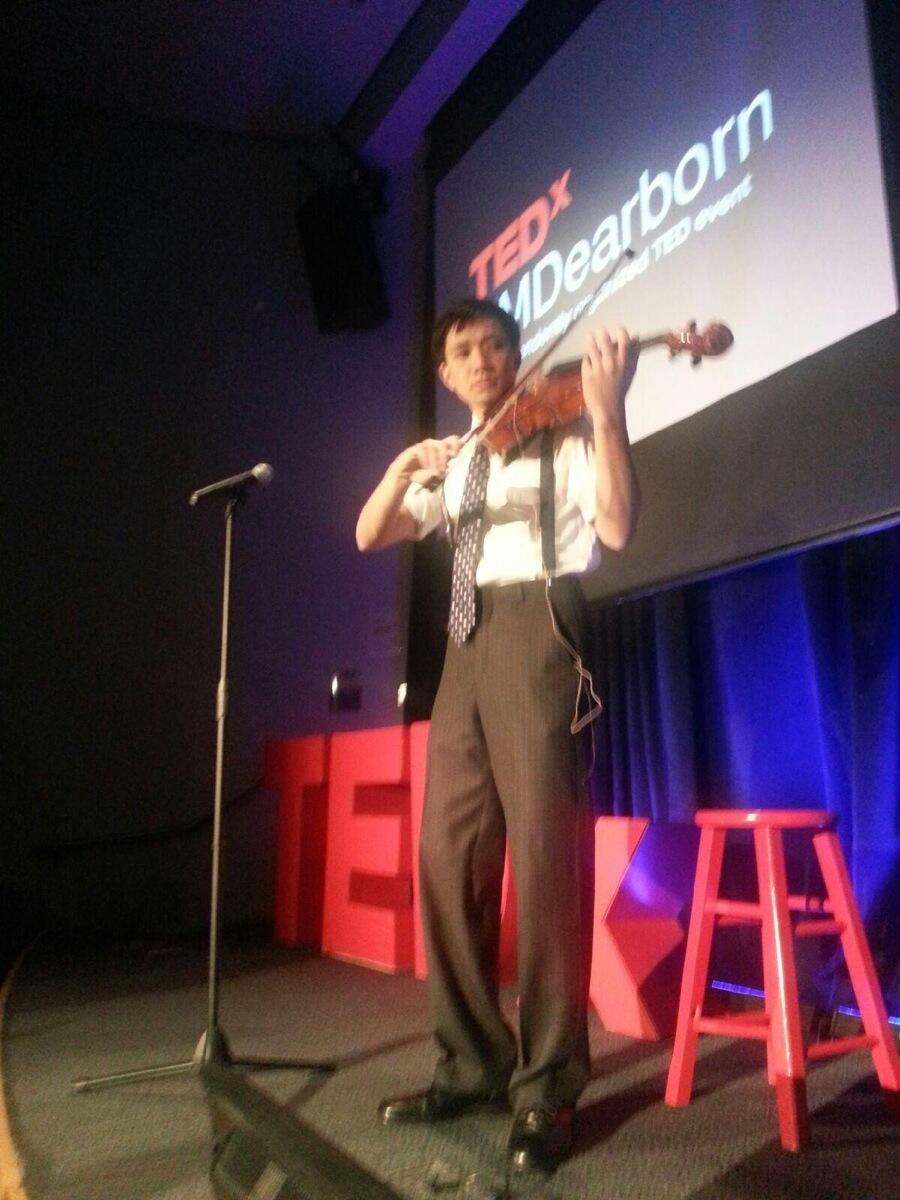 |
| Image credit to Greg Ezzo on Twitter |
-As with every performance, I learn about who I really am in the moment from what I actually prepared and what I chose to use
Granted, there were a fair number of curveballs thrown just before I got on stage:
I was asked to shave 5 minutes off of my time minutes before I walked on from a 12-15 minute timeframe, equipment wasn't readied for me to speak or play (amplifier and receiver was unplugged), and the timer was never started until I requested it about halfway through my set. But what I've learned from this and previous trials and performances: you find yourself when you push yourself. I learned on stage what exactly I had internalized and what I had yet to embody. I'm certain learning to prepare for that better comes with time, additional exposure, and follow-through on not repeating the same mistakes.
-I'm getting better at building emotional solidarity with audiences, but there's a threshold where the enthusiasm and emotion stirred up in my performance-presentations needs to match the integrity of the wisdom I strive to convey. My intentions for the performance was to show that attendees had both a privilege and responsibility to take whatever they found inspiring or useful and share it with others. At the same time, I hoped that bringing statistics about environmental health and air quality in Detroit/Southwest Detroit, and the "digital divide" (how the event required online applications in an area where digital literacy and access to the internet remains very low) would also spur lasting attention to bigger systemic environmental and digital justice issues.
-At an event like today's, innovations in emotional technology (how we get people to connect and humanely relate to each other) ought to be coupled with ethical intellectual food for thought of equal or greater quality as well. I have an opportunity to educate a community. Using new devices for engagement stays in the heart's memory, but sometimes a clear logical statement can help the mind stir the heart as people wind down from an event. As a former debater, I know what a logical presentation and argument looks like. While I wasn't at TEDX UM-Dearborn to debate, I did come with a message to assert. I don't think it was done as clearly as I'd like, but I'm at peace with it for now.
I'm pleased to learn from various attendees who shared their thoughts (especially from Alex) that the concept of taking inspiration and carrying it forward beyond the event was clear.
-Seek out and listen to the people who didn't get your message(s)
Accolades and enthusiasms are wonderful and deeply appreciated, but in finding ways to refine how I communicate, it's best to engage those who didn't appreciate or grasp the points I hoped to convey.
-Virtue in performance (for what I mean, here's a statement on virtue in music):
Everything I really prepared for came through fairly intuitively. What I hoped but failed to thoroughly prepare for didn't manifest itself clearly when spoken under pressure. I'll acknowledge that I didn't project my voice sufficiently too.
Everything I really prepared for came through fairly intuitively. What I hoped but failed to thoroughly prepare for didn't manifest itself clearly when spoken under pressure. I'll acknowledge that I didn't project my voice sufficiently too.
Granted, there were a fair number of curveballs thrown just before I got on stage:
I was asked to shave 5 minutes off of my time minutes before I walked on from a 12-15 minute timeframe, equipment wasn't readied for me to speak or play (amplifier and receiver was unplugged), and the timer was never started until I requested it about halfway through my set. But what I've learned from this and previous trials and performances: you find yourself when you push yourself. I learned on stage what exactly I had internalized and what I had yet to embody. I'm certain learning to prepare for that better comes with time, additional exposure, and follow-through on not repeating the same mistakes.
My remarks were written in strategy language--they represented the content I sought to intellectually convey, but they didn't represent what I needed to say to human beings. In my strategy work with the Ismotion/WorldByCycle team we've realized the same thing: every time we got stuck in crafting our business pitch, it was because we no longer wrote words that meant something to most English speaking human beings. To bring stories to life, one needs verbs, not nouns to move us forward.
-I'm getting better at building emotional solidarity with audiences, but there's a threshold where the enthusiasm and emotion stirred up in my performance-presentations needs to match the integrity of the wisdom I strive to convey. My intentions for the performance was to show that attendees had both a privilege and responsibility to take whatever they found inspiring or useful and share it with others. At the same time, I hoped that bringing statistics about environmental health and air quality in Detroit/Southwest Detroit, and the "digital divide" (how the event required online applications in an area where digital literacy and access to the internet remains very low) would also spur lasting attention to bigger systemic environmental and digital justice issues.
-At an event like today's, innovations in emotional technology (how we get people to connect and humanely relate to each other) ought to be coupled with ethical intellectual food for thought of equal or greater quality as well. I have an opportunity to educate a community. Using new devices for engagement stays in the heart's memory, but sometimes a clear logical statement can help the mind stir the heart as people wind down from an event. As a former debater, I know what a logical presentation and argument looks like. While I wasn't at TEDX UM-Dearborn to debate, I did come with a message to assert. I don't think it was done as clearly as I'd like, but I'm at peace with it for now.
I'm pleased to learn from various attendees who shared their thoughts (especially from Alex) that the concept of taking inspiration and carrying it forward beyond the event was clear.
-Seek out and listen to the people who didn't get your message(s)
Accolades and enthusiasms are wonderful and deeply appreciated, but in finding ways to refine how I communicate, it's best to engage those who didn't appreciate or grasp the points I hoped to convey.
-Prepare 2x more
For performance presentations that require solid grounding in data and ethics, it certainly takes twice as long to prepare. In order to use the opportunity well, I need to do two things: Prepare the speech and practice the speaking/audience engagement, prepare the music and practice performing it too.
-That said, I enjoyed sharing it--in the future to prepare for events that charge a fee for attendees, I'll be sure to offer more opportunities to friends/the public for test-running my presentations/performances in progress.
-Unlike featured speakers for the event, I didn't have a dedicated speaking coach assigned to me and have yet to find one I'd trust on my own. However, thanks to the generosity and attention of friends and the broader community, I was able to practice my remarks (a brief 3 minute or less speech), and sketch out how the presentation aspect blends into the audience participation & performance aspect.
If you know what to look out for and can ask others to keep you accountable, it's possible to sharpen what you do without a professional coach. I've been fortunate to have various professors, classes, and extracurriculars which helped hone what I pay attention to for better public speaking. But without the keen attention, enthusiasm, and support of many friends and amicable acquaintances, I don't believe I'd have refined my message as well as I did.
Many thanks to Sara C., Megan M., Bear, Scotty, Thomas M., Marty S. and all those who shared their attention and insight.
Also: sometimes straightening out another person's collar when they're unaware can be as good as getting a hug from a dear friend. I really appreciated Ryan K's keen eye in helping make sure I had my tie under the collar before I went onto state.
Pushups helped, I don't mind how odd it looks to others, I did a quick set of pushups a bit before going onto stage and it was worth it.
Also: sometimes straightening out another person's collar when they're unaware can be as good as getting a hug from a dear friend. I really appreciated Ryan K's keen eye in helping make sure I had my tie under the collar before I went onto state.
Pushups helped, I don't mind how odd it looks to others, I did a quick set of pushups a bit before going onto stage and it was worth it.


No comments:
Post a Comment