In reality, when people get angry, they'll do it in whatever way seems to suit their needs.
The only way people can really determine what's "appropriate" is to decide from within whether they believe their actions will align with their values, and if their actions also align with the mutually agreed upon (or yet-to-be-established) parameters of the relationship.
At the same time, having worked with angry people often, myself and family included, I believe I've found a few ways that can make it a little more dignified and mature. In the spirit of living the life I wish already existed in the world, I hope the following guidelines are helpful for you and anyone else you care about.
When angry, you either:
1) Know yourself and the situation accurately (it may take some time to calm down and careful re-examination)
Then: Confront the issue as you recognize it so that the other party/parties can work toward resolving the issue.
2) Don't know what's going on within yourself and/or the situation but need to express yourself
If you need to express your frustration and have yet to figure out exactly what needs to be articulated for other people to engage
Then: Create clear parameters for what and how you choose to express your anger so that other people can better engage or avoid you as you get yourself grounded. Otherwise, it becomes toxic as other people around you don't know how to appropriately respond to your behavior and it risks escalating the situation.
Being aware of both choices conscientiously choosing one of them are the only mature actions I'm aware of at this time.
If/when someone capable of and consents to doing either or both of the above but fails to do so in-the-moment:
Kindly maintain shared responsibility and integrity by helping or reminding them of their choices, to act as their better self, and in the interest of the greater relationship you share.
Return and resume humane resolution when things calm down. After all, you'll probably wish someone would do the same with you if you were in a similar situation and cared about them.
The only judgment needed happens from within, not upon one another. It may be applied internally, and to the relationship, but never imposed upon the other individual.
"I agree that you will be happier if you are able to forgive. You are not condoning or accepting her behavior if you forgive her. Instead you are making a choice not to allow hurts from the past to steal your joy in the present and in the future." -Mara (in comments about emotional abuse in childhood from here)
I've gone through a lot of statements about forgiveness, most of them tend to be glib and life-coachy in the sense that they're removed from practical focus.
The above characterization by Mara reminds me of mercy and subtle forms of courage.
Today I played music outside of the Mardigian Library. I was approached by a girl who said she was unfamiliar with a lot of music, though she shared wonderful insight into the ways verses of the Q'uran can be sung (according to her, 10 melodic guidelines can be applied to every verse when reading). She asked me if the music I played had any meaning or symbolism.
. . .
{according to my mother 20:28 28 IV 2013}
American FM radio was a source for interesting music and news in Vietnam, but during these days, all they could hear was "I'm Dreaming of a White Christmas"--that's what my mother and grandfather heard as they stayed in their Saigon home under a curfew that began on the 27th of April in 1975. Instead, my mother listened to her music on reel to reel audio tapes or tape players. Around April 26th and the 27th of 1975, a few skirmishes broke out and airplanes trying to leave the country crashed. Some of the planes were too overloaded with people, others were piloted by mechanics who didn't know how to fly. The music persisted throughout the 28th and 29th, and at night the skies were pink from combat. From the windows of her home, my mother could see a lot of bloodied uniforms, jeans, and guns strewn on the street behind her house. The uniforms belonged to the Army of the Republic of Viet Nam fighters, while the jeans were almost certainly of the Viet Cong. Meanwhile, my mother and grandfather listened to the radio. They didn't know what it meant at the time, but for the U.S. nationals in Saigon, the ongoing broadcast of "I'm Dreaming..." signaled evacuation.
At noon on April 30th, a famous Vietnamese singer-songwriter [Trịnh Công Sơn?] was in the palace to receive the North Vietnamese and Viet Cong. The Communist flag was raised (yellow star in the center, red field), and no matter where one looked, the South Vietnamese flag with three red stripes on a yellow field could not be found. With the change of regime, the curfew no longer remained in effect and people were in the streets to see soviet supplied T-54 tanks roll in bearing with many skinny young men (approximately 16 years old). At this time, my mother chose to wear her scout uniform over her Red Cross uniform since the Red Cross was restricted to certain areas, whereas the scout uniform, especially that of a young Scout Master, was recognized and respected by the North and South Vietnamese alike. She spoke with two of the youth who appeared to be soldiers, still wearing fresh jungle vegetation on their helmets. They turned out to be students--North Vietnamese honor students promised to see and liberate the people in South Vietnam.
Drawing parallels to what we hear about malnourished and impoverished people in North Korea today, the North Vietnamese Soldiers and Viet Cong were all skinny, and the students wanted to know why the South needed liberation when the South seemed so opulent: everyone in the South seemed rich, or fat. Ladies were well dressed, and you could smell their perfume in the breeze. The city still had a modernized mark from the presence of U.S., French, and other international forces. After days of curfew, florists had their finest flowers on display in the streets--and they were exotic to those from the North, where the selection of flowers weren't as diverse and tended to be mixed with edible crops in the city.
My mother and grandfather took a taxi cab rather than their own vehicle to save gas. With all of the people in the streets, travel was slow. They had a boat prepared and tried to leave on the Saigon River to the ocean, but since the draw bridge had no operator were unable to pass.
They went to see my grandfather's brother and their 85 year old mother, a suburb where high-ranking officers lived. Though they couldn't leave the country, my grandfather said he'd continue to try to leave and my great grandmother sadly agreed. It was a sad affirmation for everyone as they knew it was likely the last time they'd see each other.
On the return, they stopped by warehouses and food stores to purchase non-perishible foods (canned goods, dried foods, etc.) the warehouse which had nouc mam (the Vietnamese fish sauce), rice, and sugar was looted and ransacked--my mother could see people carrying goods away as if they owned them.
Grandfather and my mum got home while it was still light outside, likely around at 6:30 p.m. they ate very little and began pulling photos, documents, and books to burn. They heard a noise in the street and overheard someone in the street offering a bounty to neighbors. The description was for my grandfather. Since it was too soon for outsiders to know who was who in the neighborhood, especially for the North Vietnamese and Viet Cong to know anyone there, my grandfather and mother realized one of their neighbors must have been supporters and informants to the communists. My mother and grandfather tore up any books that were translated so that they could burn them throughout the night. My mother got exhausted and was told to sleep as my grandfather continued burning books throughout the night and next morning until 05:00-06:00.
On May 1st, my mother went to a friend's house. Her friend was a schoolmate and fellow scout. her friend's family, where she overheard their plans to leave. Mum asked if she could leave with them, and her friend said yes--but the fishing boat leaves at 10:17 (or possibly at 10:47--my mother now forgets). Mum left for home to tell her father.
On the way, she saw South Vietnamese Soldiers on the street calling out each other's names at their homes and asking neighbors if they were planning to leave the country or go to the jungle to continue fighting. They gathered weapons that littered the street and planned to rendezvous. In retrospect, my mother says when people refer to the jungle, it's a jungle that's in the mountains where the Hmong people lived. The Hmong are respected for continuing the fight long after the U.S. had left, and she suspects it's likely the South Vietnamese resistance soldiers had joined them.
### (recollected from a previous conversation in early May of 2010) ###
My mother and grandfather left for the boat by automobile and she watched as her dogs disappeared behind the car as it drove away from the house. As the boat departed from the dock, she saw her dogs swim after them. As she told this to me, she wept.
#01:49 2 V 2013
Throughout the week, and especially as I re-wrote the frantic notes from Monday's phone call into sentences, everything in the present seems to relate to these events. I suppose that's a good sign--I hope it means I'm living life eventfully and well enough to relate so much to someone else's life and consequences of history that still shake the ground I move upon with its echoes here on the other side of the world: yesterday a Vietnam War veteran called my father to express his thanks for an e-mail my dad sent in observance of the fall of Saigon and in respect to those who were part of the armed services. As I've said last year to several people, I can attribute much of the circumstance of my existence to military conflict and aid. While I believe there's something important about writing all of this down, I'm also detached from the events enough to feel neutral and ramble my writings like a fool in hopes of finding something that resonates with greater coherency.
I spent much of my evening yesterday reading and working in a library writing about organizations that promote literacy, higher education, public service, and peaceable conflict resolution. I imagined the smell of chemical smoke from burning your own books and family photos in your house at the base of a grand staircase. I can also imagine my grandfather's heart pump through arteries that stiffened from being persecuted for his involvement with a government that lost its legitimacy again (Vietnam was susceptible to coups and regime changes).
As I wrote my mother's account of the past few days, I also wondered what would I do were I there and what I would represent.
Isaac Asimov was quoted from one of his novels that "violence is the last refuge of the incompetent."
Despite my belief and interest in non-violence, the fires of youth and bonds of loyalty compel me to imagine myself joining the South Vietnamese even after the capitol and government had fallen if I were part of the armed forces. Yet last year alone I've seen people get brutally beaten over notions of loyalty and an ethos of escalation. I also know some people who are in prison for similar reasons. Myself a musician, I could also see why the musician who greeted the North Vietnamese at the palace might have thought it was appropriate and meaningful to welcome the re-unification of Vietnam. If it is the person I suspect, he certainly advocated for peaceable action and probably had the imagination to envision a co-creative outcome between both regimes. To move people toward a peaceable path in the midst of a major event requires so much work that I can hardly imagine it working--the resilience of a peaceable infrustructure must be established in advance, and the sustained opportunity to authentically engage all stakeholders involved must happen as well.
I'd probably do as my mother did to engage the youth riding in the tanks in a curious conversation, and calculate possible ways to escape the country too.
I explained to the girl who asked me about music that it can bear intrinsic meaning as well as carry extrinsic meanings--history on personal and collective levels can imbue new meanings onto a tune or song. White was once a color of truce, but also a color of surrender under the Hague Convention. In some Buddhist countries, it's seen as a color of mourning. Is it odd or fitting that someone chose a song which wistfully celebrates the birth of a Christian icon as the signal for evacuation? In this case, there's too much life to meaningfully unpack. People died, many in terrible ways, over notions and an ethos of escalation, nationhood, manipulations of our appeal for humanity, and aggression. Others, including members of my own family, would suffer from a legacy of oppression in "reeducation camps" and strife once released.
There's a lot of truth to this article: http://opinionator.blogs.nytimes.com/2013/04/06/how-memoirists-mold-the-truth/?ref=opinion
Within the first few lines of my mum's account, I found myself trying to articulate it with narrative devices as a story that fills the gaps and highlights the salient points. While I certainly see pockets to further explore and flesh out, I understand how my fellow memoirists of the Immigrant Memoir project can find it so challenging to write down their own family histories, and I now also know how the awkward gaps in a possible narrative can occur. This is the first memoir I've completed (relatively) about my parents' past.
I'm still inclined to write some kind of satisfying resolve to the events described above. The best I can offer follows: many of the people I know are alive today or have passed on for reasons other than the war, I remain privileged to write about this and partake in the telling the story of other people's misfortune. While this might not solve a lot of problems in the big picture, we can at least continue to live with gratitude for memorable stories that continue to be made today and our ability to share them.
... there's more to this notion of love for sustainability (I feel like the ideas are 3/4 baked at this point). In particular, the role of concepts like compassion, love, hocma, and their relation to appropriately bringing one's courage, wisdom, and capacity for expressing it in life that signify the significance of an individual in the world. I can see it, but it'll take me a while to put it all down into writing. For now, here's something I call the conundrum of compassion: How an unsustained instance of kindness can create tremendous pain through disempowerment.
Good education allows us to discover, and some of what we learn from discovery enables us to wisely live through whatever truly matters in life. Oddly enough, increased exposure to the sensations of a holiday like Valentines day, or for those who experience it, exposure to loving people (even those with non-amorous intent) can be painful and disheartening.
When suddenly lifting the burdens of oppression and anticipated threat creates trauma in itself. When realized opportunities for that kind of reprieve are unsustained or non-existent, it doubly serves to break one's hope. It's a different kind of growing pain.
Sometime last year I started to realize it was very likely I was still clenching a few grudges so closely that they might have influence over how I trust and engage other people. I know of a few people who always have "an ax to grind", and could feel myself teetering in and out of bearing preemptive hostilities in almost every situation I came across. I frequently considered it mandatory that I prepare something to validate and assert about myself or my presence before I engage another person, or whatever event or activity before me. I'd come to an event out of curiosity, but find ways to point to bigger responsibilities or obligations beyond self-interest. For the most part, it works--people might know there's something more to what you do or they'll find out if they do something to trigger the unveiling of whatever you had to say for yourself. Yet working in many public forums and among passionate and injusticed community activists, I also recognized that this kind of armed or hostile mental mechanism quickly becomes a detriment to the intended consequences that people seek.
Exposure to a genuinely compassionate person or event that makes any anticipated hostilities pointless can become profoundly painful experience of remorse. You spend so much of your life living in anticipation of hatred only to realize that some people currently don't or never had to deal with systemic injustices the way you had to for all or most of your life. You also realize that their life and community might actually have all of the things that allow them to express themselves in ways that you'd have never conceivably done before.
If you carry a burden on your shoulders for long enough, your body undergoes a kind of traumatic shock from its sudden release and removal. I've experienced this physically several times in my life, but taken as a metaphor, it's a fairly new phenomenon that arose for me in 2012.
The best illustration of this experience might be seen in a film. To make this a bit more realistic, imagine a film where a malicious dictator was apprehended and eliminated from a country, or where the oppressed people were extracted and rescued from the grips of the regime. After having endured and been rescued from a terrible situation, a person of few words and grim resolve suddenly breaks down even though they're in a safe environment and one would think that they should be overjoyed about their favorable new circumstance.
To the casual observer, it's a bizarre token of sadness in humanity, but sometimes it represents something really profound: suddenly lifting the psychological burden of living in anticipation of threat and oppression creates trauma in itself. It might be good, but it's almost unbearably profound and it hurts almost as much, if not more than being in a state of consistent oppression. In essence, they're growing pains, but the brevity of the phrase doesn't do justice to the extent of the challenge some people have to endure.
I most keenly realized this phenomenon last year after speaking with a person whom I initially was extremely guarded around and was taken by surprise when she allowed a long phone discussion for me to address a lengthy array of personal concerns, and much later I realized she had sincerely entertained the possibility of being a girlfriend to me. Months before, as smitten as I might have been, I was convinced that people were more disposed to using each other for temporary personal gain and let that overshadow and sabotage the reality and opportunity presented in our relationship.
I later noted something similar when I shared conversation with a few people who considered me a friend over drinks in Detroit as we discussed transformative ideas for social justice and proactivism. Simple acts, but a taste of ambrosia--you've discovered a brutal possibility about compassion, love's prerequisite. It's something that everyone should be able to live with, but for some, it's rare to find in the environment they live in. A moment of genuine reprise from a struggle so constant, you never knew there were other ways of living life that don't require hindrances from hostility as a preemptive defense. Instead, you discover what it's like to live with a part of yourself that's exposed and unfamiliar. For some, it triggers an overwhelming kind of grief that results from suddenly lifting decades, lifetimes, or generations of burden. It's a traumatic appreciation--good grief in a literal sense--that has you wishing you had found and embraced the opportunity to act without hindrance or burden sooner. It's a naked consciousness that's as fragile in its being as it is mysterious in its resilience. At the same time, I think some people, myself included, are inclined to fight the signals of reality so as to minimize the pain of trauma--especially when we see those opportunities to openly live remain rare, inconsistent, or non-existent. We uphold facades of hollow identity to keep excuses at the forefront of our existence to the world that we're willing to engage.
Last summer, Willie of the Wellness Center at UM-Dearborn had said to me: "some people don't know what love is, or how to love--they never grew up with it" (paraphrased). In the context of his story, he was talking about juvenile delinquents in Detroit but it was profound to me given my circumstances. Thrashing through a mix of hardened oblivion, self-hatred, and what
almost certainly amounts to an iteration of unknown behavioral triggers for acute-traumatic stress coupled with behaviors to patch disingenuous actions [listen
to Paper Cuts by Broadcast for a sense of this "the things you miss out when you try to mislead..."], I know I've squandered even simple
friendships. From here, the only
solutions amount to giving up—which doesn’t fit with my ethical framework—or
belief in ideals that hold little other than disparate possibilities. Belief, and perhaps faith then becomes a requisite for
social sustainability as well.
“What we need to match the science of human health is what the ancient Israelites called ‘hocma’—the science of the heart... the capacity to see... to feel... and then to act... as if the future depended on you. Believe me, it does.”-Bill Moyers
Some of the most evocative artists also happened to have very severe mental health challenges.
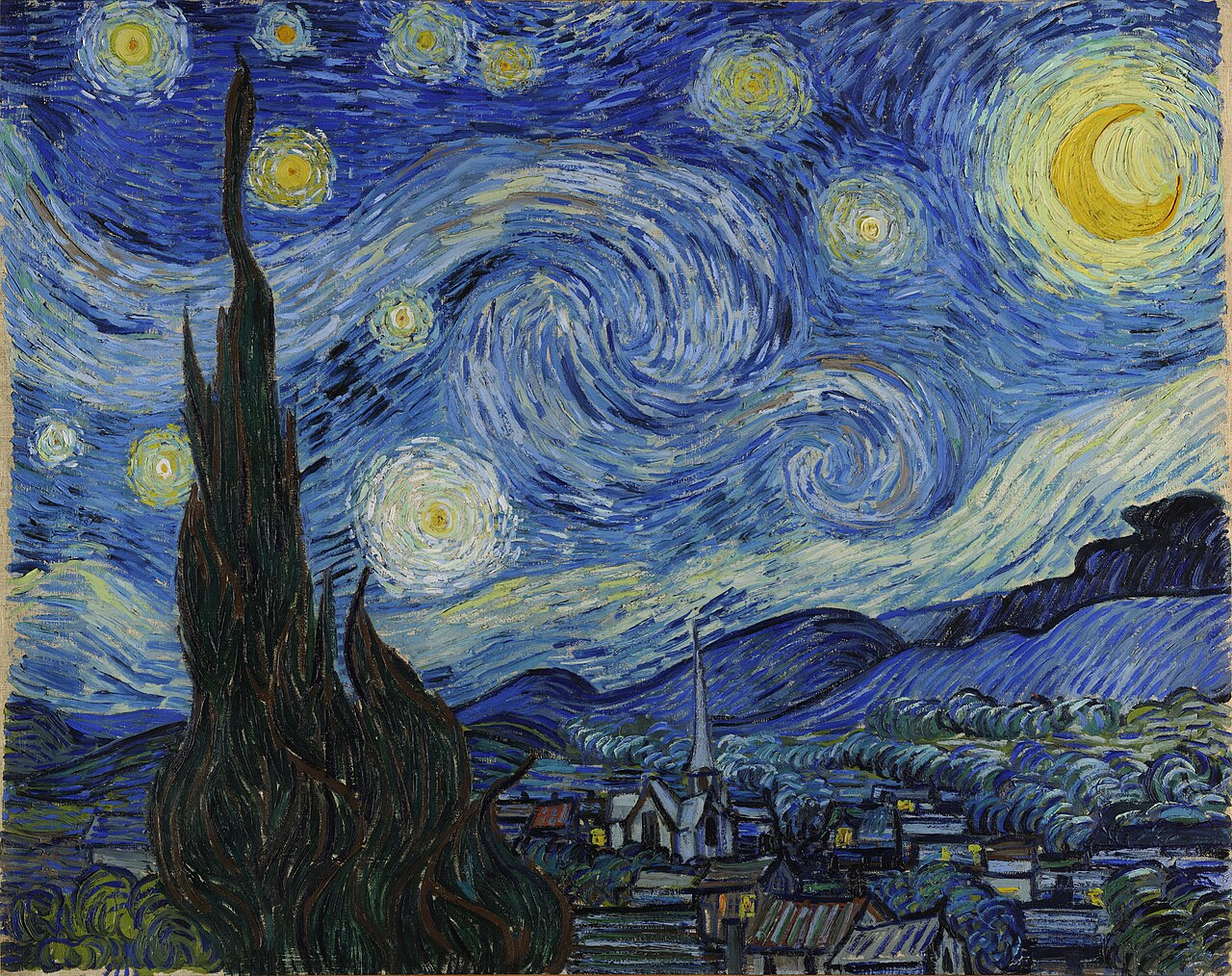
Vincent Van Gogh (of starry night fame, among other paintings), would be labeled with bipolar disorder, schizophrenia, and a host of other illnesses (those who want to point to his missing ear as possible evidence of mental illness may need to reconsider recent interpretations of events though).
Recently, I've had a cello tune by Robert Schumann visiting my head with vigor. I first learned and listened to Schumann's music via a recording of his "five pieces in folk style" performed by the cellist Natalia Khoma. The piece that really stood out was the first from piece in the set labeled with a brief suggestion in German: "With Humor" (Mit Humor). I really liked the tune, but always imagined it had an adversarial kind of sound to it. Now, with the benefit of many years of new experience in performing and the wonders of youtube, I've listened to several other performances of the piece and decided that the piece is challenging to play with humorous conviction unless you're in a REALLY good mood.
While searching for other recordings of the piece, I noticed one youtube playlist that contained a lot of Schumann's music was titled "Music for a troubled mind." After a brief search on Wikipedia (and elsewhere, but Wikipedia was most accessible so I'm giving it credit foremost) about his life, I had confirmed my suspicion that he too, had a rough time grappling with life on the now and then.
In some ways, I was disappointed, there's a research article with a disempowering title called "the dark side of creativity:" and a subtitle that says "vulnerability and negative emotions lead to greater artistic creativity"[1], Schumann reaffirmed its findings. At the same time, I was relieved: over a hundred years later, living people actually perform and presumably enjoy listening to his music.
Realizing that, I'm reminded of a pondering that started earlier this summer: how many people actually wanted to be with Van Gogh or Schumann not because they enjoyed their works, but because they knew they were ill and truly wanted to understand, or possibly help them?
The current media buzz from recent shootings suggest that we as a public are quick to impose a label and therefore, imbue an identity onto another person. When we refer to people with mental illness who behave poorly around others or worse yet, commit injustices, we strip away the complexities of their history, circumstance, and potential as people. In light of shootings like the Colorado shooting that took place in the theatres, or the recent shooting at Sandy Hooke elementary, people say "that's sick" with sneering hate in their voice and tones of disbelief. Yet they forget what it means to be sick. Killings of that sort are certainly inexcusable and unjust acts. But in saying someone is sick under most circumstances, we'd hopefully recognize sickness as a state of poor health with the intent to improve it to a better condition. We rarely say someone's an absolute loss and dead already.
In instances of the shooters in the aforementioned incidents, one of them (James Holmes) looked like he was in disbelief about his circumstance and actions during the trials, the other (Adam Lanza) had been killed before he went to trial.
While it might not be accurate or true to the circumstances of the previously mentioned criminals, I'll offer an unusual perspective as a possible ingredient for empathy:
Some people hurt so much that they wish they'd do something to deserve the pain and shame they've felt. Why? Because they don't understand where it truly came from, why it happened, or what they can meaningfully do about it. Sometimes the confusion, pain, and anger are a legacy of outcomes from bullying, terror, neglect--abuse.
At the same time, recovery has little space to exist in our society. We delegate responsibilities of care by sending people to hospitals or rehabilitation centers. Often, they're cut off from people whom they might actually need for humane interaction that goes beyond vital statistics, food delivery, and psychiatric testing. This is a similar challenge that prisoners face. Granted, they're frequently inexcusable and still responsible for their own actions, but I've met enough to know that there are some who also want to live as better human beings for the sake of others in their community or family. One of them is a mentor of sorts to me and many others at the University of Michigan-Dearborn.
Furthermore, we're in a society where meeting sophisticated social needs frequently becomes a rare occurrence--mental healthcare for many is inaccessible if it means we must invest burdensome financial capital and traverse great distances to reach whom we'd hope are vigorously trained and keenly attentive health specialists. But what happens if therapy amounts to paying for the privilege of talking to someone who just might choose to offer you medication instead of helping you embrace and resolve your conflicts? Our fundamental intentions with most of these sessions come from a deep desire to meaningfully communicate with another person in a safe environment, and know that someone else cares about your well being. These "specialized services" happen to be many of those that people ought to expect out of a good friend.
Let's consider a line of questions:
1) When someone we know grieves because a loved one died, what's the likelihood that they'll do so in a way that can't be described as some kind of illness?
2) What accurate ways exist to gauge one's mental health?
3) Will that person remain an injured and fatally broken person forever?
4) Does a state or institution have the right to take them (and in turn, impinge upon their freedoms) away from the rest of the world away by labeling them as "sick" or "mentally ill" for suffering humane experiences?
Sometimes, you'll discover that they too, deeply wish to get better. I suspect in severe cases, more often than not, they've had to confuse themselves into believing they're unworthy of aid and redemption. In my case, I think it's a form of shame and self-hatred that some people are willing to perpetuate because they don't really grasp an alternative reality to how they can live and who they can be.
When someone is ill, the rest of us also have choices that actually challenge our perceptions of responsibility as a community:
Do you take up apathy?
Will you let them continue to suffer?
Will you embrace their challenge and aid them to get better?
If you want to live in a better world, these questions become your charge and duty. If you're preparing for fields in medicine or justice, this is the challenge you're charged to meet at any moment, sometimes through witnessing subtle realities slip in and out of a window of opportunity many times in one day.
I started to write this post around December 19th of 2012 in reaction to realizing that a talented and fun loving person who quickly and, likely, genuinely considered me a friend did so as I was still wondering if I was in stable mental and emotional health.
This brings me to a quote from Bill Moyers which you've seen at the beginning of this post:
“What we need to match the science of human health is what the ancient Israelites called ‘hocma’—the science of the heart. . . the capacity to see. . . to feel. . . and then to act. . . as if the future depended on you. Believe me, it does.”-Bill Moyers
You may be the only individual with the privilege of interacting with someone who suffers from mental illness. Recognizing that possibility exists, even brief encounters with other people can define your relationship if it's no longer sustained. I've come to believe we're obligated to make sure we've made a positive difference in other people's lives whenever we're privileged to reach another person.
"Depression is real. Just because you’ve never had it doesn’t make it imaginary. Compassion is also real. And a depressed person may cling desperately to it until they are out of the woods and they may remember your compassion for the rest of their lives as a force greater than their depression."-an excerpt posted on an online social network by someone who pulled a quote from the depths of another social network
I'm convinced that many people with mental health challenges also contributed some of the most profound ideas, expressions, and acts of compassion known to history.
Van Gogh, Schumann, I've mentioned before. There are more I can list, but I'll choose Buckminster Fuller as the closing example for his resolve to do something out of what began as despondent angst:
"He ultimately chose to embark on 'an experiment, to find what a single individual [could] contribute to changing the world and benefiting all humanity.'"
Just read about him, he made amazing things and had great insight for design/complex systems theory.
[I don't completely agree with his techno-centric vision, but he was certainly prolific and lived a life worth knowing something about-read the section on his depression and epiphany for the segment that most.]
Now on the converse, you don't need to be sad, immensely depressed, or ill to do great things. If that's where you're at great! As human beings however, we're capable of it all. Can you make the most of life and see what you can do with the hearts of other people?
Research doesn't tell us the answer, the actions you choose to live for do. It's up to you to hone hearts, to do what the future depends on you for.
[1] The Dark Side of Creativity: BiologicalVulnerability and Negative Emotions Lead toGreater Artistic CreativityFor just the abstract: http://www.ncbi.nlm.nih.gov/pubmed/18832338