We have been asked to share our research with a community school district in Michigan and we want to hear your response. Why is recess important? What is the importance of outdoor recess vs. indoor recess? How often should recess take place for K-6. Please share your research, links, and comments. Your response could make the difference. - from the Michigan No Child Left Inside Coalition facebook page (Posted by The Michigan No Child Left Inside Coalition page https://www.facebook.com/pages/Michigan-No-Child-Left-Inside-Coalition/132659406774553 )
A brief anecdote about outdoor play from a different angle: I used to play street hockey with friends in the summer. I spoke with a hockey player earlier this autumn who realized that kids no longer play outdoor sports on his street either. One of my neighborhood friends affirmed a similar observation. Recess outdoors is important to me because it demonstrates that people can have fun without sophisticated facilities. One challenge for working with an open area comes from making the rules for stimulating and fun low-resource intangible games (tag, etc.) accessible to generations whom may no longer be familiar with them. While it's possible to have fun indoors too, I think people are inclined to rely on toys or games that don't beneficially integrate other aspects of a person's growth (especially the kinesthetic/physical).
The indoors, as a controlled environment, denies people the opportunity to discover subtle realities of their environment. In turn, it can reduce a one's capacity to develop a better sense of the place they live in, and can deny them the opportunity to meaningfully engage with the world around them via self-motivated inquiry. An authentic curiosity and sense of reverence for an experience ignited from of one's own volition--the "sense of wonder" as Rachel Carson would coin it--is important for opening the door to deeper learning. Students in cities might notice something about their neighborhoods that most adults would not have. Though the neighborhood tire clean-up case study from a place like the STARR Academy in Detroit wasn't necessarily motivated by recess, it's a good example of people developing their sense of place and an empowering example of people recognizing their capacity for efficate action in their local environments. I also believe outdoor play is important for adults, but that's for a slightly different story.
This is a similar challenge for people interested in the No Child Left Inside movement who have an environmental education/nature background: how can we help people empower themselves to develop a focused sense of what can be done amid almost overwhelming choices? An empty yard or an empty field/vacant lot may look the same to the casual observer.
Natural history and systemic processes--the interesting stuff that many people eventually do find fascinating--behind the things we might take for granted are frequently unknown and intangible. Yet developing basic literacy for finding resources or recognizing natural phenomena also can inspire and impel a person (any age, not just k-6) to engage and appreciate whatever it is they find around them. Perhaps students with some education in geology would actually want to examine the cement near the school for rocks they can identify? Likewise, those who have some understanding of local flora and principles of ecology might be excited about seeing whatever weeds are growing up on the school grounds. Animals (including insects) probably would have been a better example, but I think I've demonstrated the idea. To quote Baba Dioum: "In the end we will conserve only what we love. We will love only what we understand. We will understand only what we are taught." I suspect fleshing out connections in education that make any outdoor experience coherent will be an important step.
I recently wrote a note to colleagues encouraging them to familiarize themselves with the emergency procedures, and to begin developing a department-specific emergency plan. However, as I said in my e-mail to them, I still think the best thing we can do comes from being kind and sincere in our encounters with people. I'm glad to have a great team at work.
I'm starting to suspect iterations of good personal questions also make good interview questions: they challenge your character and if you're unprepared, you're challenged to truly face yourself.
"What's your day like?"- Anna
"What do you think you want to develop about yourself?" - Chelsea
In some cases, people probably have a ready answer. I've asked myself an iteration of both of these questions before, but hearing it articulated or simply being asked by another person who does not know your answers sheds light on how another person can hold you accountable for your own life.
The funny thing is that I might have asked other people similar questions not long ago. I may have recently examined these facets of who we are and am ready to answer them--the stars align and I feel pretty good about it. Sometimes, it's been a bit too long and the salience of the question becomes especially incisive. You start to squirm, sometimes not even because of the person asking it--you might trust them a lot--but rather it's because you realize you never knew, or no longer know who you are at this time.
Self-help guru Stephen Covey, probably best known for his Franklin-Covey planners and his book(s) _# Habits of Highly Successful People (the number changes, last I checked I think it was at 7), talks about "Sharpening the Saw" as one of the habits and principles of self-improvement. In essence: make your own self-restoration a regular priority.
From contemplating these two questions from friends, I realize my biggest challenge comes from finding an appropriate time frame.
I think it's a good case for Richard Sennet's principle of participation for meaningful craftsmanship (ergo the title of his book "The Craftsman") as a means to making a "consumer experience"--in other words (my own), existentialism in marketing.
In fewer (albeit, less mature) words: called it!
That said, it's odd to hear young people speak about their product choices:
"Students really love showing off, and kids love showing off who they are," Stewart says. "And ... me spreading the word about how I designed these shoes led to all my friends wanting to design their own." -Lindsay Stewart, a senior at Holy Innocents' Episcopal School in Atlanta
There's certainly more to expression and a student's identity than Ms. Stewart's view, but you've got to admit she'd make for a great PR rep.
“What we need to match the science of human health is what the ancient Israelites called ‘hocma’—the science of the heart... the capacity to see... to feel... and then to act... as if the future depended on you. Believe me, it does.”-Bill Moyers
Some of the most evocative artists also happened to have very severe mental health challenges.
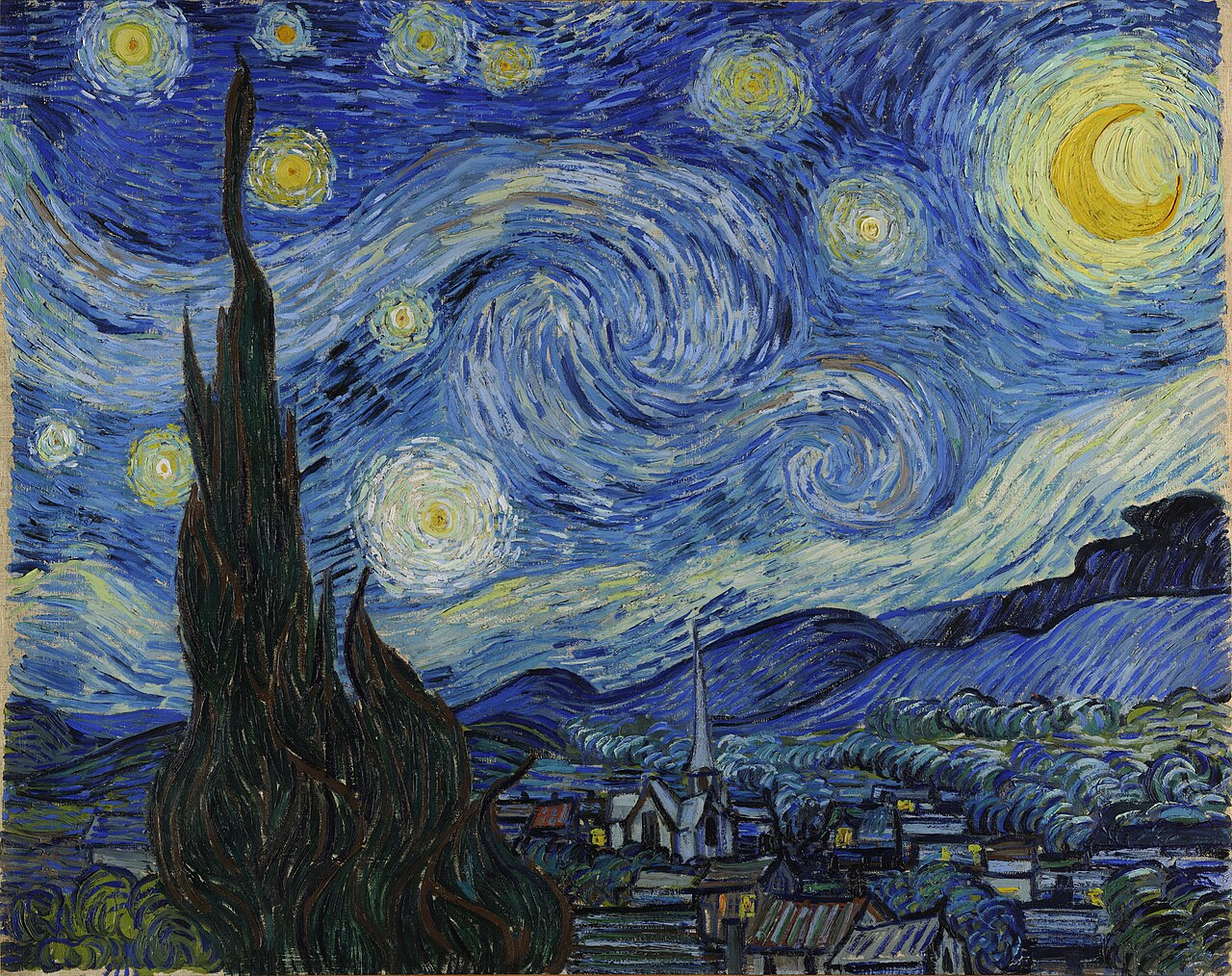
Vincent Van Gogh (of starry night fame, among other paintings), would be labeled with bipolar disorder, schizophrenia, and a host of other illnesses (those who want to point to his missing ear as possible evidence of mental illness may need to reconsider recent interpretations of events though).
Recently, I've had a cello tune by Robert Schumann visiting my head with vigor. I first learned and listened to Schumann's music via a recording of his "five pieces in folk style" performed by the cellist Natalia Khoma. The piece that really stood out was the first from piece in the set labeled with a brief suggestion in German: "With Humor" (Mit Humor). I really liked the tune, but always imagined it had an adversarial kind of sound to it. Now, with the benefit of many years of new experience in performing and the wonders of youtube, I've listened to several other performances of the piece and decided that the piece is challenging to play with humorous conviction unless you're in a REALLY good mood.
While searching for other recordings of the piece, I noticed one youtube playlist that contained a lot of Schumann's music was titled "Music for a troubled mind." After a brief search on Wikipedia (and elsewhere, but Wikipedia was most accessible so I'm giving it credit foremost) about his life, I had confirmed my suspicion that he too, had a rough time grappling with life on the now and then.
In some ways, I was disappointed, there's a research article with a disempowering title called "the dark side of creativity:" and a subtitle that says "vulnerability and negative emotions lead to greater artistic creativity"[1], Schumann reaffirmed its findings. At the same time, I was relieved: over a hundred years later, living people actually perform and presumably enjoy listening to his music.
Realizing that, I'm reminded of a pondering that started earlier this summer: how many people actually wanted to be with Van Gogh or Schumann not because they enjoyed their works, but because they knew they were ill and truly wanted to understand, or possibly help them?
The current media buzz from recent shootings suggest that we as a public are quick to impose a label and therefore, imbue an identity onto another person. When we refer to people with mental illness who behave poorly around others or worse yet, commit injustices, we strip away the complexities of their history, circumstance, and potential as people. In light of shootings like the Colorado shooting that took place in the theatres, or the recent shooting at Sandy Hooke elementary, people say "that's sick" with sneering hate in their voice and tones of disbelief. Yet they forget what it means to be sick. Killings of that sort are certainly inexcusable and unjust acts. But in saying someone is sick under most circumstances, we'd hopefully recognize sickness as a state of poor health with the intent to improve it to a better condition. We rarely say someone's an absolute loss and dead already.
In instances of the shooters in the aforementioned incidents, one of them (James Holmes) looked like he was in disbelief about his circumstance and actions during the trials, the other (Adam Lanza) had been killed before he went to trial.
While it might not be accurate or true to the circumstances of the previously mentioned criminals, I'll offer an unusual perspective as a possible ingredient for empathy:
Some people hurt so much that they wish they'd do something to deserve the pain and shame they've felt. Why? Because they don't understand where it truly came from, why it happened, or what they can meaningfully do about it. Sometimes the confusion, pain, and anger are a legacy of outcomes from bullying, terror, neglect--abuse.
At the same time, recovery has little space to exist in our society. We delegate responsibilities of care by sending people to hospitals or rehabilitation centers. Often, they're cut off from people whom they might actually need for humane interaction that goes beyond vital statistics, food delivery, and psychiatric testing. This is a similar challenge that prisoners face. Granted, they're frequently inexcusable and still responsible for their own actions, but I've met enough to know that there are some who also want to live as better human beings for the sake of others in their community or family. One of them is a mentor of sorts to me and many others at the University of Michigan-Dearborn.
Furthermore, we're in a society where meeting sophisticated social needs frequently becomes a rare occurrence--mental healthcare for many is inaccessible if it means we must invest burdensome financial capital and traverse great distances to reach whom we'd hope are vigorously trained and keenly attentive health specialists. But what happens if therapy amounts to paying for the privilege of talking to someone who just might choose to offer you medication instead of helping you embrace and resolve your conflicts? Our fundamental intentions with most of these sessions come from a deep desire to meaningfully communicate with another person in a safe environment, and know that someone else cares about your well being. These "specialized services" happen to be many of those that people ought to expect out of a good friend.
Let's consider a line of questions:
1) When someone we know grieves because a loved one died, what's the likelihood that they'll do so in a way that can't be described as some kind of illness?
2) What accurate ways exist to gauge one's mental health?
3) Will that person remain an injured and fatally broken person forever?
4) Does a state or institution have the right to take them (and in turn, impinge upon their freedoms) away from the rest of the world away by labeling them as "sick" or "mentally ill" for suffering humane experiences?
Sometimes, you'll discover that they too, deeply wish to get better. I suspect in severe cases, more often than not, they've had to confuse themselves into believing they're unworthy of aid and redemption. In my case, I think it's a form of shame and self-hatred that some people are willing to perpetuate because they don't really grasp an alternative reality to how they can live and who they can be.
When someone is ill, the rest of us also have choices that actually challenge our perceptions of responsibility as a community:
Do you take up apathy?
Will you let them continue to suffer?
Will you embrace their challenge and aid them to get better?
If you want to live in a better world, these questions become your charge and duty. If you're preparing for fields in medicine or justice, this is the challenge you're charged to meet at any moment, sometimes through witnessing subtle realities slip in and out of a window of opportunity many times in one day.
I started to write this post around December 19th of 2012 in reaction to realizing that a talented and fun loving person who quickly and, likely, genuinely considered me a friend did so as I was still wondering if I was in stable mental and emotional health.
This brings me to a quote from Bill Moyers which you've seen at the beginning of this post:
“What we need to match the science of human health is what the ancient Israelites called ‘hocma’—the science of the heart. . . the capacity to see. . . to feel. . . and then to act. . . as if the future depended on you. Believe me, it does.”-Bill Moyers
You may be the only individual with the privilege of interacting with someone who suffers from mental illness. Recognizing that possibility exists, even brief encounters with other people can define your relationship if it's no longer sustained. I've come to believe we're obligated to make sure we've made a positive difference in other people's lives whenever we're privileged to reach another person.
"Depression is real. Just because you’ve never had it doesn’t make it imaginary. Compassion is also real. And a depressed person may cling desperately to it until they are out of the woods and they may remember your compassion for the rest of their lives as a force greater than their depression."-an excerpt posted on an online social network by someone who pulled a quote from the depths of another social network
I'm convinced that many people with mental health challenges also contributed some of the most profound ideas, expressions, and acts of compassion known to history.
Van Gogh, Schumann, I've mentioned before. There are more I can list, but I'll choose Buckminster Fuller as the closing example for his resolve to do something out of what began as despondent angst:
"He ultimately chose to embark on 'an experiment, to find what a single individual [could] contribute to changing the world and benefiting all humanity.'"
Just read about him, he made amazing things and had great insight for design/complex systems theory.
[I don't completely agree with his techno-centric vision, but he was certainly prolific and lived a life worth knowing something about-read the section on his depression and epiphany for the segment that most.]
Now on the converse, you don't need to be sad, immensely depressed, or ill to do great things. If that's where you're at great! As human beings however, we're capable of it all. Can you make the most of life and see what you can do with the hearts of other people?
Research doesn't tell us the answer, the actions you choose to live for do. It's up to you to hone hearts, to do what the future depends on you for.
[1] The Dark Side of Creativity: BiologicalVulnerability and Negative Emotions Lead toGreater Artistic CreativityFor just the abstract: http://www.ncbi.nlm.nih.gov/pubmed/18832338
Drawing from the public's attention on the violence of recent events (particularly talk of escalation between Israel and Palestine, the shootings at Sandy Hooke, and a shooting I was in), I wrote a note to colleagues encouraging them to familiarize themselves with the emergency procedures, and to begin developing a department-specific emergency plan. However, I still think the best thing we can do comes from being kind and sincere in our encounters with people.
This year I've been around malicious gunfire that was so close I could taste the gunpowder shortly after the aroma reached my nose. The incident I was in happened between extended family members, and it didn't surprise me to see and hear it happen. Violence swiftly escalated from language into physical pushing, shoving, and punching which eventually turned into gunshots and a brutal beating in response to the shooter.
I suspect the notion of love is antithetical to this situation. I understand compassion, it's been illustrated in tremendous experiences for me this year. Yet what if people don't know love? I appreciate peace, but similarly, what if most people actually don't know peace? Despite popular assertions that they can be found in simple expressions, peace and love are complicated concepts to substantiate, and it's almost inconceivable for those who lived much of their lives with an oppressive and abusive environment. If anything, we human beings fundamentally understand the notion of hope before we understand the nature of peace and love.
I'll say it again: More people probably understand hope better than they do love.
Truly, not everyone knows what love is or grew up with meaningful exposure to it and therefore, more people lack meaningful understanding of it than we’d assume or wish. People do, however, recognize compassion and reprieve from hostile situations on a more frequent basis.
Look at international relations as an example of a similar misunderstanding between war (analogous to hate) and peace (analogous to love):
Reprieve from dire hostility (i.e. war/sectarian violence, etc.) becomes labeled improperly (and thereby assumed/presumed understood) as “peace”; similarly, peace-keeping forces (actually security forces) designated by the UN aren’t actually an authentic indication of peace, they provide a crucial opportunity for fostering authentic peace by creating a more secure environment.
Hostility, and hatred, both still allow for hope—a special kind of opportunity with positive possibilities, at least for a particular individual or group of entities who carry the same hope(s).
Hatred is a choice to engage in certain behaviors present within our nature, but does not constitute our nature in its entirety. Hatred operates upon unreasonable hostility, and a deep inclination for humans (and other species) to reciprocate perceived behaviors tit-for-tat.
[War: communication and artificial environment (creates structure) Hatred: unreasonable consciousness/mindset/worldview that perpetuates the circumstances necessary for war.] For local examples of environments and histories that have strong influence over how an individual perceives their choices and behaviors:
A few friends of mine confessed to me that they had seriously considered suicide in the past, or present. One of them considered it out of shame, the other out of frustration in knowing that his intimate partner only wants the relationship to satisfy her physical desires. The first lived in a neighborhood of Detroit where the average lifespan of his friends and family was about 35 years old due to systemic violence. The other also grew up in Detroit, and has a family history of suicide, bipolar disorder, and/or manic depression. Those are real questions: will I need to accept the legacy of the place I grew up in or family I come from as the trajectory of my own life?
In retrospect, both of them are the first in their families in several generations to leave the area they grew up in, graduate high school or earn a G.E.D., they're also the first of their families to attend a University.
I considered the same and share the same question too, though I know I'm about 8 steps ahead thanks to a few friends who've astutely pointed out that: you are not your family. Similarly, we, as individuals, aren't our cities or communities. We have choices and new opportunities While I'm not vigorously trained in the physical aspects of the martial art known as aikido, I strive to live its principles. In aikido, one acknowledges and embraces an assailant's momentum to direct it elsewhere for a mutually favorable outcome. It's a profound alternative to traditional thinking in fighting and conflict resolution: normally the only way to end a fight is to prevent it or combat power with power to win. That's how war and most fights start to devolve until threats are eliminated.
We have choices and new opportunities now. Let's start with the hope we'll create peace for everyone involved.
Don't want to disappoint, don't want to freak you out. Don't want to resurrect all of your buried doubt. But if you wanna know where I’m going to: Avalon. ... I leave you facing life--in the face of death. There is no deeper truth, there is no truer rest--Avalon.
-Lyrics to Storyhill’s "Avalon"
When relapsing into rougher states of morale, I frequently wonder “what would Colvin do?” Marie Colvin was a journalist who was willing to die because she had a burning desire to tell the truth about other peoples’ suffering. [I've written about this realization before in my musings about dour optimism] She also understood the profundity of presence, and lived that wisdom. She recognized and promoted the empowering participatory aspect of journalism: everyone has the privilege of presence, and with social tools that most everyone can use like twitter for broadcasting information, we're even called to acknowledge our obligation and the power of our own presence as witnesses to misfortune, crisis, and tragedy.
I've seen and experienced beautiful and joyous stuff, witnessed significant events in peoples' lives and their communities. I've also lived through terrifying realities, and helped other people literally survive amid disputes, gunshots, and beatings.
At this point, I question where the wisdom I once took comfort in recent months went. At this point I can only look back at the year as a comfort which stems from knowing the extent of one's endurance. As Bear Gryllis (whom I don't admire but can appreciate in some ways) had remarked: the only reward of hardship is pride.
So long as we're able to--and do--help others, we are rich.
In many ways, it's true: We're privileged to share knowledge of rich places and people--but it's fleeting.
Perhaps that's an aspect of life that the lyrics to Avalon captures: amidst fear, we strive for a fantastic ideal that leaves us restless for so long as we live.